









The Episcopal Conferences of the Americas have expressed their renewed commitments to walk together in a spirit of communion as one Church on pilgrimage throughout the region.
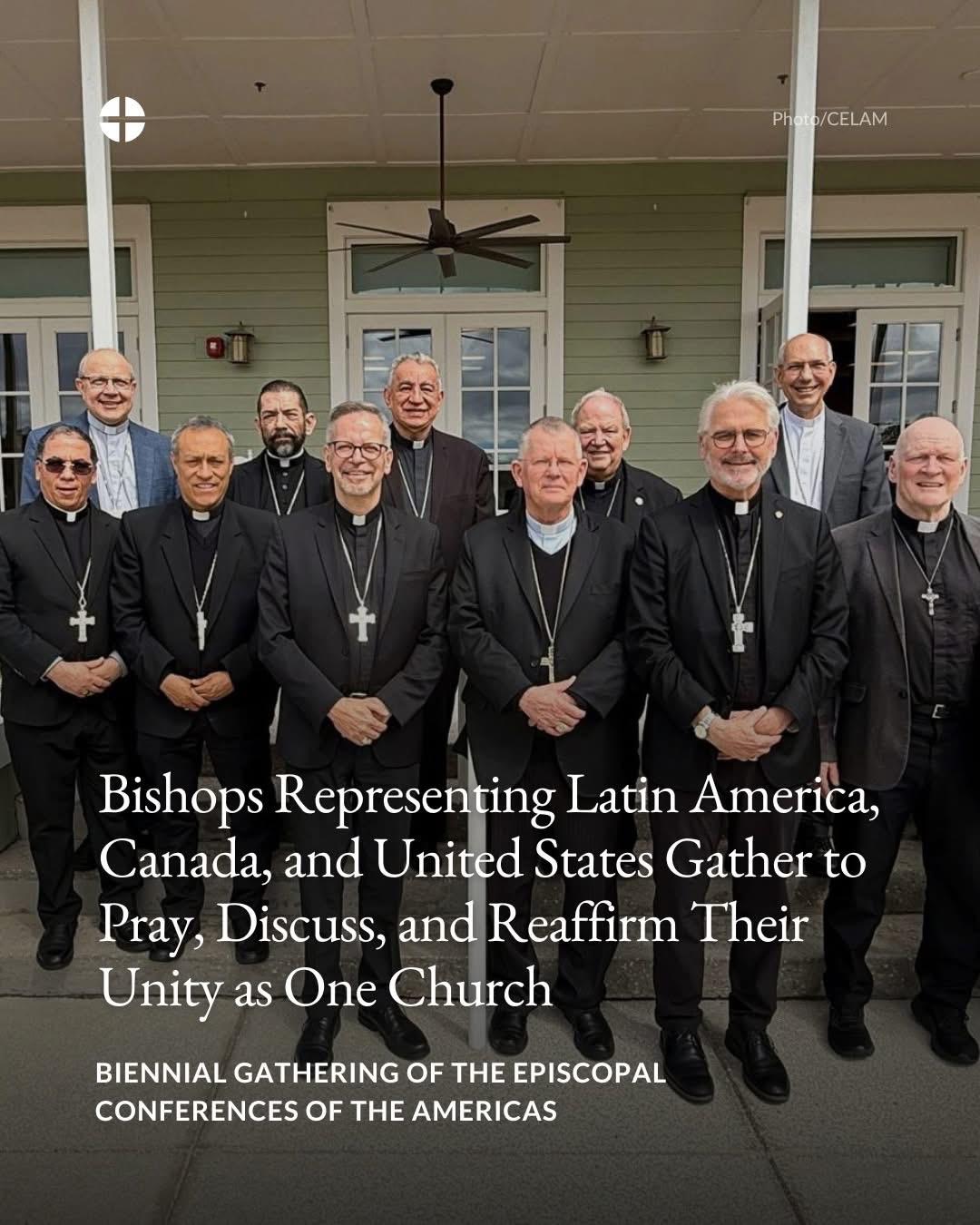
The Bishops made this commitment when the officers and members of the Episcopal Conferences of the Americas with eleven bishops attending, including bishops from the Latin American and Caribbean Episcopal Council (CELAM), the Canadian Conference of Catholic Bishops (CCCB), and the United States Conference of Catholic Bishops (USCCB) met from 15-17 February 2026 at a retreat center to pray and discuss their shared ministry as pastors of the Church.
They described their encounter as having “experienced days of fraternal joy, united in prayer, sincere dialogue, and pastoral discernment…which has allowed us to renew our commitment to walk together as the Church in the Americas, strengthening the bonds that unite us beyond our borders and cultural differences.”
The Bishops indicated that “Gathered in a spirit of profound communion, aware that we do not represent isolated Churches or fragmented realities, but rather one Church on pilgrimage throughout the Americas, we wish to address you with a message of closeness, hope, and shared responsibility.”
They noted that “Aware of the historical moment we are living through and the complexity of the challenges affecting our societies, we have renewed our commitment to walk together in a synodal way as a Church that embraces the north and south of the continent, bearing clear and consistent witness to Jesus Christ, Crucified and Risen, the living hope for all peoples.”
Issues deliberated at the conference include “concern for the poor and vulnerable, the dignity and rights of indigenous peoples, the painful scourge of human trafficking and narco-culture, the growing polarization that wounds public discourse and weakens social cohesion, and, in particular, the extreme vulnerability of migrants who live, travel through, and seek a future in our countries.”
Stressing the focus of their deliberations, the ecclesiastical hierarchy of the American Church said, “Our prayer and our conversations have focused on how to better guide the people of God with wisdom and courage in a time marked by profound changes and challenges. Although our national contexts are diverse, we recognize that our peoples experience similar anxieties and that our episcopal ministries face common challenges that invite coordinated, compassionate, and profoundly evangelical responses.”
On the issues of migration, the Bishops affirmed that “No migrant is a stranger to the Church. In every person who leaves their homeland seeking safety, opportunities, or dignity, we recognize a brother, a sister; we recognize the very face of Christ on the move.”
According to them, “human mobility cannot be reduced to a merely political or economic issue; it is a profoundly human reality that challenges our Christian conscience and the ethical responsibility of nations.”
While recognising the responsibility of states to regulate migration and ensure the common good, the Church leaders urged “the civil authorities to promote policies that safeguard the lives, rights, and dignity of migrants,” reiterating that “all legislation must place at its center the inalienable dignity of the human person and the respect that the person deserves.”
They called on “all the people of God in the Americas to live in unity in a concrete and daily way: in the generous welcome of migrants, in the defense of the most vulnerable, in respectful dialogue even amidst differences, in the patient building of bridges.”
The Prelates charged “parishes, communities, and families to be visible signs that fraternity is possible and that the Gospel continues to be a transformative force in our societies.”
Recall that migration in America is currently defined by a sharp shift toward restrictive enforcement following the return of the Trump administration in early 2025, which has led to the first decline in the U.S. foreign-born population since the 1960s.
Current Policy and Enforcement Mass Deportations, “Self-Deportation” have characterised the Trump administration.
The administration has deported over 605,000 individuals, while an estimated 1.9 million have “self-deported” due to increased pressure.
Border Restrictions Policies like the CBP One app (used for asylum appointments) were ended, and “humanitarian parole” for nationalities like Cubans, Haitians, and Venezuelans was terminated. Visa suspensions have been enforced.
Immigrant visa processing has been paused for 75 countries based on claims that their migrants use public welfare at “unacceptable rates.”