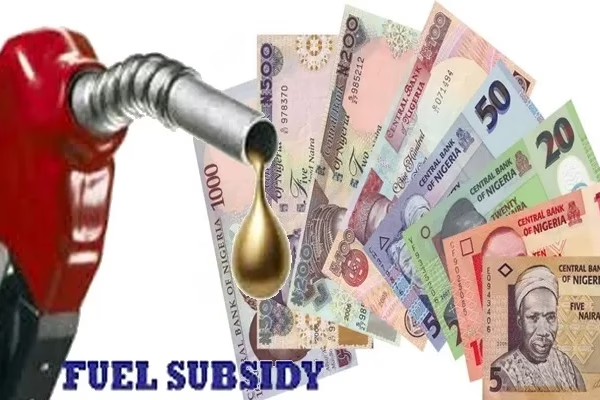
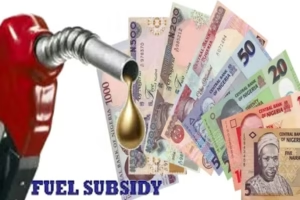
₦15.8 Trillion Saved — But Was the Petrol Subsidy Ever Truly Gone?
In this op-ed, Dr. Ijuptil argues that ₦15.8 trillion may represent a significant fiscal gain from reform, but the figure deserves a full public ledger.




In this op-ed, Dr. Ijuptil argues that ₦15.8 trillion may represent a significant fiscal gain from reform, but the figure deserves a full public ledger.
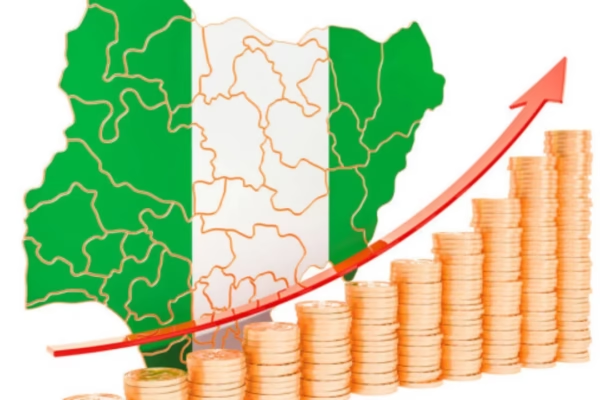
Nigeria’s latest economic reform agenda is increasingly centred on expanding access to credit as a catalyst for growth. The Federal Government believes that strengthening the country’s credit ecosystem could unlock more than $100 billion in additional economic value, stimulate investment, create jobs, and accelerate its ambition of building a $1 trillion economy.
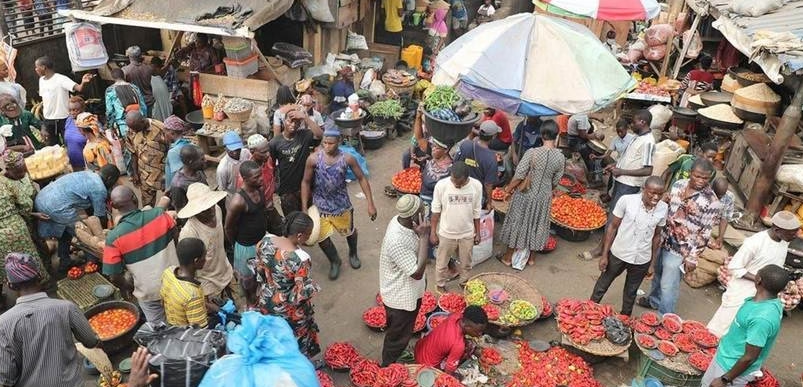
Following the removal of petrol subsidies, exchange-rate reforms and persistent inflation, Nigerians have faced significantly higher prices for food, transportation, electricity and essential goods.
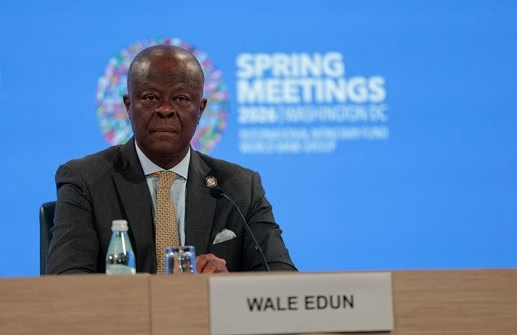
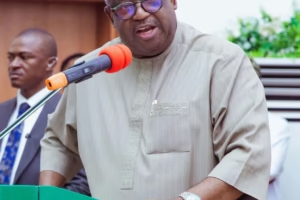
In this op-ed, Dr. Ijuptil argues that, “Sovereign ratings have improved, foreign exchange reforms have been welcomed by investors, and higher oil revenues have strengthened government finances. Yet there is a growing gap between what investors see as economic progress and what many Nigerians experience in their daily lives.”

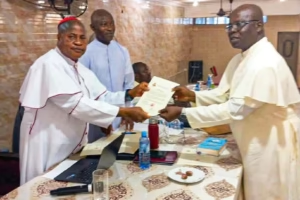
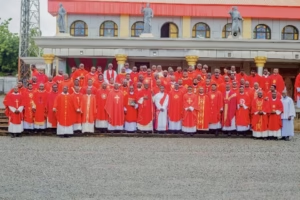
His Eminence, Anthony Cardinal Olubunmi Okogie, stands before us not simply as the immediate past Archbishop of the Catholic Archdiocese of Lagos, but as a father whose voice has formed consciences, whose courage has steadied the Church in difficult seasons, and whose ministry has reminded Nigeria that the Gospel is never meant to be kept safely inside the sacristy
Until Nigeria reduces its exposure to oil price cycles and significantly expands non-oil revenue capacity, every budget will continue to sit on a tension between projected optimism and structural constraint.
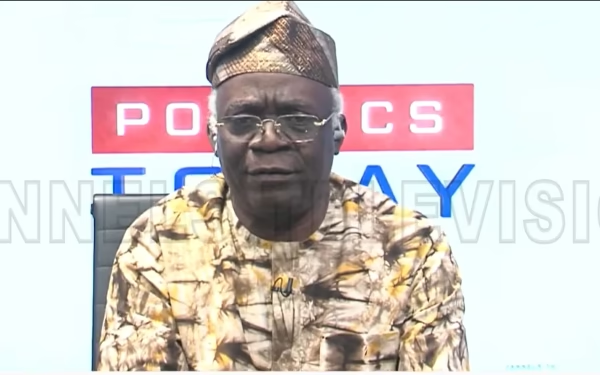
Prominent human rights lawyer and Senior Advocate of Nigeria (SAN), Femi Falana, has issued a 14-day ultimatum to the Attorney-General of the Federation (AGF), demanding urgent action to recover billions of dollars and trillions of naira in alleged unpaid revenues owed to the Federation Account by operators in Nigeria’s oil and gas sector.
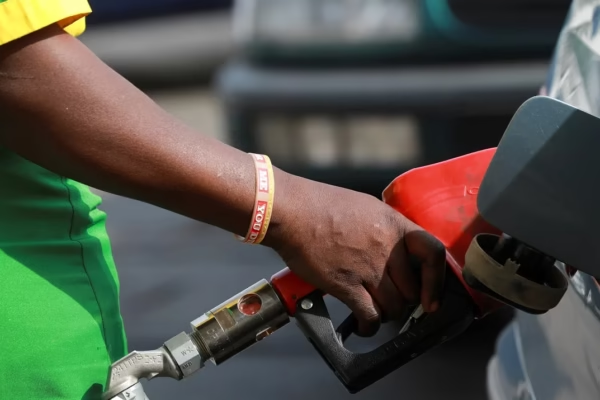
In this provocative op-ed, Advocatus Africa data and annotation “unpacks why Nigeria’s relatively cheap fuel no longer signals economic advantage, and what the data reveals about the real drivers of prosperity across the region.”
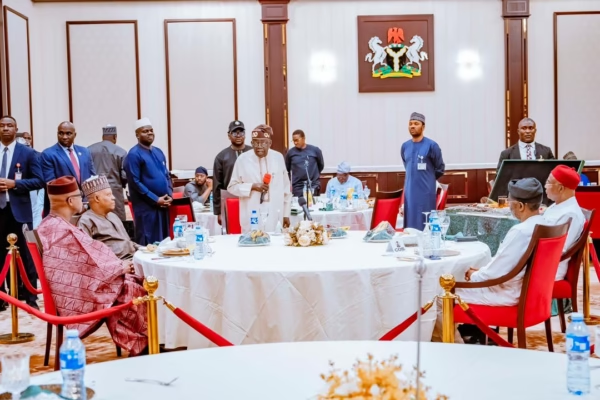
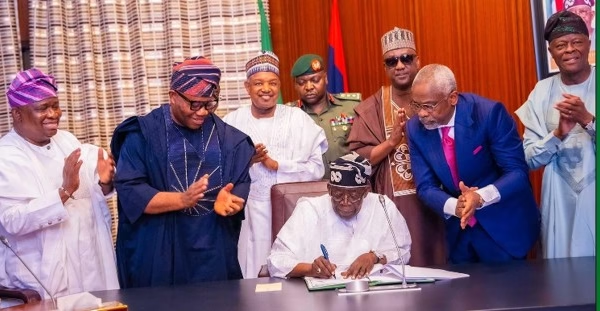
President Bola Ahmed Tinubu has marked the third anniversary of his administration, with the claim that the removal of fuel subsidy was a necessary decision that saved Nigeria from bankruptcy, placing the economy on a path of recovery.

Every child, as a precious gift from God, has dreams and potential that can transform the world. When we guide, protect, and care for them with love, we are building a stronger community, a greater nation, a better tomorrow, and a promising future.