
…’Plateau has 95% Population Christians’ – Netherland’s African Studies Centre Report
By Dangwam Jude Dabee
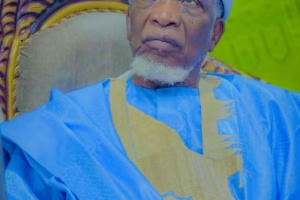
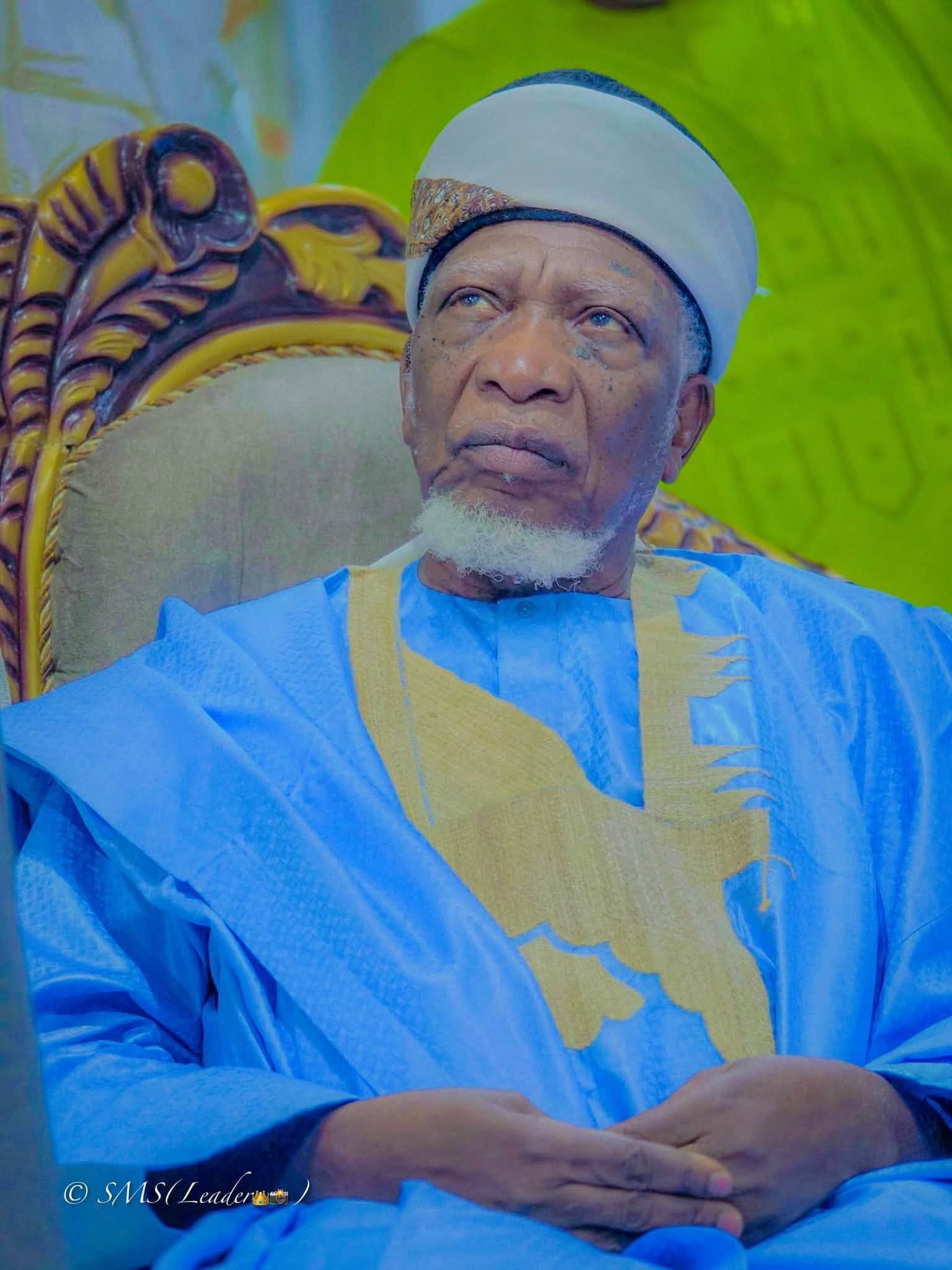
An American-based advocacy organisation, the Patrick Anum Advocacy Group has petitioned the Nigerian authorities to investigate controversial Islamic cleric, Sheikh Sani Yahaya Jingir based in Jos Plateau the Middle Belt Capital over what it described as alleged religious incitement, threats to public order and conduct capable of provoking inter-communal violence in the fragile State in Nigeria.
In a petition dated September 27, 2026 and addressed to the Commissioner of Police, Plateau State Command, the group urged the Nigeria Police Force to investigate public remarks attributed to Sheikh Jingir, particularly statements it said could deepen religious and ethnic tensions in a state with a long history of communal conflicts.
Copies of the petition were sent to the Director of the Department of State Services (DSS) Plateau State Command; the Attorney-General and Commissioner for Justice, Plateau State; and the Inspector-General of Police, Nigeria Police Force, Abuja.
The advocacy group said its concerns were heightened by remarks allegedly made by Sheikh Jingir on Sunday, August 9, 2026 while addressing supporters at the “Abba Go Again” campaign event for the reelection of the Kano State Governor in Kano Abba Kabir Yusuf.
According to the petition, the cleric was reported to have referred to non-Muslims as “infidels” and to have made assertions concerning the religious composition of the population in Plateau State.
The group alleged that such remarks, coming against the backdrop of recent attacks and displacement of communities in Plateau State, could further deepen mistrust between communities and potentially fuel inter-religious and inter-communal tensions if not put under checked.
The petition indicated that the group was particularly concerned by what it described as an assertion that Muslims form a majority in Plateau State relative to Christians population while arguing that the claim was inconsistent with findings it attributed to the African Studies Centre in Leiden, Netherlands, which it said placed the Christian population of Plateau State at 95 per cent in a March 2006 report.
The group also argued that Plateau State’s indigenous population includes 54 ethnic groups are predominantly Christian and Traditionalist. However stressed that it was not asking the authorities to convict Sheikh Jingir on the basis of allegations or media reports but investigate the claims of the said cleric and its intent.
“We wish to state clearly that we do not ask your offices to prejudge these matters or to act against Sheikh Jingir on the strength of allegation or media report alone. We urged the relevant authorities to established the facts, preserve available evidence and determine whether the statements violated Nigerian laws relating to incitement, ethnic or religious hatred, public order and peace,” they insisted.
The group further said its concerns were reinforced by what it described as an earlier intervention by the National Human Rights Commission, NHRC which has described the remarks of the Islamic Cleric as a “hate speech.”
According to the petition, the NHRC, on Tuesday, August 11, 2026, publicly described the alleged statements as hate speech and incitement to religious hatred and potential violence, and called on the Inspector-General of Police, the Director-General of the DSS and other relevant authorities to arrest and prosecute Sheikh Jingir.
The Patrick Anum Advocacy Group said it joined the NHRC in calling for action, while noting that, to its knowledge, no arrest had been announced and no public charges had been filed as of the date of its petition.
The group also raised concerns over what it described as a pattern of inflammatory and divisive rhetoric allegedly associated with Sheikh Jingir over several years.
It cited his reported description of the COVID-19 pandemic in 2020 as a conspiracy intended to prevent Muslims from gathering for prayers, as well as his reported decision in March that year to lead congregational prayers despite government restrictions on public gatherings.
The petition further alleged that in 2023, Sheikh Jingir framed support for the “Muslim-Muslim” presidential ticket as a religious obligation for Muslims, reportedly describing Muslims who did not support the ticket as non-believers.
The advocacy group also referred to remarks it attributed to the cleric in March 2023 concerning the then All Progressives Congress governorship candidate in Plateau State, alleging that Sheikh Jingir presented the candidate as a vehicle for advancing Islam in the state and referred to indigenous people as “killers” while profiling various indigenous communities.
Another incident they cited in the petition was an alleged statement made in July 2025, when Sheikh Jingir reportedly criticised Muslim scholars who received politician Peter Obi.
The group said the cleric objected to Mr Obi’s wearing of Hausa traditional dress and invoked the killing of the Sardauna of Sokoto, Sir Ahmadu Bello, during the January 1966 coup. He was reported to have said: “We Fulani will never forgive the Igbo for killing our Sardauna.”
The advocacy group also alleged that Sheikh Jingir had more recently argued that Plateau State does not belong to its indigenes but to God, describing the statement as one capable of inflaming indigene-settler tensions.
It further accused him of making an unsubstantiated allegation against a former Governor of Plateau State concerning alleged organ harvesting targeting Hausa and Fulani settlers.
The group caution that such allegations, particularly when made publicly in a state already marked by years of violent conflict, could heighten fear and suspicion among communities.
The Patrick Anum Advocacy Group against this backdrop requested the authorities to investigate the August 2026 Kano Northwest region of Nigeria remarks and the other statements cited in its petition.
It asked investigators to obtain and examine recordings, transcripts, publications and other available evidence; preserve relevant materials; authenticate the statements; and assess them against applicable Nigerian laws.
It further urged the authorities to take appropriate lawful action, including arrest and prosecution where an investigation establishes reasonable grounds that an offence had been committed by the controversial Islamic Cleric.
The group said its petition was motivated by concerns over Plateau State’s history of communal violence and the need to prevent rhetoric capable of worsening tensions from escalating into another cycle of violence.
“Our intention is not to suppress legitimate expression, but to ensure that conduct capable of inciting violence or deliberately altering the peaceful co-existence of communities in Plateau State is properly investigated and addressed within the law,” it pointed out.
The advocacy group said it was prepared to provide further information, documentation or assistance that could support the investigation.
The petition comes at a time when questions surrounding identity, indigene-settler relations, religious coexistence and the security of communities remain deeply sensitive issues in Plateau State and the Middle Belt Region of Nigeria.
For communities that have endured years of violence and displacement, words from influential religious and political figures can carry consequences beyond the immediate audience which the advocacy group’s petition placed focus not only on what was allegedly said, but on whether public statements capable of heightening communal tensions should be subjected to scrutiny under the law or not.
Editor’s Note: Featured photo is courtesy of Saeed Mansoor Saeed.