







…The result [of the fuel price myth] is a widening disconnect between what Nigerians pay at the pump and what they are able to earn in return.
Across West Africa, fuel prices have become an unexpected economic mirror, but Nigeria sits at the centre of a striking paradox. Despite being Africa’s largest oil producer and one of the region’s lowest petrol-price markets, Nigeria continues to trail behind several neighbours in income, living standards, and development outcomes. The result is a widening disconnect between what Nigerians pay at the pump and what they are able to earn in return.
This piece unpacks why Nigeria’s relatively cheap fuel no longer signals economic advantage, and what the data reveals about the real drivers of prosperity across the region.

Advocatus Africa data and annotation analyst.
Fuel Price vs GDP Per Capita (2026)
Fuel prices tell only part of the economic story. Nigeria stands out as a central reference point in the region, with petrol priced at ₦1,250 per litre, which is slightly above Niger’s ₦1,215 per litre, yet still among the lowest in West Africa. However, this apparent fuel advantage contrasts sharply with Nigeria’s income level. Nigeria’s GDP per capita is estimated at US$1,556 in 2026, placing it near the bottom of the regional distribution despite its large economy and status as Africa’s most populous nation. Niger remains lower at US$822 per capita, but Nigeria’s position is particularly striking given its scale and resource base.
Table 1: GDP per Capita in Africa (2026). Data Source: World Bank datasets and analysis by Advocatus Africa.
| Country | Petrol Price (₦/L) | Gdp Per Capita 2026 (Us$) |
| Cabo Verde | 2,351 | 6,670 |
| Côte D’ivoire | 2,130 | 3,313 |
| Ghana | 1,818 | 3,314 |
| Senegal | 2,239 | 2,054 |
| Guinea | 1,874 | 1,848 |
| Benin | 1,765 | 1,809 |
| Nigeria | 1,250 | 1,556 |
| Togo | 1,765 | 1,341 |
| Burkina Faso | 2,069 | 1,319 |
| Mali | 2,130 | 1,301 |
| Liberia | 1,568 | 964 |
| Sierra Leone | 2,437 | 919 |
| Niger | 1,215 | 822 |
At the opposite end of the spectrum is Cabo Verde, where motorists pay ₦2,351 per litre, almost double Nigeria’s petrol price, yet the country records the highest GDP per capita in the comparison at US$6,670. Similarly, Ghana and Côte d’Ivoire, where petrol costs ₦1,818 and ₦2,130 per litre respectively, each generate GDP per capita exceeding US$3,300, more than twice Nigeria’s level. This contrast places Nigeria at the centre of a regional paradox: relatively low fuel prices do not translate into strong income performance.
West Africa: Fuel Prices, Income, and Oil Production (April 2026)
Fuel prices across West Africa reveal a deeper economic imbalance when compared with income levels and crude oil production capacity. While some countries are major oil producers, others rely heavily on imports, yet the relationship between production and fuel prices is not straightforward.
Table 2: Comparative Overview of Fuel Prices, Income Levels, and Oil Production in West Africa (2026). Source: Trading Economics and analysis by Advocatus Africa.
| Country | Petrol Price (₦/L) | GDP Per Capita (US$) | Crude Oil Production (bpd) -Approximate |
| Cabo Verde | 2,351 | 6,670 | 0 |
| Côte d’Ivoire | 2,130 | 3,313 | 67,000 |
| Ghana | 1,818 | 3,314 | 178,000 |
| Senegal | 2,239 | 2,054 | 0 |
| Guinea | 1,874 | 1,848 | 0 |
| Benin | 1,765 | 1,809 | 0 |
| Nigeria | 1,250 | 1,556 | 1,489,000 |
| Togo | 1,765 | 1,341 | 0 |
| Burkina Faso | 2,069 | 1,319 | 0 |
| Mali | 2,130 | 1,301 | 0 |
| Liberia | 1,568 | 964 | 0 |
| Sierra Leone | 2,437 | 919 | 0 |
| Niger | 1,215 | 822 | 107,000 |
Nigeria remains the dominant oil producer in West Africa at around 1.49 million barrels per day, yet still has relatively low GDP per capita compared to coastal economies like Côte d’Ivoire and Ghana.
Meanwhile, several countries with zero or near-zero oil production still face some of the highest petrol prices, showing that: oil production is not equal to cheap fuel, refining capacity, imports, taxation, and currency strength matter more; and income levels determine real affordability more than pump price.
Economic Context Behind the Numbers
A comparison of fuel prices alone tells only part of the story. GDP, debt, poverty levels, exchange-rate stability and human development are equally important.
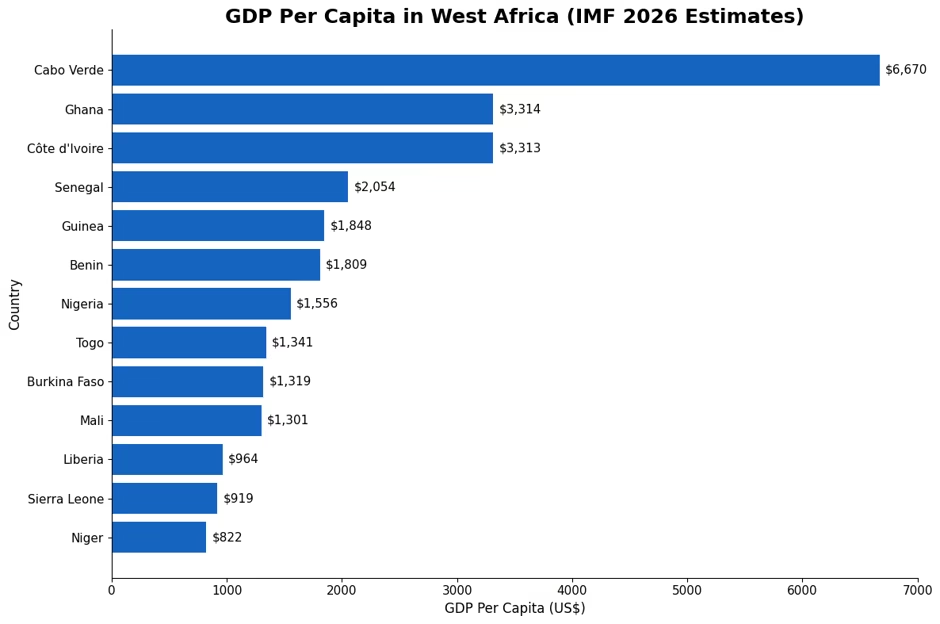
Figure 1: GDP per capita. Data Sources: World Bank, and analysis by Advocatus Africa.
Nigeria’s Diminishing Fuel Advantage
For decades, Nigeria maintained some of the world’s cheapest petrol through government subsidies. The removal of fuel subsidies and exchange-rate reforms changed that equation.
Today, Nigeria’s petrol price is only about ₦36 per litre higher than Niger’s. That gap is insignificant compared with the enormous differences seen a decade ago. The result is a more market-driven fuel system, but also one that exposes Nigerians to global oil prices and exchange-rate fluctuations.
“Although Niger has a much smaller economy and lower human-development indicators than Nigeria, government pricing structures and taxation policies currently allow lower retail fuel prices.” – Dr. Ijuptil.
Niger’s position at the top of the affordability table challenges a common assumption that oil-producing giants automatically enjoy the lowest fuel prices. Although Niger has a much smaller economy and lower human-development indicators than Nigeria, government pricing structures and taxation policies currently allow lower retail fuel prices. Yet cheap fuel has not translated into broad prosperity. Niger remains among the lowest-ranked countries globally in human development and income per capita.
Human Development Index in West Africa: A Comparative Analysis
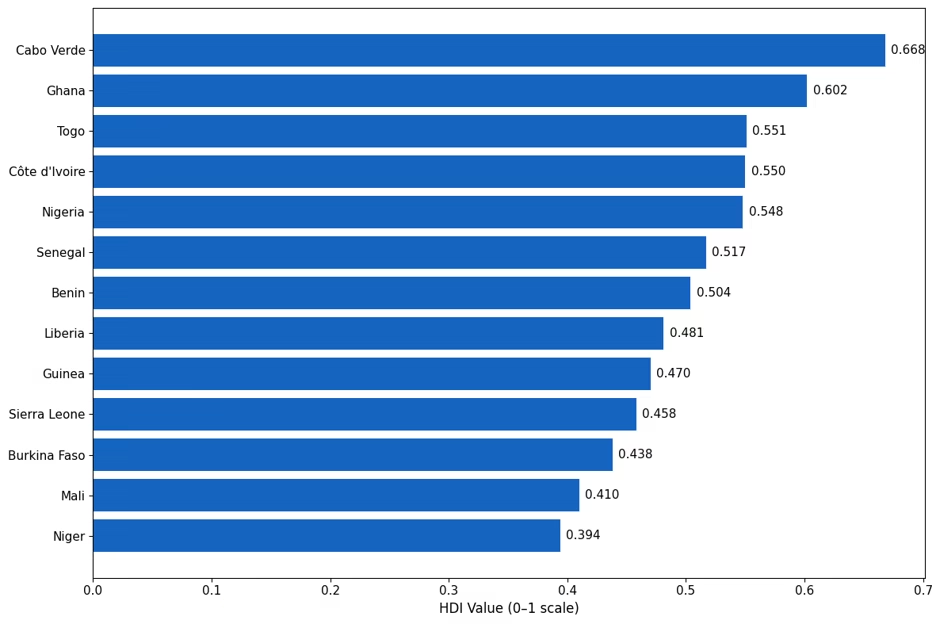
Figure 2: Comparative HDI Performance Across West Africa. Data Source: UNDP, and analysis by Advocatus Africa.
The HDI chart for West Africa shows a clear and persistent development gap across the region, based on UNDP rankings. Cabo Verde leads the region with the highest human development level, reflecting stronger outcomes in income, education, and health. In contrast, Niger, Mali, Burkina Faso, and Sierra Leone sit at the bottom of the index, indicating weaker access to basic services and lower income levels.
Countries such as Ghana, Côte d’Ivoire, Senegal, and especially Nigeria fall in the middle range, showing moderate progress but still far below global high-development standards. Notably, Nigeria stands out within this group due to its large economic size, yet it continues to record only modest human development performance relative to its scale. This highlights a persistent gap between Nigeria’s economic weight and the living standards experienced by its population. Overall, the chart shows that West Africa’s main challenge is not just economic growth but converting that growth, particularly in countries like Nigeria, into better living standards through improved health, education, and public services.
Why Ghana, Senegal, and Nigeria: Experience Fuel Prices Differently
Ghana and Senegal both pay significantly more for petrol than Nigeria. However, when viewed alongside development indicators, Nigeria’s position becomes more complex and more revealing. While Nigeria benefits from relatively lower fuel prices, it continues to lag behind Ghana in key measures such as GDP per capita and human development outcomes. Ghana’s GDP per capita is roughly three times higher than Nigeria’s current level, and its HDI score is also stronger. Senegal, despite higher fuel prices than Nigeria, has achieved greater macroeconomic stability and lower inflation, helping to cushion households against the burden of energy costs.
Nigeria therefore illustrates a critical disconnect in the region: lower petrol prices do not automatically translate into stronger development outcomes or higher living standards. This reinforces an important lesson: citizens ultimately experience fuel prices through the lens of income and purchasing power, not nominal pump prices. In Nigeria’s case, relatively cheap fuel is offset by lower average incomes, which limits real affordability and weakens the perceived benefit of lower prices.
“Nigeria therefore illustrates a critical disconnect in the region: lower petrol prices do not automatically translate into stronger development outcomes or higher living standards.” – Dr. Ijuptil.
Another overlooked factor is sovereign debt. Cabo Verde carries one of the highest debt burdens relative to GDP among the countries reviewed, yet also posts the highest GDP per capita and strongest human-development outcomes. Conversely, countries with lower debt burdens, including Nigeria, do not necessarily achieve better living standards or stronger social outcomes. This further underscores that fiscal position alone does not determine development success.
Across the region, the quality of governance, policy consistency, and effectiveness of public investment appear more important than debt levels alone. The affordability question is therefore especially relevant to Nigeria: the real issue is not whether petrol costs ₦1,250 or ₦2,200 per litre, but how many litres the average Nigerian worker can afford. A driver earning $800 per month can absorb higher fuel costs more comfortably than one earning $100 per month. In Nigeria’s case, income constraints mean that even relatively lower fuel prices can still feel burdensome in real terms. Viewed through that lens, West Africa’s fuel debate, particularly Nigeria’s, shifts decisively from price levels to purchasing power.
Conclusion
The 2026 fuel-price rankings reveal a region in transition, with Nigeria sitting at the centre of a shifting economic narrative. Once widely viewed as a benchmark for relatively cheap petrol, Nigeria now shares that position with Niger, while no longer clearly dominating the region’s fuel-price advantage. Niger has emerged as the lowest-cost market, while Sierra Leone sits at the opposite extreme.
“Fuel affordability is not the same as economic prosperity.” – Dr. Ijuptil.
However, the broader economic picture makes one point especially clear in Nigeria’s case: fuel affordability is not the same as economic prosperity. Despite Nigeria’s relatively low petrol prices, its income levels remain low compared to several West African peers, highlighting a persistent disconnect between energy pricing and real living standards. Meanwhile, countries such as Ghana, Côte d’Ivoire and Cabo Verde demonstrate that higher fuel prices can coexist with significantly stronger incomes, better infrastructure, and more advanced human-development outcomes.
For Nigeria in particular, the data reinforces a critical policy reality: cheap fuel has not translated into broad-based prosperity. Instead, structural factors such as productivity, currency stability, and governance outcomes play a far greater role in determining how citizens experience the cost of living. The lesson for policymakers is therefore especially relevant for Nigeria: citizens benefit more from rising incomes, stable macroeconomic conditions, and effective governance than from maintaining artificially low fuel prices.
Editor’s Note: Featured photo is courtesy of RateCaptain.