







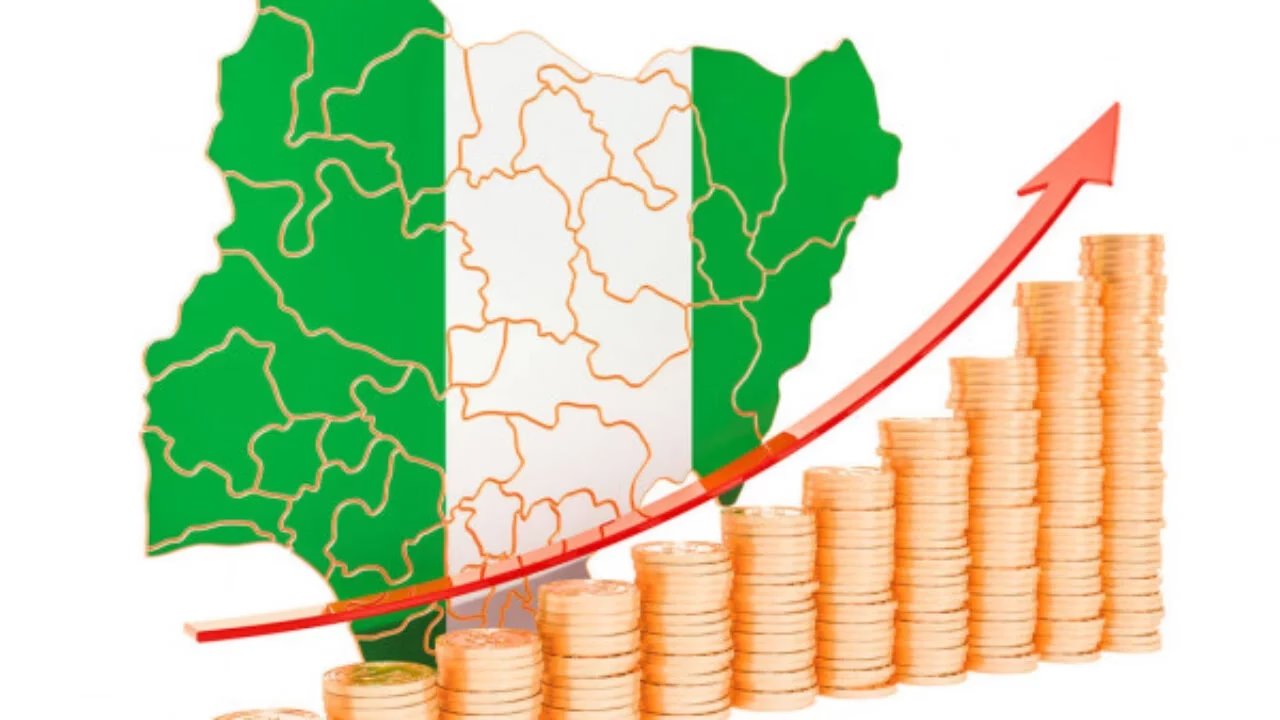
Nigeria’s latest economic reform agenda is increasingly centred on expanding access to credit as a catalyst for growth. The Federal Government believes that strengthening the country’s credit ecosystem could unlock more than $100 billion in additional economic value, stimulate investment, create jobs, and accelerate its ambition of building a $1 trillion economy.
While the potential benefits of broader financial inclusion are well supported by institutions such as the World Bank and the International Monetary Fund (IMF), many Nigerians remain unconvinced that macroeconomic reforms alone will improve their daily lives. This opinion examines whether expanding access to credit can translate into inclusive economic prosperity or whether, like previous reforms, it risks strengthening economic indicators without delivering meaningful improvements in household welfare.
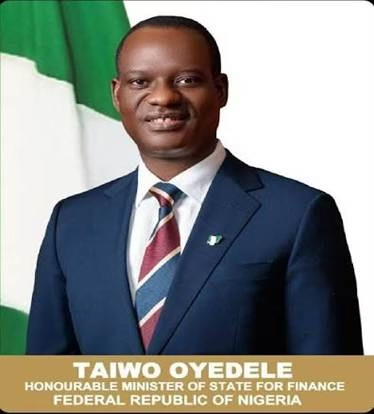
Nigeria’s Minister of Finance and Coordinating Minister of the Economy, Taiwo Oyedele, maintained that expanding access to credit could unlock more than $100 billion in additional economic value while supporting Nigeria’s ambition of becoming a $1 trillion economy.
Credit Can Drive Growth—If It Reaches the Real Economy
The Federal Government believes improving access to finance could unlock over $100 billion in economic value by enabling businesses to expand, which increases household consumption, creating jobs and stimulating investment.
This view is consistent with international evidence. The World Bank argues that financial inclusion enables firms to invest, innovate and create employment, particularly for small and medium-sized enterprises. Similarly, the International Monetary Fund (IMF) notes that deeper financial markets improve capital allocation and support long-term economic growth.
Why Nigerians Remain Cautious
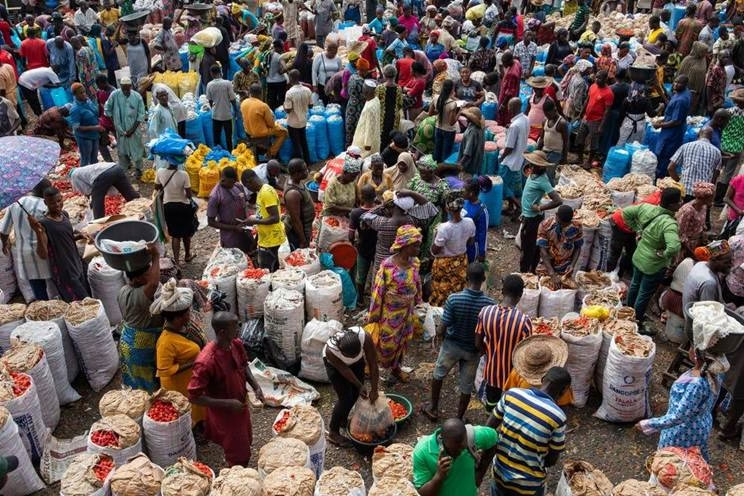
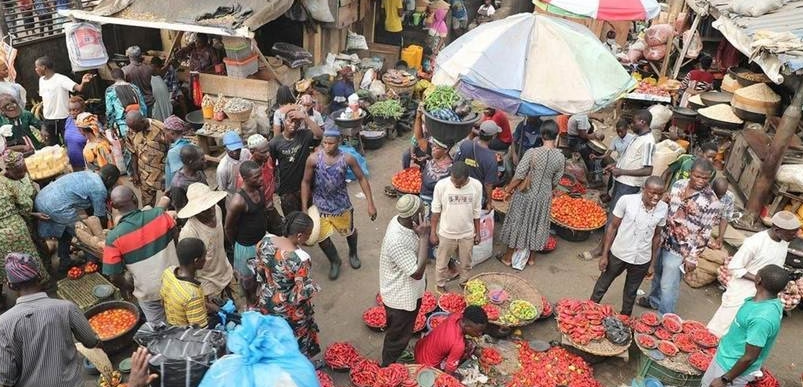
Despite the government’s optimism, many Nigerians remain cautious. As commentator Ishaka Ibrahim recently observed, previous economic reforms promised long-term gains but have yet to produce meaningful improvements in the daily lives of many citizens. That skepticism reflects broader economic realities.
The World Bank’s Nigeria Development Update estimates that more than 60 percent of Nigerians live below the national poverty line, while around seven million additional Nigerians fell into poverty following recent economic reforms.
Likewise, the IMF’s 2025 Article IV Consultation concluded that although fiscal and monetary reforms are improving macroeconomic stability, poverty, inflation and food insecurity remain significant challenges.
Investor Confidence Is Improving
Only recently, the outgone Finance Minister Wale Edun argued that stronger oil revenues, improving investor sentiment and recent sovereign credit-rating upgrades have created favourable conditions for Nigeria to refinance part of its expensive public debt at lower borrowing costs.
International credit-rating agencies have also become more optimistic. S&P Global Ratings upgraded Nigeria’s sovereign credit rating after citing improvements in foreign exchange reforms, higher oil production and stronger external liquidity. Similarly, Moody’s Ratings revised Nigeria’s outlook upward, pointing to fiscal reforms and improving external balances.
Credit Alone Is Not Enough
Expanding access to finance can only achieve its full potential if businesses operate in an environment that supports productivity. The World Bank’s Enterprise Surveys consistently identify unreliable electricity, limited infrastructure, access to finance and policy uncertainty among the most significant constraints facing Nigerian businesses.
The OECD similarly argues that inclusive growth depends on improvements in productivity, infrastructure, governance and labour-market opportunities – not financial reforms alone.
As discussed in the accompanying analysis, refinancing debt or expanding credit may improve financial conditions, but neither automatically reduces inflation, creates jobs or raises household incomes.
The Measure of Success
Ultimately, the success of Nigeria’s reforms should not be judged solely by projections of $100 billion in additional economic activity or improvements in sovereign credit ratings.
The World Bank defines inclusive development as “economic growth that improves people’s welfare, reduces poverty and expands opportunity”. Likewise, the IMF has emphasized that maintaining macroeconomic stability must be accompanied by policies that protect vulnerable households and promote inclusive growth.
Nigeria’s ambition to expand credit is therefore an important step—but its success will ultimately be measured by whether ordinary Nigerians experience lower living costs, better jobs, rising incomes and improved quality of life, rather than stronger economic statistics alone.
Conclusion
Nigeria’s plan to unlock $100 billion through expanded credit is an important policy objective. If accompanied by stronger infrastructure, stable regulations, productive investment and sustained job creation, greater financial inclusion could become a genuine engine of long-term growth.
But expanding access to finance should not become the sole measure of economic success. Ultimately, the success of Nigeria’s reforms will be judged not by optimistic projections or favourable investor sentiment, but by whether ordinary Nigerians experience lower living costs, rising incomes, greater employment opportunities and a better quality of life. Only then will ambitious economic targets become meaningful achievements rather than hopeful projections.