

…U S Congress Proposes Sweeping Measures to End Persecution of Christians in Nigeria
…Seek Repeal of Sharia Codes and Criminal Anti-blasphemy Laws
By Dangwam Jude Dabee
The United States Congress has called for a sweeping new strategy to confront the prolonged violence against Christians in Nigeria, recommending stronger security cooperation, sanctions against perpetrators, humanitarian support for displaced communities and measures to restore confiscated farmlands to displaced populations.
The recommendations followed an investigation by the U.S. House Appropriations Committee into what it described as the “persecution and slaughter of Nigerian Christians,” following President Donald Trump’s decision to redesignate Nigeria as a Country of Particular Concern (CPC).
The Congress commended President Trump for the action, saying it was intended to “hold perpetrators of violence to account and compel the Government of Nigeria to protect vulnerable communities and end religious persecution.”
The investigation was conducted through an investigative roundtable hosted by Appropriations Vice Chair Mario Díaz-Balart, a Congressional Delegation to Nigeria, and a hearing convened by House Foreign Affairs Committee Chairman Brian Mast and Africa Subcommittee Chairman Chris Smith, where evidence was received from government and civil society witnesses.
At the heart of the congressional findings is a grim assessment of the security situation confronting Christians in Nigeria.
“After decades of persecution, Nigeria is the deadliest place in the world to be a Christian,” the report declared.
It said Christians have been subjected to continuing attacks by what it described as well-armed Fulani Ethnic Militia (FEM) and terrorist groups, resulting in the deaths of “tens of thousands of Christians, including pastors and priests,” while thousands of churches and schools have been destroyed and communities subjected to kidnappings.
The report also raised concerns over the application of blasphemy laws in northern Nigeria, alleging that the laws are being used to “silence speech and dissent, target Christians and minorities, and justify so-called ‘convictions’ without due process.”
According to the committee, the attention generated by President Trump’s CPC designation and congressional scrutiny has created a “once-in-a-generation opportunity for real change” in confronting what it described as a two-decade-long crisis.
But the proposed response goes beyond criticism of the Nigerian government. The U.S. Congress recommended a bilateral agreement between Washington and Abuja focused on protecting vulnerable Christian communities, eliminating jihadist terrorism, deepening economic cooperation and countering external adversaries.
Under the proposed agreement, Nigeria would be expected to co-fund donor-supported humanitarian assistance, including assistance delivered through faith-based organisations, with priority given to underserved Internally Displaced Persons (IDPs) and host communities, particularly in the predominantly Christian Middle Belt.
The committee further called for Nigeria to strengthen early-warning systems, deploy adequate security personnel to vulnerable communities and ensure that security agencies respond rapidly to warnings of impending attacks and kidnappings.
One of the most significant recommendations concerns displaced farmers in the Country particularly the Middle Belt region of Nigeria is for a sweep reclamation if land from Fulani militias and the safe returned of displaced natives to their ancestral abode
The U.S. lawmakers called for the removal of Fulani militias from “confiscated, productive farmland” and the voluntary return of displaced communities to their ancestral homes, supported by security and infrastructure.
The report argued that restoring communities to their homes would reduce dependence on humanitarian assistance while reviving agricultural productivity and economic development.
Washington also proposed technical assistance to Nigeria to tackle armed militia violence through a demobilisation, disarmament and reintegration programme, support for ranching and land reform, and improved recruitment, technical capacity and responsiveness of the country’s security forces.
The committee recommended expanded counter-terrorism cooperation, including the possible provision of excess defence equipment and the use of relevant U.S. drawdown authorities to combat foreign terrorist organisations regarded as threats to both Nigeria and the United States.
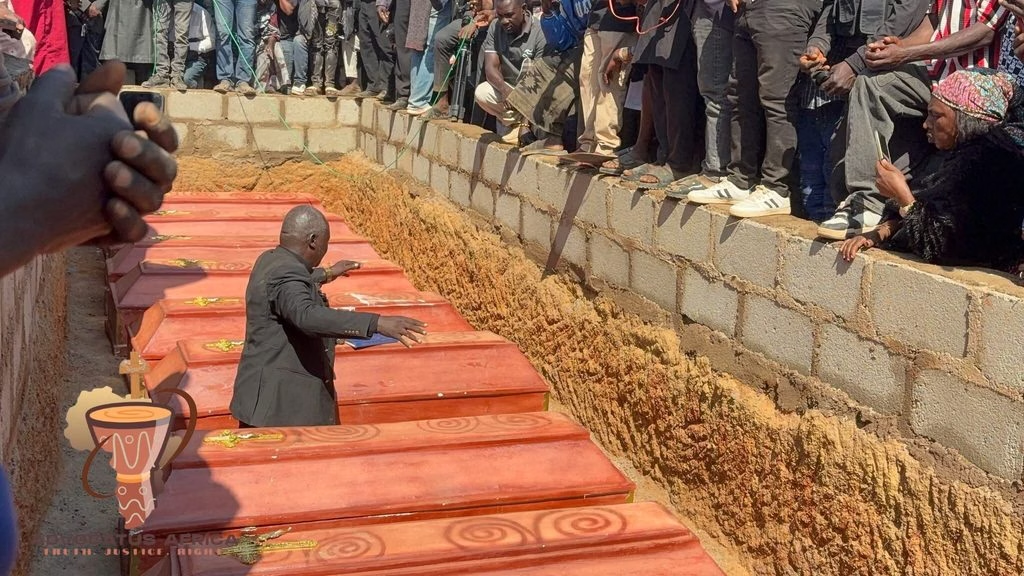
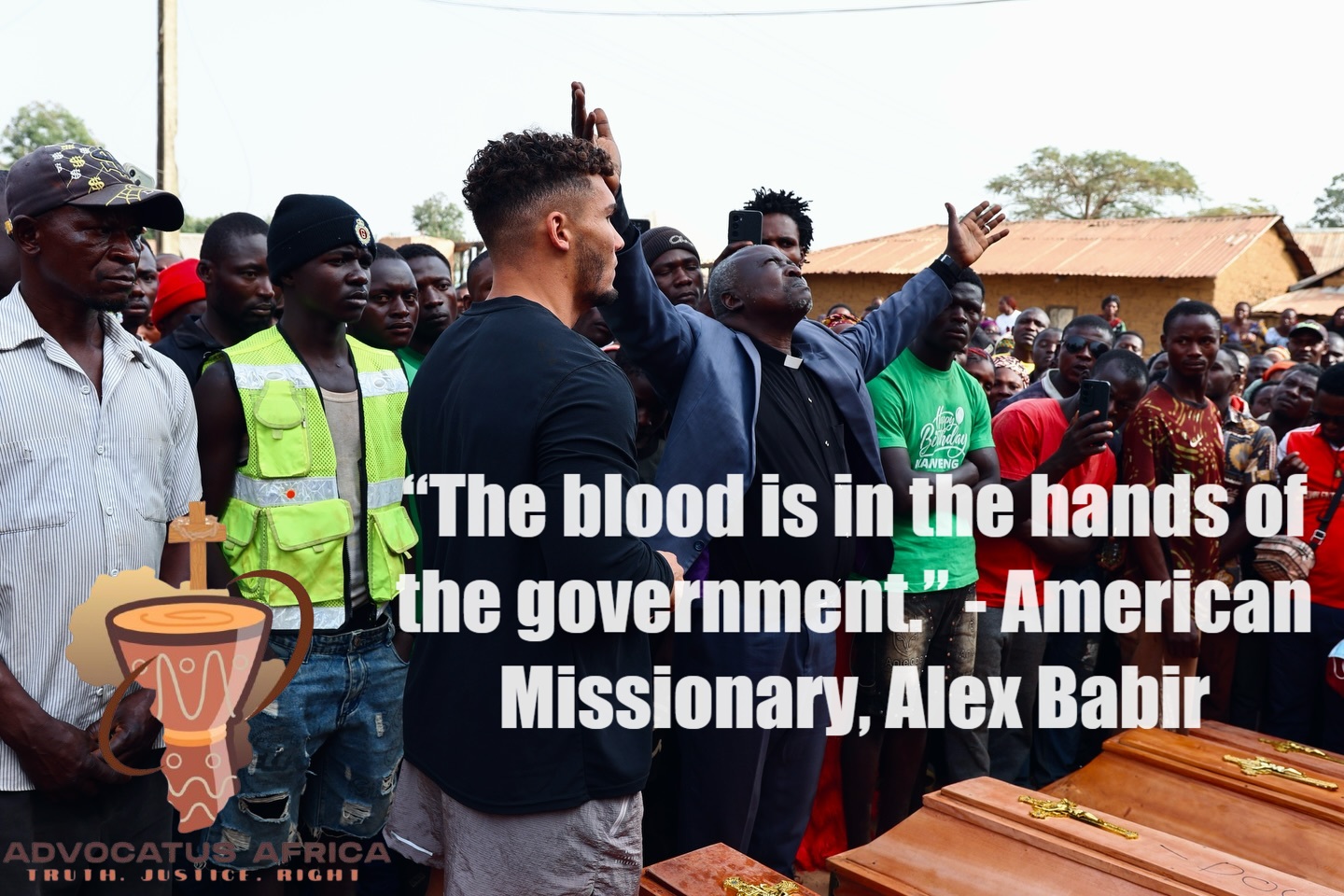
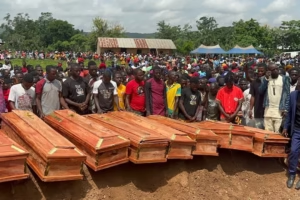
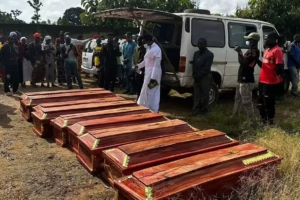
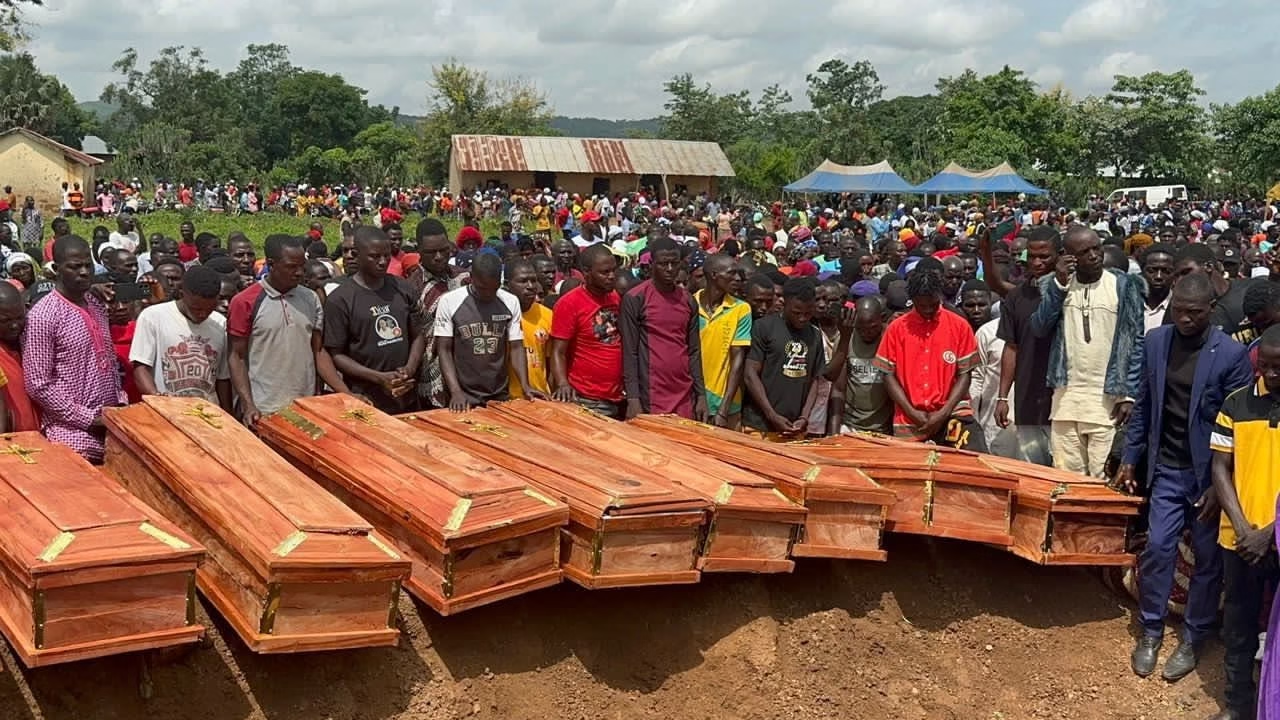
Plateau fiery Cleric, Rev. Ezekiel Dachomo officiating a mass burial of victims of serial attacks by suspected Fulani Ethnic Militia.
It also urged the United States to counter what it described as hostile foreign exploitation of Chinese illegal mining operations and alleged practices of paying protection money to Fulani militias.
On accountability, the committee proposed that additional U.S. funding should be tied to evidence of progress, while programmes supporting religious freedom, atrocity response, legal reforms, policing, criminal justice and the disruption of terrorist financing networks should be strengthened.
It further recommended sanctions against groups and individuals who “participate in, or tolerate violence against, Christians,” continuation of visa restrictions against perpetrators of violence and violations of religious freedom, and the public identification of perpetrators under CPC presidential directives.
The committee also called for the repeal of sharia codes and criminal anti-blasphemy laws, as well as the use of economic and diplomatic leverage to compel the disarmament of armed Fulani groups.
It recommended a National Intelligence Estimate on Nigeria’s sectarian and communal violence and urged a review of whether Fulani militia groups linked to terrorist organisations, alongside other organised violent groups threatening the United States, should be designated as Foreign Terrorist Organisations.
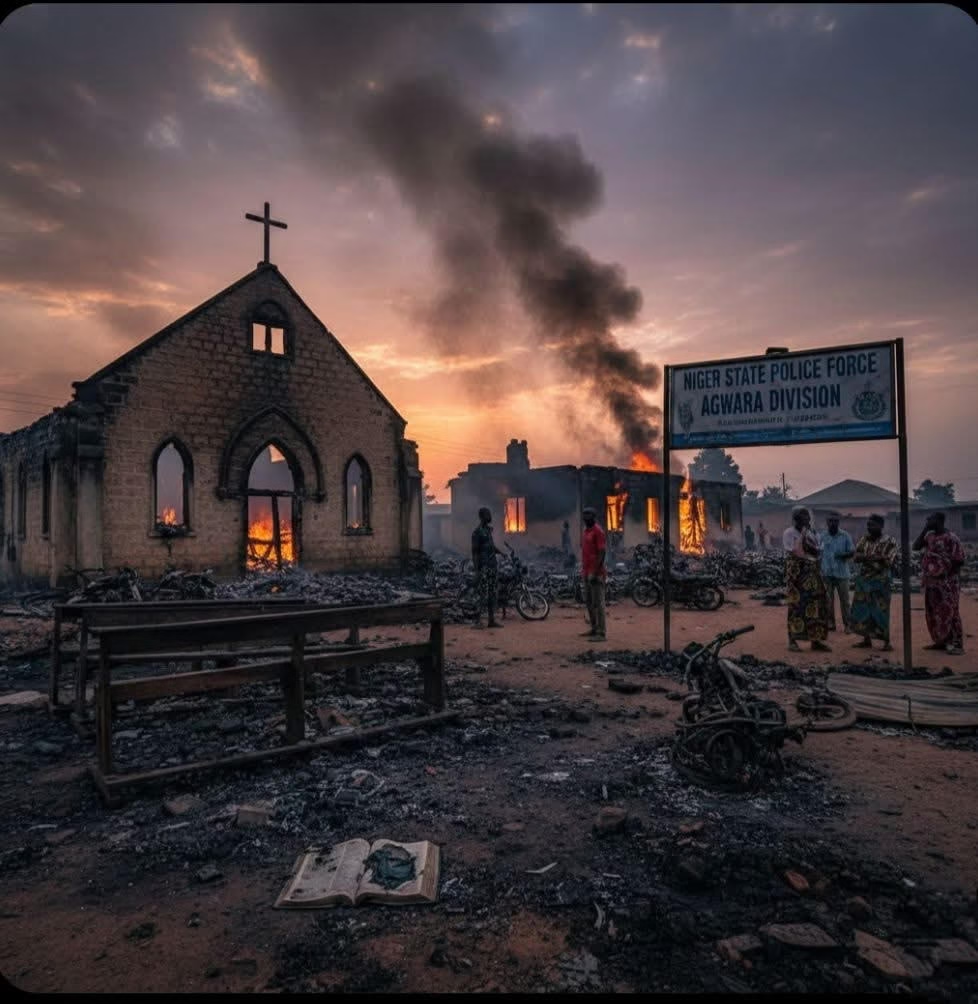
United Methodist Church of Africa Agwara, Niger State set ablaze by suspected Islamists on February 1, 2026.
Beyond security, the proposed strategy includes increased U.S. investment in Nigeria, particularly in the Middle Belt, stronger oversight of American development assistance, improved military sales processes and greater diplomatic staffing.
The committee also called for cooperation with international partners, including France, Hungary and the United Kingdom.
The recommendations effectively place the protection of vulnerable communities, accountability for perpetrators, restoration of displaced populations and security-sector effectiveness at the centre of a proposed new U.S.-Nigeria strategic partnership.
The committee said the Nigerian government remains a “key partner” of the United States but insisted that Abuja must demonstrate the political will—and commit its own financial resources—to immediately reduce and ultimately eliminate the violence.
“The United States and Nigeria should take this moment to redefine a new strategic partnership to make America-and Nigeria-safer, stronger, and more prosperous,” the report stated.