


The Nigerian government increasingly appears to be shielding terrorists. A government that repeatedly chooses negotiation over decisive action against terror groups is not merely displaying incompetence; it raises serious concerns about deliberate concealment of the truth from citizens who are left to suffer daily kidnappings, killings, and displacement. When terror becomes routine and excuses replace accountability, something is fundamentally wrong.
Hard questions must be asked. How do serving cabinet ministers and presidential advisers who have been publicly named as sponsors, enablers, or sympathizers of terrorism remain in office without investigation or consequences? What message does this send to communities under siege and families burying loved ones? A government cannot genuinely claim it wants to end insecurity while protecting those accused of sustaining it.
The contradiction becomes even more glaring when one considers government priorities. Nigeria spends millions of dollars on foreign lobbyists to persuade Donald Trump and the American government that there is no Christian genocide in Nigeria, while Nigerians continue to be kidnapped, raped, and murdered at home. Instead of confronting the crisis with honesty and urgency, the government appears more concerned with managing international perception than saving lives.

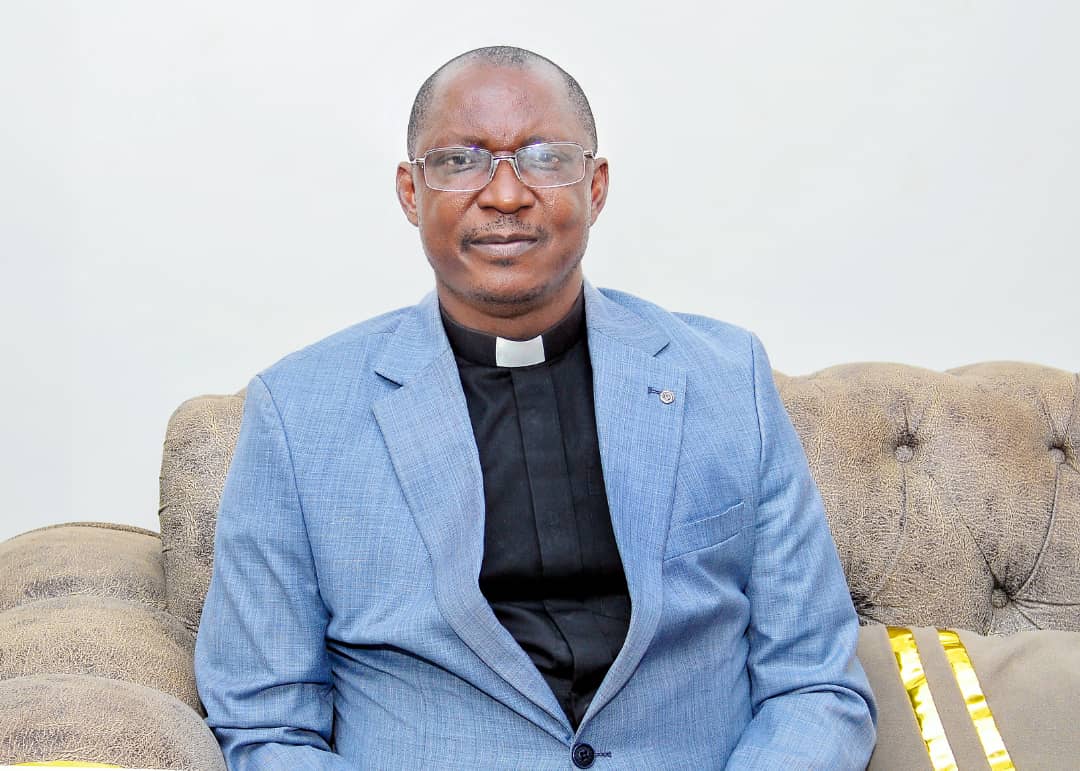
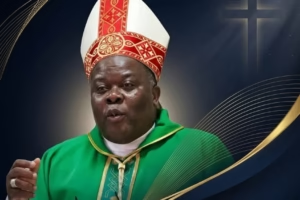
Good governance advocate and motivational speaker, Dr. Haruna Goroh. Credit: Christian Family Church International
While insecurity worsens and the economy continues to suffocate ordinary citizens, Bola Ahmed Tinubu spends weeks abroad on holiday. In any serious nation, the security of the people is the foremost responsibility of government. In Nigeria, however, leadership appears detached from the pain, fear, and desperation of those it claims to serve.
The All Progressives Congress–led government has taken Nigerians for granted. Those in power assume citizens will complain on social media for a few days and then return to survival mode. Meanwhile, people continue to die from insecurity and crushing economic hardship. At the same time, political elites are busy consolidating power. Opposition party executives, governors, legislators, and political heavyweights are defecting en masse to the ruling party—not out of conviction, but to secure relevance and protection ahead of the 2027 elections.
If Nigerians are waiting for a miracle to rescue the country, they may be waiting for a very long time. It has become increasingly obvious that the interests of Nigerians are not the priority of this government. Many politicians within the ruling party benefit directly or indirectly from the continuation of insecurity, through inflated security budgets, contracts, political leverage, and fear-driven control. That is why there is little genuine urgency to bring the crisis to an end.
The case of the former Central Bank Governor, Godwin Emefiele, now behind bars, further exposes the depth of corruption among government appointees. If officials entrusted with managing the nation’s finances could allegedly engage in such extreme greed and abuse of office, how can Nigerians reasonably trust the same political class to handle national security with transparency and integrity? When corruption thrives at the top, funds meant for intelligence, equipment, and troop welfare are easily diverted, leaving soldiers under-resourced and citizens unprotected.
Similarly, the ongoing case involving former Attorney General Abubakar Malami reinforces the argument that elements within government are deeply entangled in the very insecurity they claim to be fighting. If those in power were not benefiting from this crisis, it would have been decisively addressed long ago.
The double standards in the use of military force are impossible to ignore. The Federal Government acted swiftly and decisively to crush the so-called “Unknown Gunmen.” If these gunmen were truly unknown, how were they identified and eliminated so quickly? Yet the same government claims it lacks sufficient troops, intelligence, and equipment to defeat Boko Haram and other terrorist groups in the North.
The same army that successfully navigated dense forests in the South-East now claims it cannot effectively penetrate Sambisa Forest, an area with comparatively open terrain. These contradictions are too glaring to dismiss as [a] coincidence. At best, they reveal selective enforcement; at worst, they point to complicity.
This is no longer just a story of failure. It is a story of responsibility. A government that consistently protects the powerful, excuses the indefensible, and abandons its citizens cannot claim innocence. Nigeria is not merely overwhelmed by insecurity; it is being betrayed by those entrusted with its protection.
Silence is no longer an option.
Editor’s note: The views of the author do not necessarily reflect those of Advocatus Africa. Dr. Goroh is a singer, good governance advocate, motivational speaker, consultant, and life coach. He is the president/founder of GLM Intl.