The case has been made for teachers to consider specialised religious education as a “sacred obligation” that must be preserved.
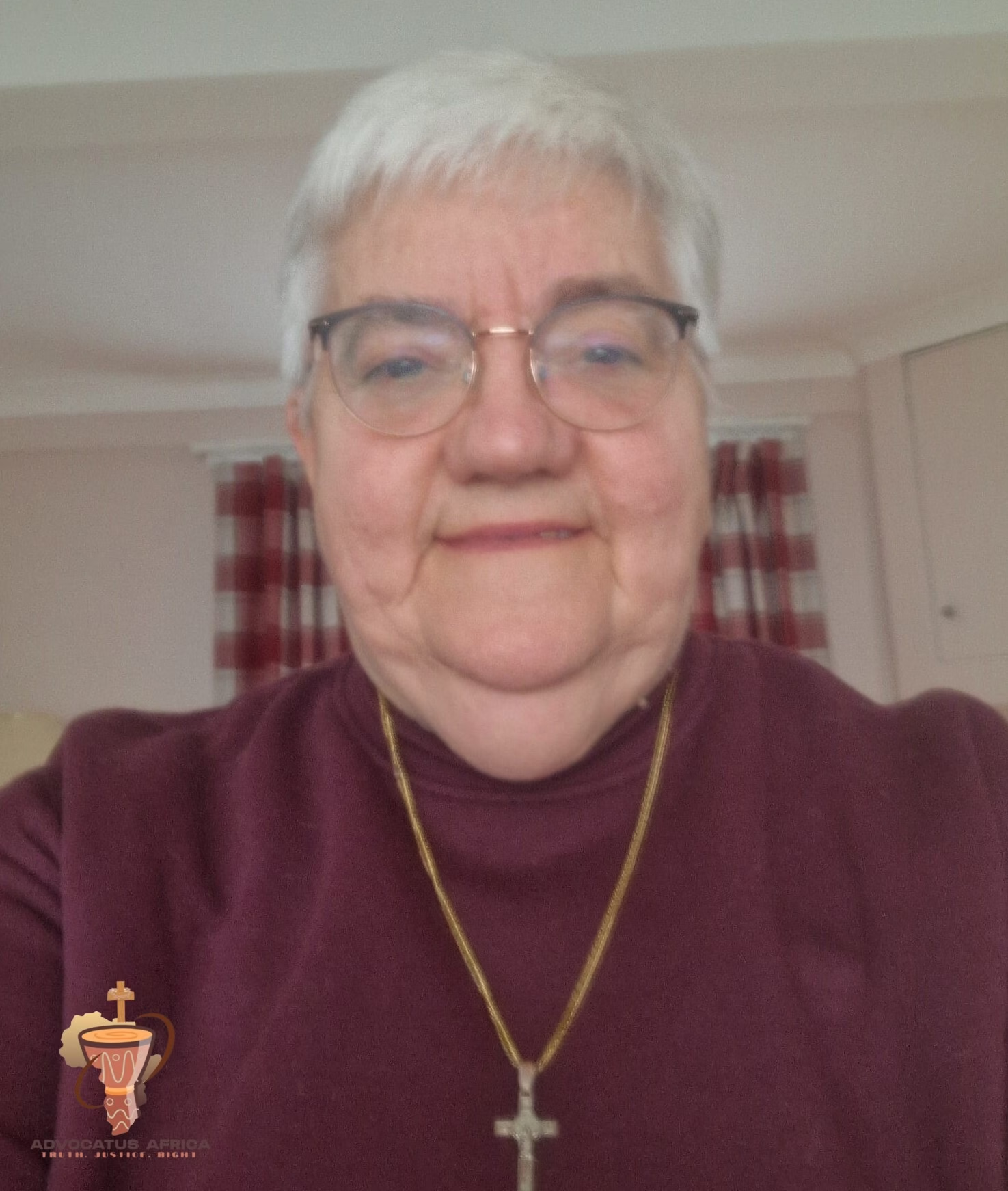
This assertion was made by Ellen McBride, a seasoned educationist, theologian and author, during an exclusive interview with Advocatus Africa, which was held at St. Eunan’s Clydebank on Monday, 19 January 2026.
“The knowledge of the faith might not be as strong as in the past”
Asked to assess Catholic education now and when she was a head teacher, McBride observed that “A lot of Catholic teachers are not coming from a faith background,” and decried that “The knowledge of the faith might not be as strong as in the past.”
Although the Irish-born acknowledged that “I might be generalising,” she explained that “When I was a head teacher in the 80s, a lot of the teachers came from a faith background. I don’t want in any way to denigrate them, but now, a lot of the Catholic teachers are not coming from a faith background and that is very difficult.”
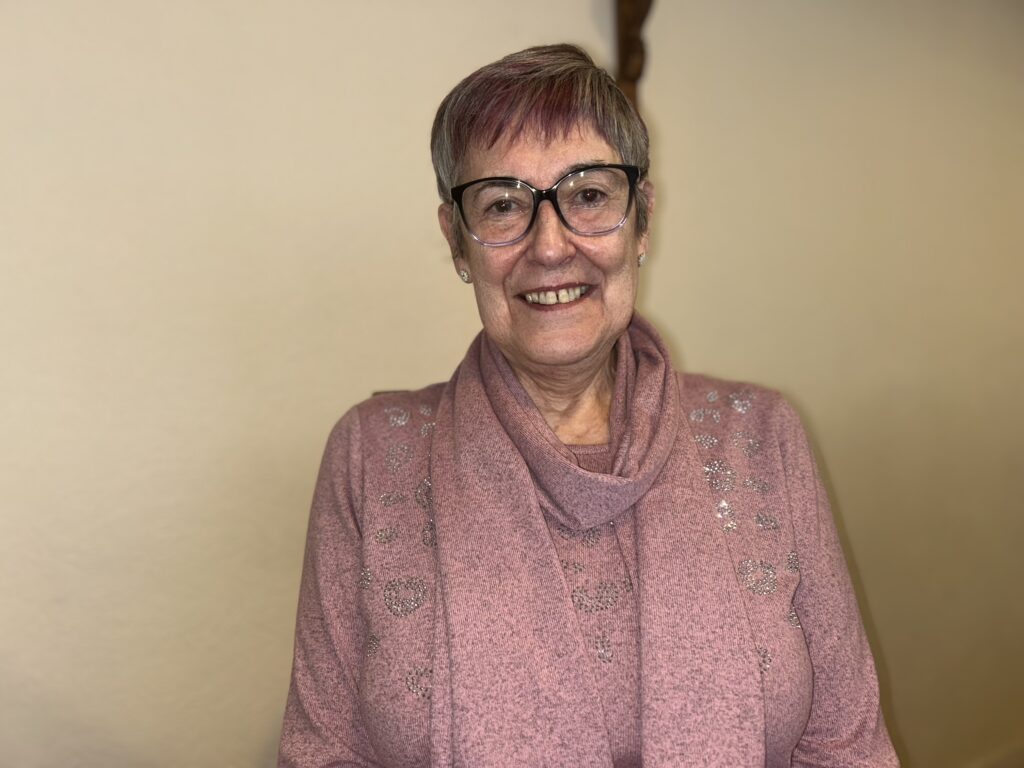
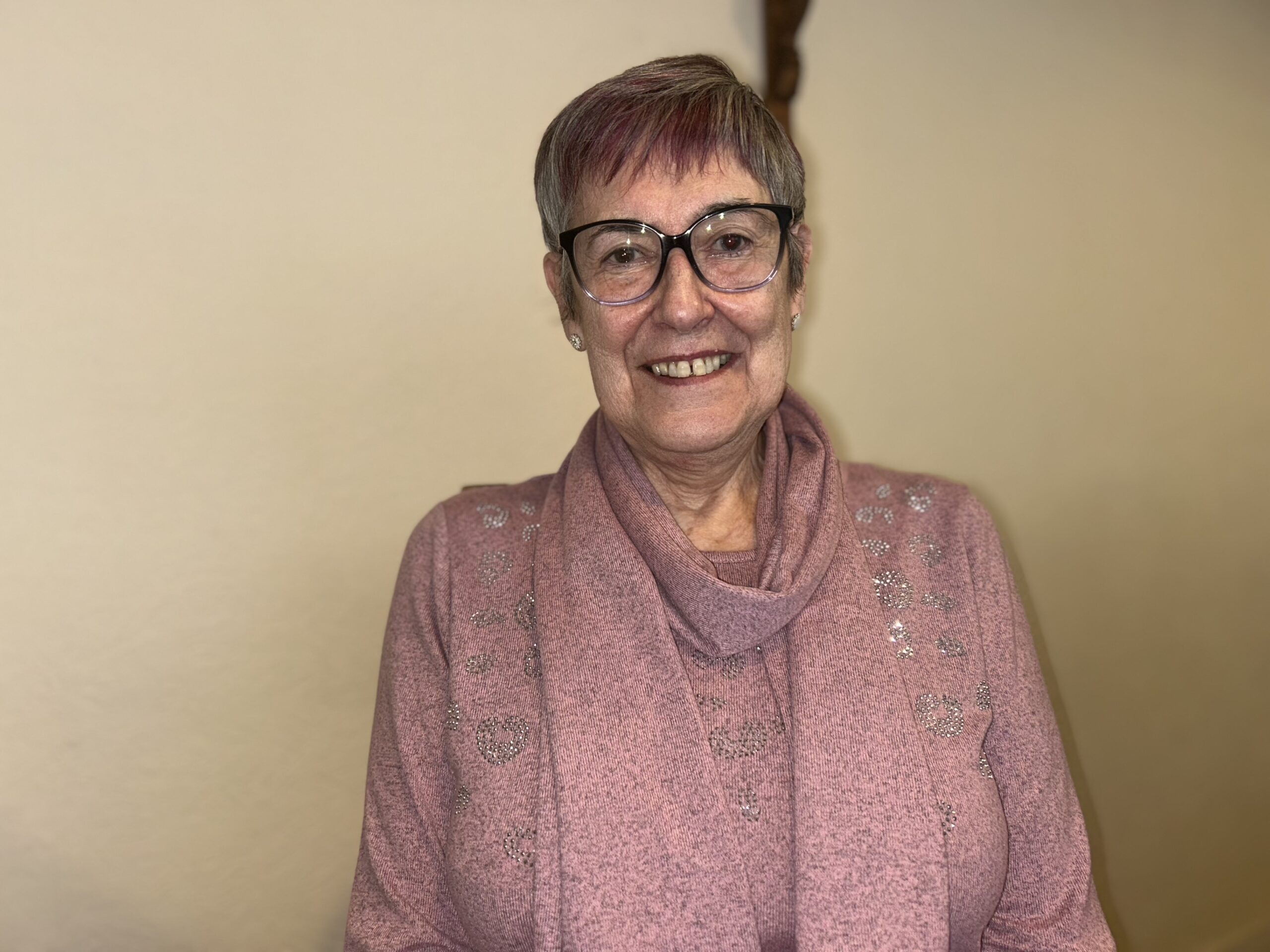
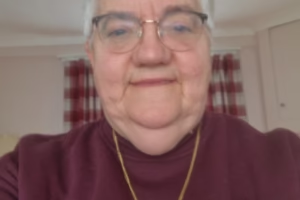
Ellen McBride, retired Head Teacher, former Strathclyde Quality Assurance team member and a leading figure in the Archdiocese of Glasgow
Making a case for religious education, the Chairperson ofSt. Eunan’s spoke about the golden days, saying, “When I was Head teacher, I made sure that my teachers had the proper curriculum; that they felt confident and comfortable with that. We took the children to Mass, because sometimes they weren’t going to Mass with their parents. So, we had that religious observance. We also had religious education, which included everything.”
“When I was a head teacher in the 80s, a lot of the teachers came from a faith background […] but now, a lot of the Catholic teachers are not coming from a faith background.” – McBride
In terms of the quality of education, she maintained that though “We did not have a catechism as such, except a syllabus, the quality was good.”
The retired teacher who served on the Strathclyde Quality Assurance teams narrated that they went to inspect schools, “Because I am a Catholic and there weren’t a lot of Catholics, I was given the religious department to visit and talk to the priest or chaplain of the school.”
Providing insights into the education system in Scotland, she said, “We are very lucky in Scotland because we have an organisation which is of the Bishops’ Conference and is called the Scottish Catholic Education Service, run by Barbara Coupar. It was started by Michael McGrath, who had been a head teacher. They support schools in religious education.”
She told Advocatus Africa about another programme at the national level, which works with the state in a political sense, challenging the government, on health education programmes to ensure that the curriculum reflects Catholic ethos.
McBride clarified that the education service in Scotland is different from England, noting that “in 1918, there was an Act of Parliament which the Catholic Church gave their schools over to the government to be run on its behalf. That meant that the Bishops of Scotland could determine the curriculum. So, we need to make sure that the catholic element is there,” adding that “Barbara does that very well.”
The theologian who spoke about becoming a teacher these days pointed to Glasgow University as the designated institution that trains catholic teachers.
“We are very lucky in Scotland because we have an organisation which is of the bishops’ conference and is called the Scottish Catholic Education Service.” – McBride
However, she stated that there were Catholics who studied in other Universities which became a challenge “because to teach in a Catholic school in Scotland, you need the approval of the Bishop of the diocese where you are teaching and you can’t get the approval unless you have a Catholic Teacher Certificate.
“This necessitated developing another course, Setting Out on the Road, to give teachers who could not go to Glasgow University the opportunity to get the Catholic teacher certificate. It started with the Scottish Catholic Education. However, it has now been taken over by Glasgow University. That has been running now for 4 years. I was involved in that. I moved along with a colleague of mine from Scottish Catholic Education over to Glasgow University so that we could have continuity and it did have continuity. That worked very well.”
West Dunbartonshire: Collaboration and a shared campus
Known for her long-standing service as a religious representative for the Archdiocese of Glasgow and educationalist within West Dunbartonshire Council, McBride shared her views about the role of pastors, parents and teachers in entrenching Catholic ethos and education in the young.
She explained thather role on the Council was to represent “the Bishop and make sure that Catholic schools are well looked after by the Council, the children receive religious education and there is a proper understanding in the Council that Catholic education is different.”
Describing the relationship of the Church, home and school as “a triangle or trinity,” McBride argued that they ought to work together.
The retired teacher detailed that the Scottish Catholic Education Service has a parents’ group, a Church representative and different organisations that ensure everything comes to fruition.
Indicating that the teachers have lots of services run by both the Archdiocese and the Scottish Catholic Education Service, the educationist underlined that these efforts help to provide knowledge and confidence.
According to her, when the local authorities conceived building new schools, they planned to build one school, a shared campus, “because of the economic situation.”
The honorary Senior Lecturer at the School of Education, Glasgow University, disclosed that “some people thought that this was Catholics and Protestants coming together in one school. So, it caused huge issues,” detailing that “When I came to West Dunbartonshire, the director was not supportive. We drew up a protocol that if there is a shared campus, it must be two separate schools with two entrances and two staff rooms. It was difficult to explain. It was also challenging for the teachers. The director could ask the teachers who pays their wages. So, they would be put in a difficult position. But eventually, teachers, the Church representatives and everybody worked together.”
“I had a very difficult time in West Dunbartonshire at that time. I had to be strong and to convince the Council why we need this catholic education as different. So, you are putting your head against the parapet. And that is never easy.” – McBride
The prominent figure in the Clydebank community acknowledged other challenges, such as “when you put a crucifix up on a wall, someone would complain, but that would not happen in a Catholic school.
“I had a very difficult time in West Dunbartonshire at that time. I had to be strong and to convince the Council why we need this catholic education as different. So, you are putting your head against the parapet. And that is never easy.”
She stated that there are 3 shared campuses in West Dunbartonshire, which are working well, urging the head teachers to work together because, according to her, “I believe the head teacher is the most important person in the school. After all, they set the whole ethos and Catholicity of the school.”