
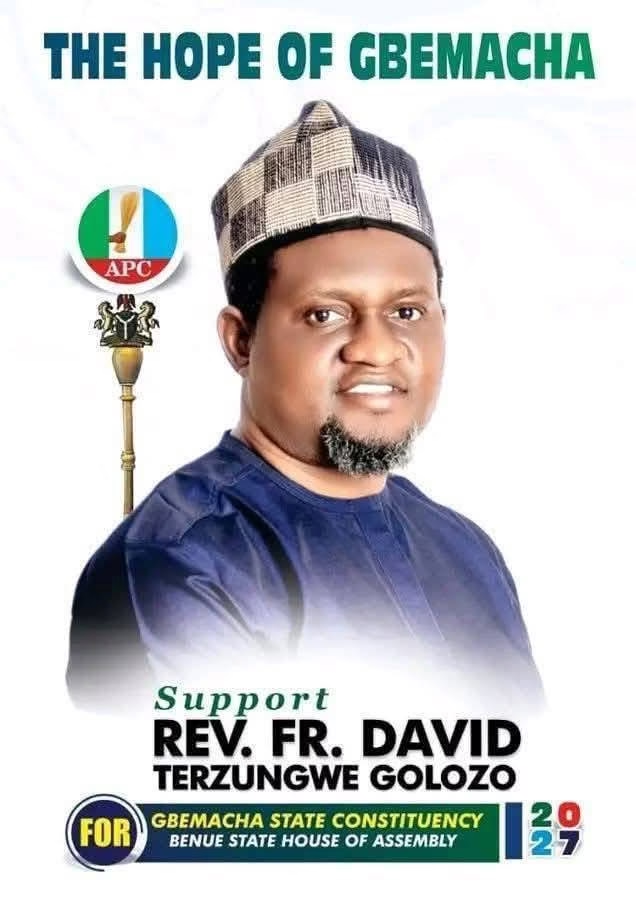
Despite the clear separation of Church and State with the canonical prohibition of Catholic priests to be involved in partisan politics, two priests in Nigeria have become governors in Benue state, north-central Nigeria, with more aspiring to abdicate the priestly ministry despite canonical sanctions.
The election of Rev. Fr. Dr. Hyacinth Alia as the Executive Governor of Benue State may have inspired other priests in his state to travel along that slippery slope.
The Alia-Adasu precedence
Following his abdication of pastoral ministry to join partisan politics, Fr. Alia was officially suspended from public ministry on 20 May 2022 by the Catholic Bishop of Gboko, Most. Rev. William Avenya, who cited partisanship which violates the provisions of Canon law (Can. 285, §3) that forbids priests from assuming public office, especially participating in the exercise of civil power.
The Bishop explained that the suspension followed a series of “admonitions” until Fr. Alia “cease from contumacy [persisting in disobedience].”
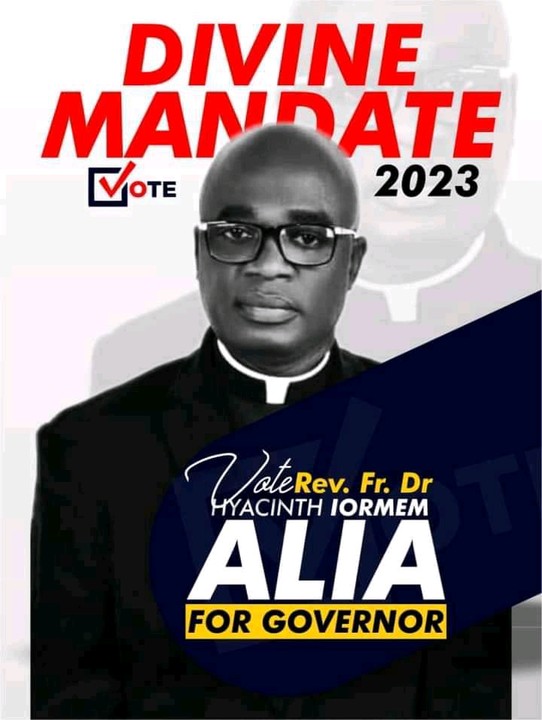
Alia, who holds a Doctorate in Biomedical Ethics from Duquesne University, Pennsylvania, USA, was sworn into office on 29 May 2023 following a landslide victory in the gubernatorial election under the All Progressives Congress (APC).
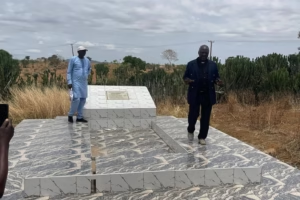
The 59-year-old is the second priest to serve Benue State as Governor; a precedent had been set by Moses Orshio Adasu (12 June 1945 – 20 November 2005), who served as the Executive Governor of Benue State from January 1992 to November 1993, becoming the first Catholic priest in Nigeria to enter partisan politics and win a gubernatorial election.
Fr. Adasu, who faced a similar suspension, was elected on the platform of the Social Democratic Party (SDP).
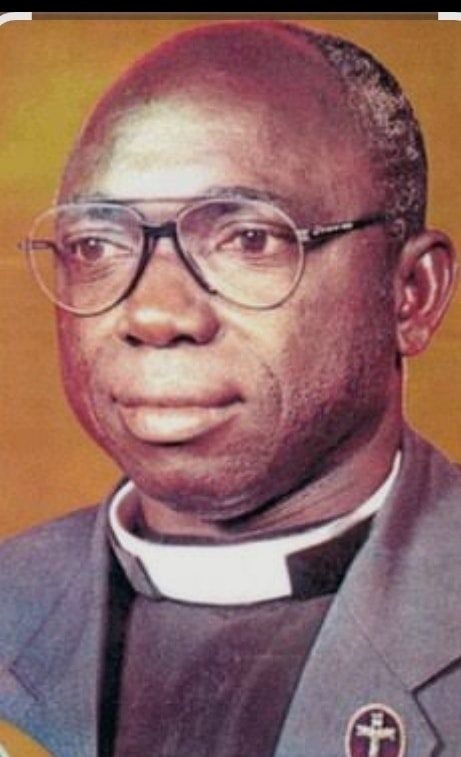
His tenure, though brief, was impactful until it was ended by the military coup that brought General Sani Abacha to power.
The member of the Independent Corrupt Practices and Other Related Offences Commission (ICPC) returned to BSU, now named after him, Father Adasu University, Makurdi (FAUM), as a lecturer in 2001 after his removal from office.
His legacies include the establishment of the Benue State University (BSU) Makurdi in 1993, BENCO roof tile factory, Katsina Ala fruit juice company, and Tarka Foundation, named after a prominent Middle Belt leader and Senator Joseph Sarwuan Tarka.
Alia’s involvement in politics mirrors a trend in Benue State where a Catholic priest like Fr. David Terzungwe Golozo of Gboko Diocese in Benue State, north-central Nigeria, is throwing his heart into the ring.
Fr. Golozo: A new entrant?
In a swift reaction, the diocese of Gboko invoked the provisions of Canon Law detailing that Fr. Golozo stands suspended from sacred ministry because of his prolonged and unauthorised abdication of pastoral duty.
The statement dated 4 September 2025 and signed by Most Rev. William Avenya notes that the embattled priest was assigned as an Associate Priest to St. Edward Parish, Uga, but allegedly absconded from this post for an extended period without permission from the appropriate ecclesiastical authority.
“I suspend you from the exercise of sacred ministry,” the statement read while stressing, “by virtue of this suspension, you are prohibited from the public celebration of and from the public participation in Holy Eucharist or any other ceremonies of worship” (Can. 1331 §1, 1333 §1, §1 CIC).
In line with the provisions of Canon law (Can. 976 CIC), the suspended priest was, however, permitted to celebrate private mass and administer the sacraments “to the people of God only in danger of death.
Voices: Between Critics and Sympathisers
Reactions have trailed this development, with many critics debunking the action, citing it as a wrong decision.
In his social media post titled, “My candid advice to Rev. Fr. David Golozo,” Dr. Mkor Aondona urged the priest “to kindly drop his sudden political ambition to go into politics, and to be elected an assembly member.
The former Special Adviser on Documentation, Research, and Planning to Governor Alia acknowledged that though Fr. Golozois is “an ardent supporter” of the Benue State governor who in his view, “has been doing well in that regard,” cautioned that, “The murky waters of Benue politics at the moment calls for intensified commitment to supporting Governor Alia to consolidate on the gains of his administration, and not for other ordained priests to engage or delve into partisan electable politics, to the extent of vying to be a house of assembly member.”
Dr. Aondona, whom the governor suspended over alleged cases of sextortion and cyberbullying, observed that Fr. Golozo’s “idea can never be viewed and accepted in the light of Fr. Alia’s desideratum involvement and role in politics.”
He maintained that although “the public perception and acceptability of Governor Alia, then and now, is anchored on a unique history and background, duly known and acknowledged. This history is not shareable.”
Reacting to the matter, a Benue-born social critic, Ferdinand Shinyi, queried, “Between a priest engaging in partisan politics and fighting war in the military, which is the lesser evil?”
Equating priests’ involvement in military service with vying for political office, he reasoned that “Despite the many ‘booby traps’ in the path of the priest serving in the military, the Church still allows them to serve.”
Shinyi further asked, “Why is this less complex than a priest aspiring to serve in Parliament or the Executive branch?
“What of the priest offering support services to the fighter pilots who mistakenly drop bombs on innocent civilians in Church on Sunday morning?”
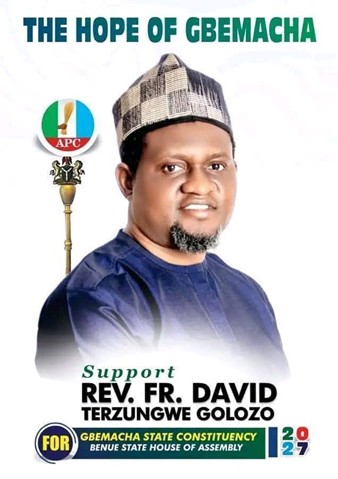
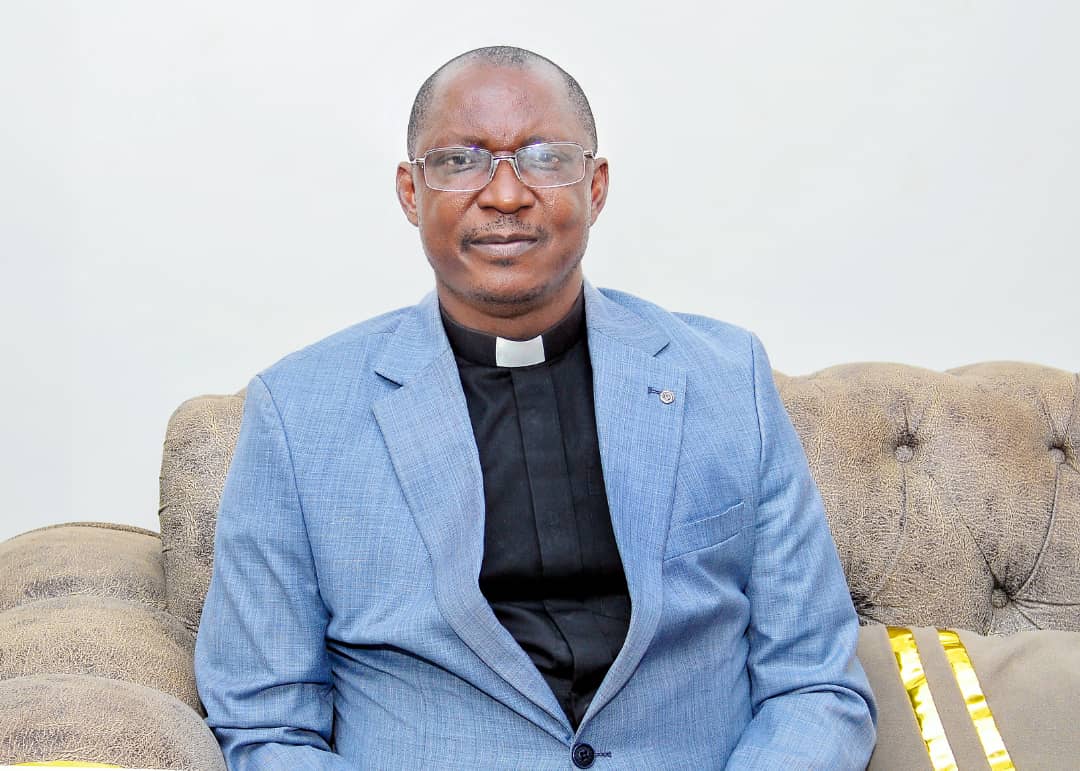
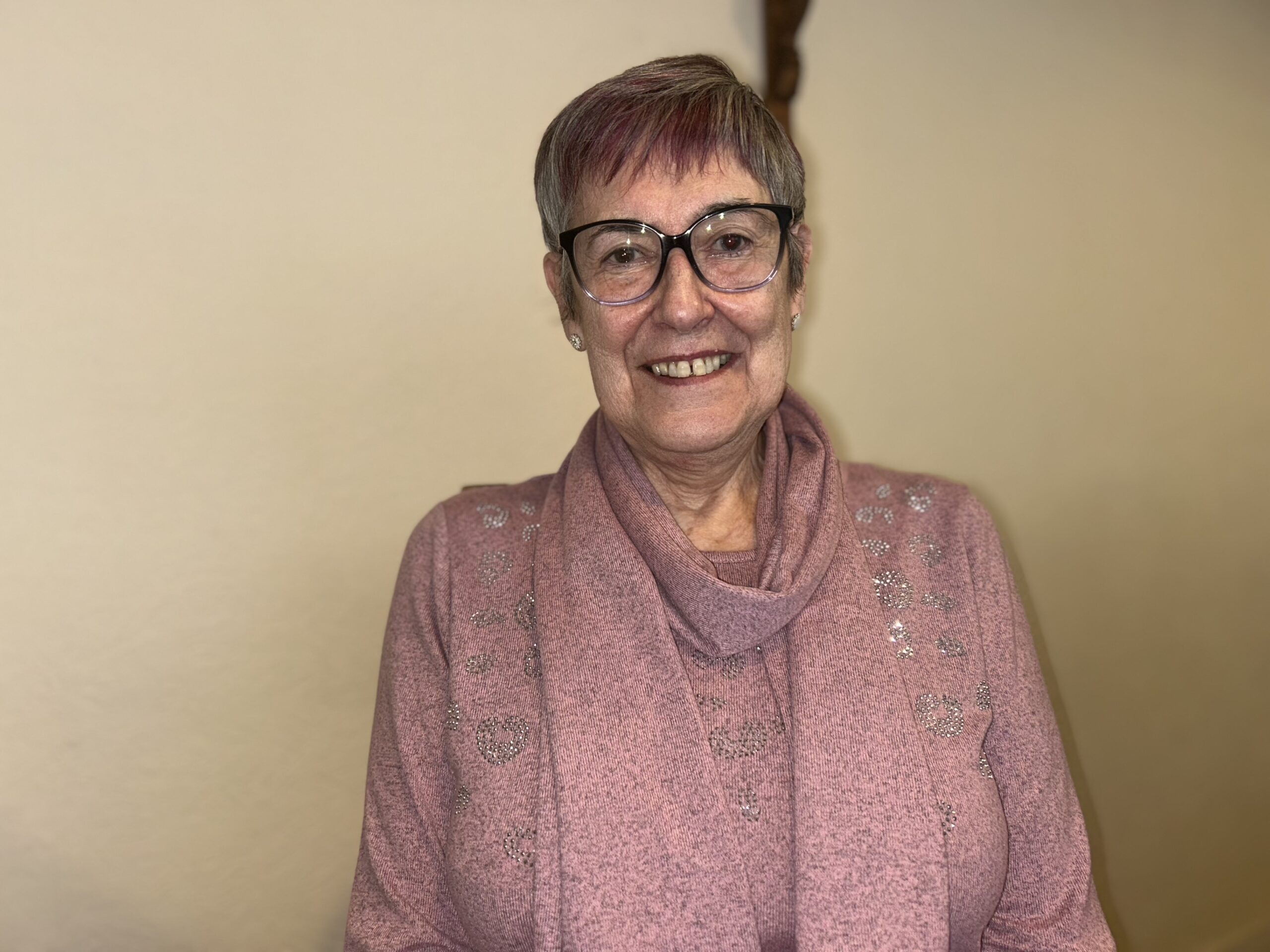
Fr.-David Terzungwe Golozo, aspirant, Gbemacha State Constituency, Benue House of Assembly. Credit: Ferdinand-Shinyi.
Despite the canonical prohibition of clerics to vie for political office, historically, many priests have served as Heads of State and Government, often during times of national transition or by receiving special dispensations.
Priests in history who became Heads of Government, Legislators and Cabinet Members
Among these are Fernando Arturo de Meriño, who joined partisan politics and served as President of the Dominican Republic from 1880 to 1882, as well as Barthélemy Boganda, who became the first Prime Minister (1958–1959) in the Central African Republic.
Just as Fulbert Youlouwas the first President of the Republic of the Congo (1960–1963) in Austria, Ignaz Seipel, a theologian and priest, also served as Chancellor of that country twice in the 1920s.
In like manner, Jozef Tiso became the President of the First Slovak Republic (1939–1945), a satellite state of Nazi Germany.
Also, Jean-Bertrand Aristide, a Salesian priest, was the President of Haiti (beginning in 1991) for multiple terms before he was eventually laicized. In like manner, Fernando Lugo, formally a Bishop, was elected President of Paraguay in 2008 before asking for laicization; after his election, his wish was granted by the Vatican.
Among revolutionary priests in history who took public office are Miguel Hidalgo Costilla, nicknamedthe “Father of Mexican Independence” for leading the initial revolt against Spanish rule in 1810, José María Morelos, arevolutionary leader who led the Mexican War of Independence after Hidalgo, and Abbé Emmanuel-Joseph Sieyès, theprimary theorist of the French Revolution who later served in the French Consulate.
Many priests have served as national legislators and cabinet ministers, among whom are Robert Drinan, a Jesuit priest who served in the U.S. House of Representatives (1971–1981) before withdrawing due to a 1980 papal decree.
Not long afterward, Robert John Cornell, a Norbertine priest, served in the U.S. House of Representatives (1975–1979).
While Ernesto Cardenal, a poet and priest, became a Minister of Culture in the Sandinista government (1979–1987) in Nicaragua, Miguel d’Escoto Brockmann was Nicaragua’s Foreign Minister and later, Libya’s ambassador to the United Nations in 2011.
A similar development occurred in Germany, Ludwig Kaas, when a prominent Catholic priest became a leader of the Centre Party in the Weimar Republic.
Raymond Gravel was elected as a Member of Parliament (2006–2008) in Canadaafter receiving a dispensation.
Conclusion
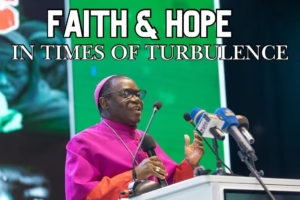
Considering partisanship and the prophetic voice, the Church emphasises that while priests are forbidden from partisan politics, supporting specific parties or candidates, nonetheless, they have a “prophetic mandate” to educate the faithful on moral justice and good governance in line with the provisions of Catholic Social teaching.
While priests who vie for political office often have their priestly faculties suspended during their political service, they still bear the “invisible seal” of Catholic priesthood because the sacrament of Holy Orders confers indelible character on recipients.