


- Pope Leo XIV underscores that “there is no shortage of tombs to open, and often the stones that seal them are so heavy…”
- The Supreme Pontiff noted that God “responds with the power of love that unites and restores life.”
- The 70-year-old religious leader disclosed that “On Easter morning, the women, overcoming their grief and fear, set out,” because “they wanted to go to Jesus’ tomb.“
- His Holiness urged Christians “to bear witness, with the words of faith and the works of charity.”
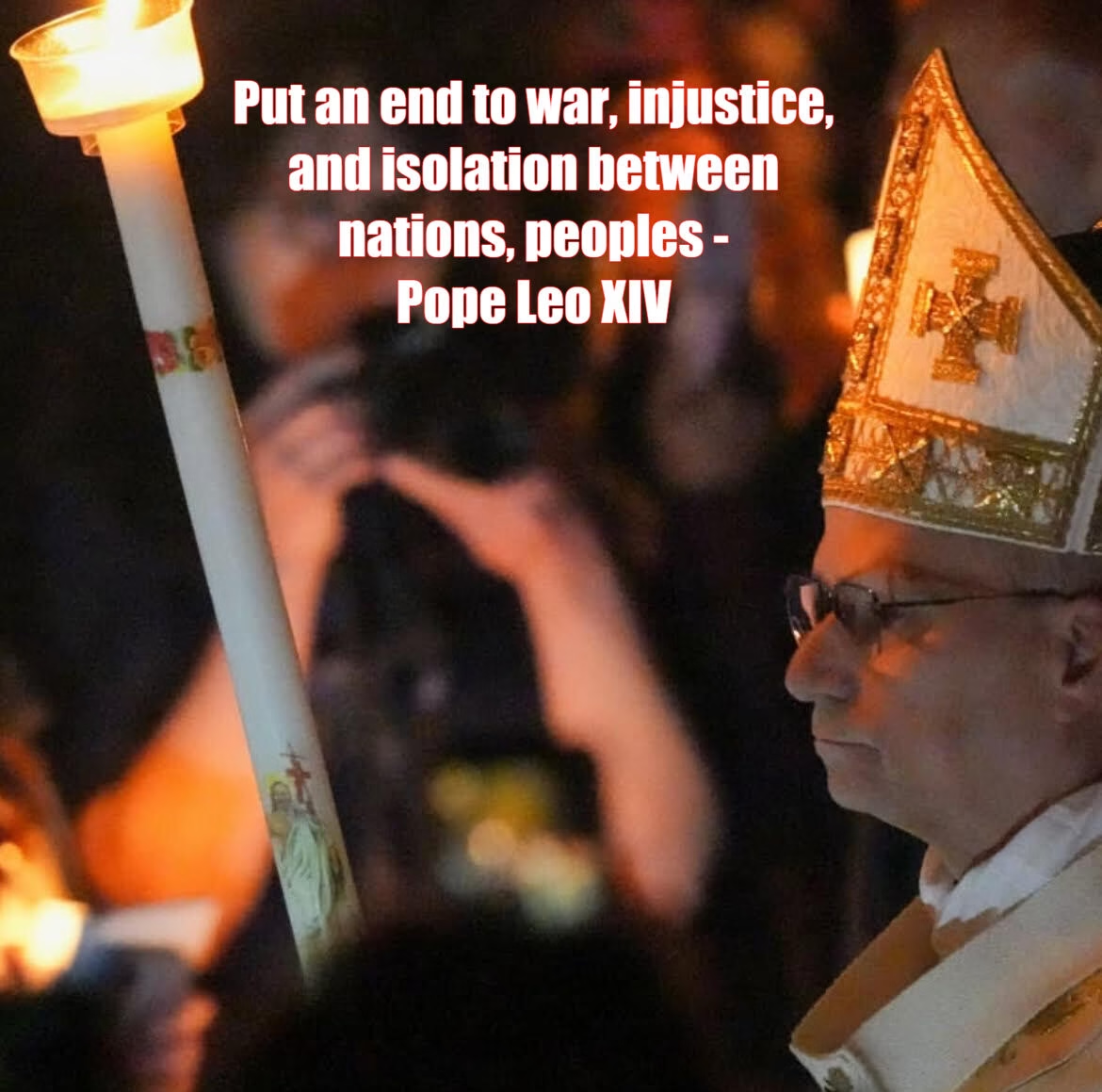
Amid the war in the Middle East, the Holy Father Pope Leo XIV has called for an end to war, injustice, and isolation, which threaten global peace.
Delivering his first Easter vigil homily on Holy Saturday, April 4, at St. Peter’s Basilica at the Vatican in Rome assured that “this holy night […] banishes hatred, brings concord, and subdues the powerful.”
“There is no shortage of tombs to open.”
The Roman Pontiff stressed that “there is no shortage of tombs to open, and often the stones that seal them are so heavy and so well guarded that they seem immovable.
“Some weigh heavily on the human heart, such as mistrust, fear, selfishness, and resentment; others, a consequence of the first, break the bonds between us, such as war, injustice, and isolation between peoples and nations.”
The Vicar of Christ encouraged the faithful not to lose heart, saying, “Let us not allow them [conflicts] to paralyze us.”

Screenshot of Pope Leo during the Mass of the Lord’s Resurrection.
He detailed that “Many men and women throughout the centuries, with God’s help, have removed them, perhaps with great effort, sometimes at the cost of their lives, but with the fruits of good from which we still benefit today.”
According to the Pope, “They are not unattainable figures, but people like us who, strengthened by the grace of the Risen One, in charity and in truth, had the courage to speak, as the apostle Peter says, with ‘words of God’ (1 Peter 4:11) and to act ‘as one who receives this power from God, so that God may be glorified in all things.’”
The Holy Father, who belongs to the Augustinian order, also spoke about the importance of the vigil night in the lives of Christians.
“This is a Vigil filled with light, the oldest in the Christian tradition, called the ‘mother of all vigils.’ In it, we relive the memorial of the victory of the Lord of life over death and hell.
“This ‘holy night,’ then, is also rooted in the place where humanity’s first failure occurred, and extends throughout the centuries as a path of reconciliation and grace.
“We do so after having journeyed, in recent days, as in one great celebration, through the mysteries of the Passion of the God made for us, ‘a man of sorrows’ (Isaiah 53:3), ‘despised and rejected by mankind’ tortured and crucified,” said he.
God “responds with the power of love that unites and restores life.”
He clarified that throughout “salvation history, we have seen how God, faced with the harshness of sin that divides and kills, responds with the power of love that unites and restores life.
“We have recalled them together, interweaving the narrative with psalms and prayers, to remind us that, through the Passover of Christ, ‘having been buried with him in death […] we too may live a new life […] dead to sin and alive to God in Christ Jesus’ (Romans 6:4-11), consecrated in Baptism to the love of the Father, united in the communion of saints, made by grace living stones for the building of his Kingdom (cf. 1 Peter 2:4-5).”
Returning to the essence of Easter, the 70-year-old religious leader described the Jesus paschal sacrifice a “a greater charity, a more complete act of grace,” assuring that “The Risen One is the same Creator of the universe who, just as at the dawn of history, He gave us existence from nothing, so too on the cross, to show us His boundless love, has given us life.”
Reflecting on the liturgy of the word, Pope Leo cited Genesis 1:1 to drive home the lesson that our original beginnings, how “God created heaven and earth – bringing forth the cosmos from chaos, harmony from disorder, and entrusting us, made in His image and likeness, with the task of being His guardians.
“And even when, through sin, humanity failed to live up to this plan, the Lord did not abandon us, but revealed His merciful face in an even more surprising way: through forgiveness.”
He emphasised that “the liturgy has offered us several stages through the sacred texts we have heard. It has reminded us how God stayed Abraham’s hand, ready to sacrifice his son Isaac, to show us that He does not desire our death, but rather that we consecrate ourselves to be, in His hands, living members of a lineage of the saved (cf. Genesis 22:11-12, 15-18). Likewise, it has invited us to reflect on how the Lord freed the Israelites from slavery in Egypt, making the sea a place of death and an insurmountable obstacle, the gateway to the beginning of a new and free life.
“And the same message has echoed in the words of the prophets, in which we have heard the praises of the Lord as the bridegroom who calls and gathers (cf. Isaiah 54:5-7), the fountain that satisfies, the water that makes fruitful (cf. Isaiah 55:1, 10), the light that shows the way of peace (cf. Baruch 3:14), the Spirit that transforms and renews the heart ( Ezekiel 36:26).”
“On Easter morning, the women, overcoming their grief and fear, set out.”
Citing the Gospel of St. Matthew, the successor of St. Peter spoke passionately about “the Resurrection” of the Lord.
Stressing the role of women disciples in the Easter story, His Holiness underscored that “On Easter morning, the women, overcoming their grief and fear, set out,” highlighting that “They wanted to go to Jesus’ tomb. They expected to find it sealed, with a large stone at the entrance and soldiers on guard. This is sin: a very heavy barrier that imprisons us and separates us from God, trying to kill His words of hope within us.
“Mary Magdalene and the other Mary, however, were not intimidated. They went to the tomb and, thanks to their faith and love, they were the first witnesses of the Resurrection.”
The supreme pontiff assured that “In the earthquake and in the angel, seated on the overturned rock, they saw the power of God’s love, stronger than any power of evil, capable of ‘casting out hatred’ and ‘subduing the powerful.’ Man can kill the body, but the life of the God of love is eternal life; it goes beyond death, and no tomb can imprison it. Thus, the Crucified One reigned from the cross, the angel sat on the stone, and the living Jesus appeared before them saying, ‘Rejoice’ (Matthew 28:9).”
“We wish to bear witness, with the words of faith and the works of charity.”
Pope Leo urged everyone in today’s world to “the encounter to which we wish to bear witness, with the words of faith and the works of charity, singing with our lives the ‘Alleluia’ that we proclaim with our lips (cf. St. Augustine, Sermon 256, 1). Like the women who ran to announce it to the brothers and sisters, we too wish to set out tonight from this basilica to bring to everyone the good news that Jesus has risen and that, with His power, risen with Him, we too can give life to a new world of peace and unity, like ‘many men and one man; many Christians and one Christ’ (St. Augustine, Commentary on Psalms 127, 3).
He emphasised the role of male and female religious in the Church, saying, “To this mission are consecrated the brothers and sisters who, present here, come from various parts of the world and will soon receive Baptism. After the long journey of the catechumenate, today, they are reborn in Christ to be new creatures (cf. 2 Corinthians 5:17), witnesses of the Gospel. For them, and for all of us, we repeat what St. Augustine said to the Christians of his time: ‘Proclaim Christ; sow […]. Spread the Gospel; what you have conceived in your heart’ (Sermon 116, 7).
“Let us be inspired by His example and, on this Holy Night, let us make his commitment our own, so that everywhere and always, in the world, the Easter gifts of concord and peace may grow and flourish.”