


Moved by what they describe as prayerful reflection “on the social, economic, and moral realities confronting our nation,” the Catholic Bishops of northern Nigeria have spoken truth to power, demanding urgent steps to save lives and property in the region amid the growing killing of innocent people across the country.
This call was contained in a communique issued at the end of the annual meeting of the Catholic Bishops of Kaduna, Abuja, and Jos Ecclesiastical Provinces held at the Secretariat of the Catholic Archdiocese of Kaduna from 27 – 29 January 2026.
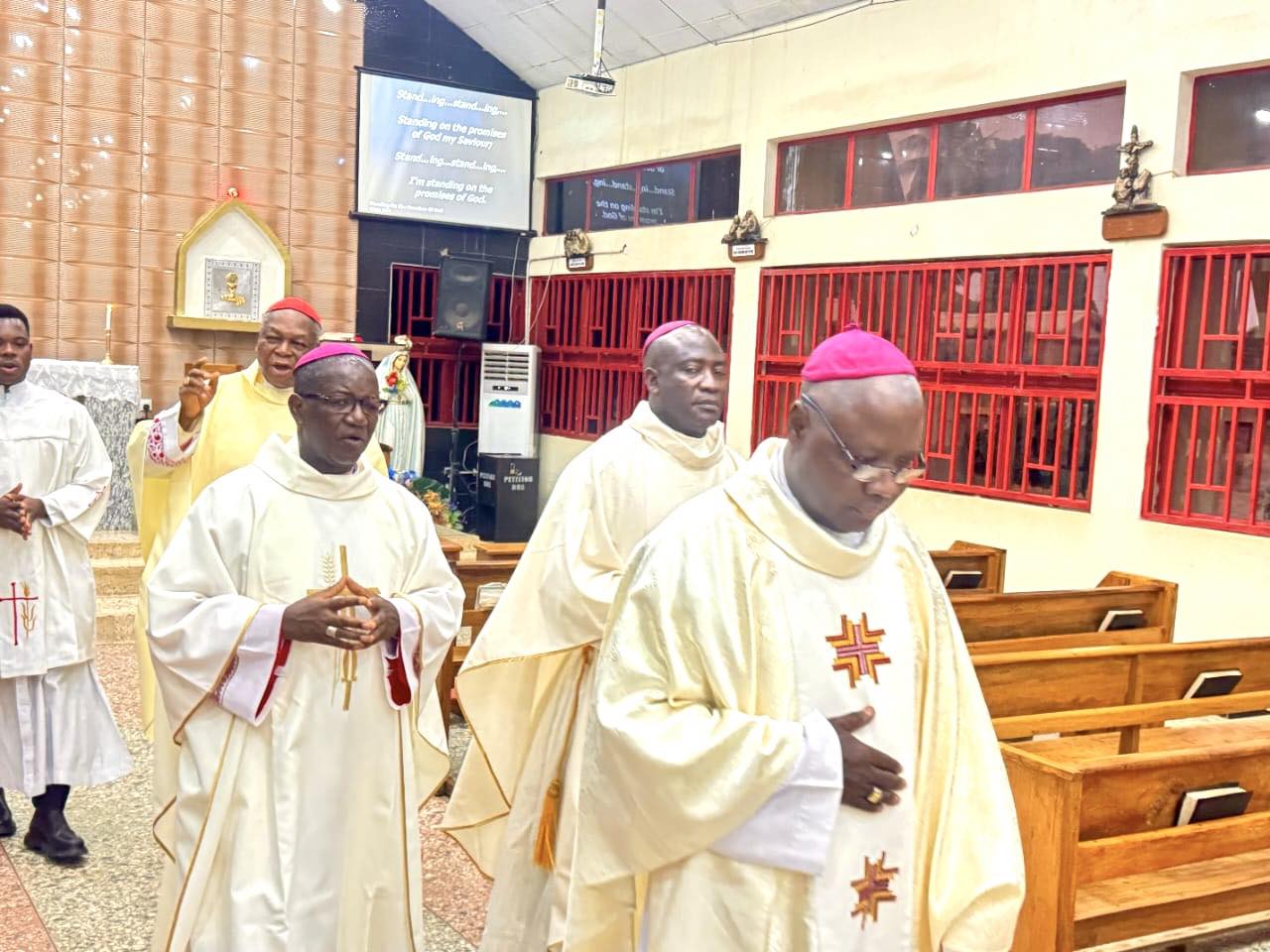
Emeritus Archbishop of Abuja, John Cardinal Onaiyekan, on procession with Bishops Kundi of Kafanchan, Ajang of Lafia and Archbishop Kaigama, the metropolitan of Abuja Archdiocese
Grave concern over the worsening security
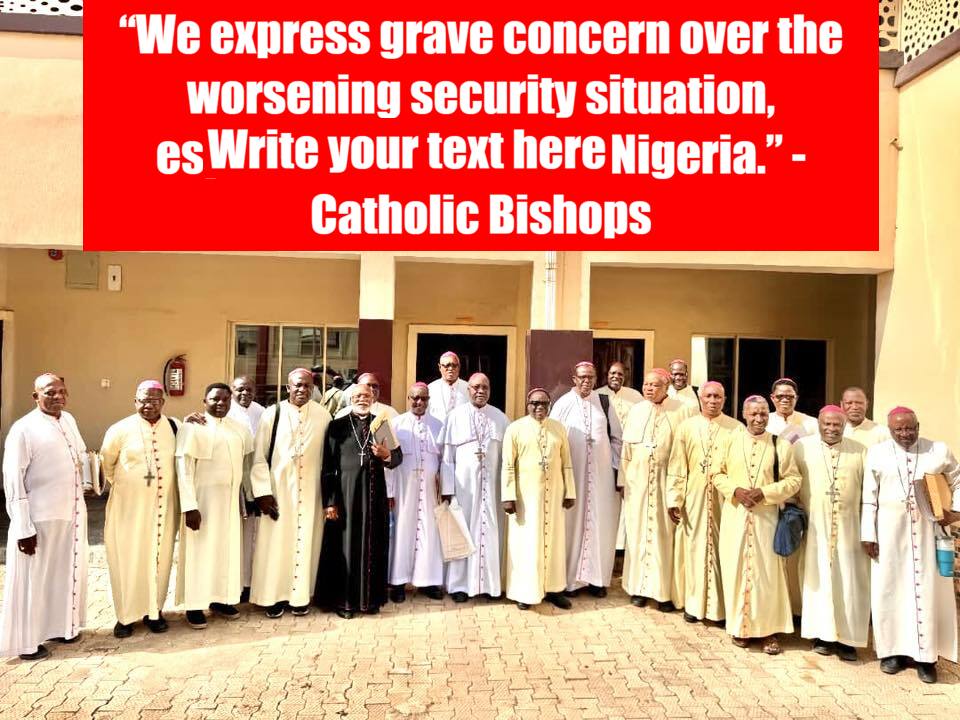
“At the same time, we express grave concern over the worsening security situation, especially in Northern Nigeria. The persistent incidents of kidnapping for ransom, killings of innocent citizens, invasion and occupation of farming communities, and widespread displacements have created fear, trauma, and deep uncertainty among our people,” the Bishops stated.
“A society cannot flourish where human life is continually threatened. We therefore call on all tiers of government and security agencies to intensify efforts towards the protection of lives and property, for peace can only endure where justice is upheld (cf. Isaiah 32:17),” the statement read in part.
Touching on security implications for food security, they observed that “Farmlands meant to sustain life have increasingly become places of danger, forcing many farmers to abandon their means of livelihood and thereby worsening hunger and poverty.”
They provided clues on how to address food insecurity, saying, “We acknowledge the government’s intention to reduce the burden of hunger through the lowering of food prices. Such concern reflects the biblical injunction: ‘You shall not harden your heart or close your hand against your poor brother’ (Deuteronomy 15:7). However, we observe with concern that this policy has produced unintended hardships for farmers. While food prices have declined, the costs of fertilizers, herbicides, seedlings, fuel, and other farm inputs remain excessively high.”
Peace engenders food security, dignity of labour, rural survival
They stressed that “As a result, many farmers are unable to earn sufficient income to meet essential obligations such as education, healthcare, and family sustenance. As Scripture affirms, ‘the labourer deserves his wages’ (Luke 10:7); when those who feed the nation cannot benefit from their labour, discouragement and deeper poverty follow.”
The Fathers of the Church upheld the sanctity of life, urging for justice and the protection of the citizenry.
The prelates expressed optimism that “Northern Nigeria is not endowed with oil wells as found in some parts of the country, Divine Providence has richly blessed the region with vast and fertile agricultural land.”
They emphasised that “If properly harnessed through sound policies, adequate security, and sustained support for farmers, this potential can significantly contribute to national food security and economic stability. As the Psalmist declares, “The earth has yielded its harvest; God, our God, has blessed us” (Psalm 67:6). Yet, blessings neglected soon become wasted opportunities.”
As responsive pastors, they further explained that, “Agriculture must therefore be treated not merely as an economic sector, but as a moral responsibility linked to the dignity of labour, rural survival, and the common good. Policies in this sector must be guided by justice, equity, and inclusion, lest abundance give way to scarcity (cf. Isaiah 5:8).
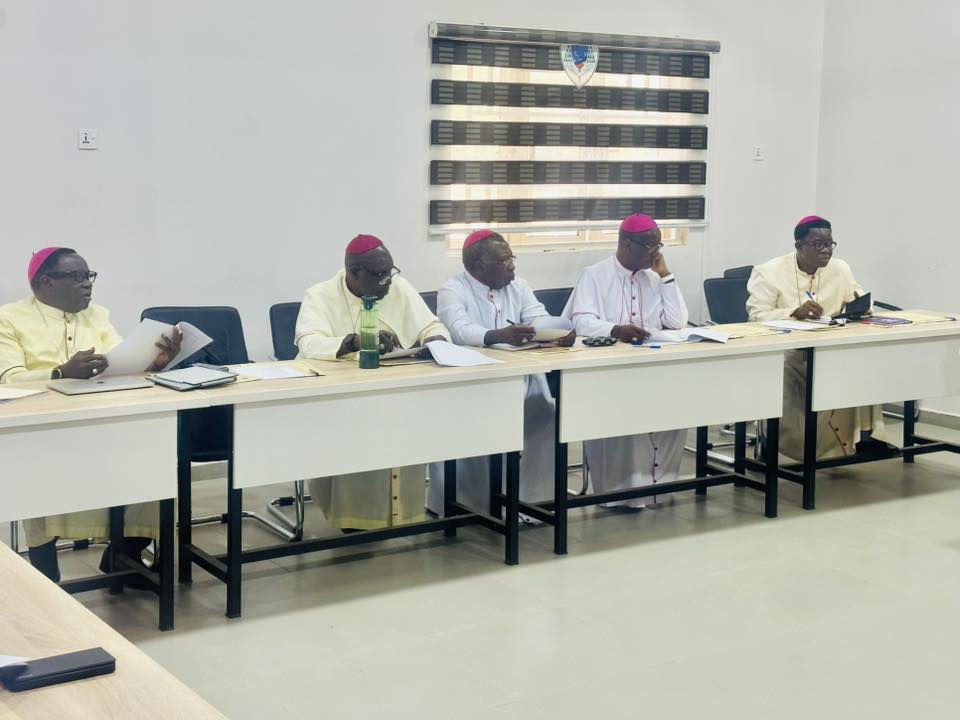
Some of the Bishops at the gathering
The statement criticised the government’s policy flipflops as regards implementing concrete agronomy, saying, “Despite repeated policy commitments by successive administrations to transform agriculture, tangible results remain limited. Access to modern machinery and affordable credit facilities continues to be constrained by administrative bottlenecks and collateral requirements.
“Information on modern farming methods and global best practices often fail to reach rural communities in good time, while agricultural extension services remain weak due to inadequate motivation and institutional support.”
As a recipe, the Bishops urged for “a comprehensive and coordinated review of agricultural policies to ensure sustainability, accessibility, and fairness, especially for small-scale farmers.”
Education key to meaningful, lasting national development
Turning to the education sector in the region, which has 80 percent out-of-school children out of about 20 million in the world, the religious leaders noted, “We further reaffirm our conviction that education remains the foundation of any meaningful and lasting national development. Scripture exhorts us: ‘Train up a child in the way he should go’ (Proverbs 22:6).
“It is, therefore, with deep concern that we recall the closure of schools in some states during the last Ramadan period. The strong reactions that followed reflected widespread anxiety over the disruption of children’s learning and formation.”
Insisting that “educational indicators in Northern Nigeria already reveal serious challenges, policies that interrupt academic activities risk further disadvantaging an entire generation,” they argued that instead of “suspending learning, greater investment should be directed toward improving educational quality, infrastructure, and inclusivity.”
Citing the scripture, “‘My people perish for lack of knowledge’ (Hosea 4:6)” the statement maintained that “educational policies must therefore be guided by wisdom, dialogue, and the overriding principle of the common good.”
Concern over misinformation and false narratives on social media
The Catholic leaders also recognised “the growing importance of communication and information technology in shaping contemporary society” and observed that “When properly used, digital platforms can promote education, participation, and national cohesion.”
However, they expressed “concern over the increasing spread of misinformation and false narratives through social media and other digital channels, often fueling division and mistrust.”
Some priests and religious have recently come under attack over the imprudent use of social media, with calls for urgent social media regulation by the Church in Nigeria.
Leaning on the value of spiritual detox, abstaining from social media use to rejuvenate, the Bishops urged “all citizens and media practitioners to exercise responsibility, discernment, and ethical restraint, remembering the apostolic counsel.”
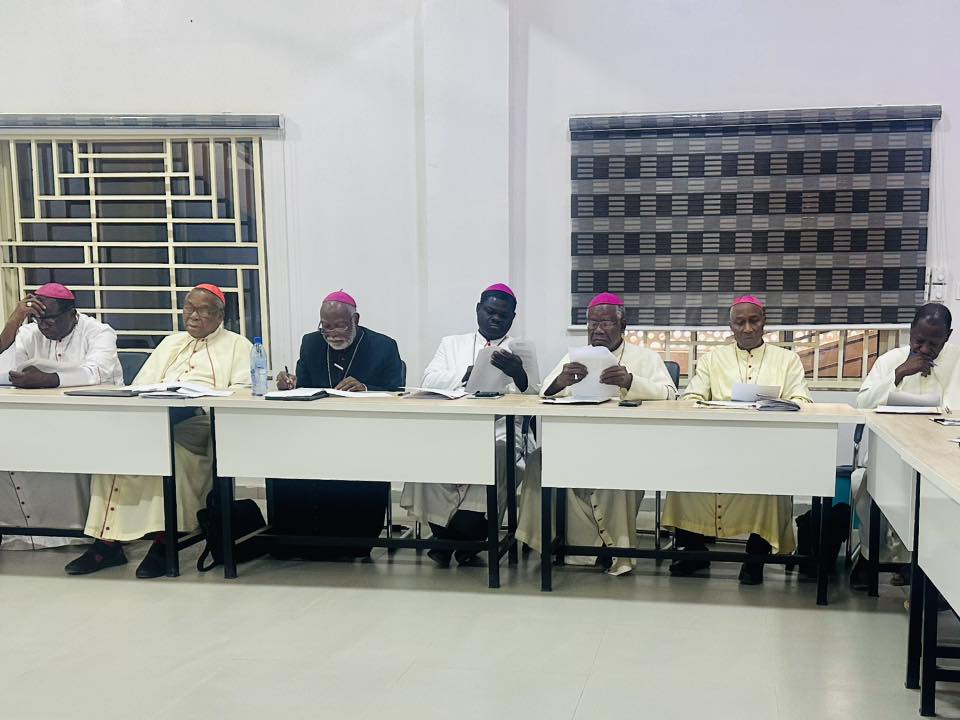
Some of the Bishops during the meeting
Conclusion
The northern Bishops inspired hope for a better country where there is justice, peace and integral development.
The statement underscored that, “Despite the many challenges confronting our nation, we remain firmly anchored in hope. Our hope is sustained by faith in God, confidence in the resilience of our people, and belief in the possibility of renewed commitment to justice, truth, and the dignity of every human person. As the Prophet assures us, “Those who hope in the Lord shall renew their strength” (Isaiah 40:31).
“We therefore call on all leaders and citizens to work together in sincerity and dialogue for the healing, rebuilding, and future of our nation, trusting that with God’s guidance and collective responsibility, Nigeria can yet experience peace, unity, and sustainable development.”
At the Inter-provincial meeting, there were over 20 bishops, one cardinal, and three Archbishops.
Editor’s Notes: All the photos are courtesy of Most Rev. Dr. David Ajang, Catholic Bishop of Lafia Diocese.