


- Reforms in sustainable water availability and safe sanitation systems are crucial
- Peace and security across the continent remain critical
- Ethiopia is positioned to lead in AI, technological transformation
- Africa’s “Sovereignty means owning our narrative.”
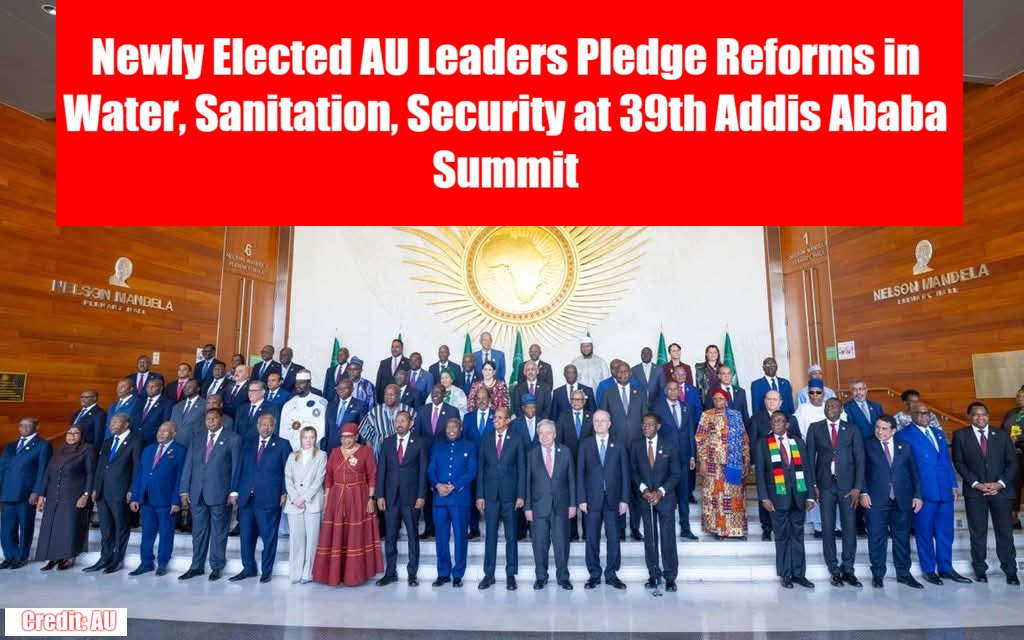
At the just-concluded 39th African Union summit at the AU Headquarters in Addis Ababa, the Ethiopian capital, African Heads of State and Government of the African Union (AU) championed developing a strong African solidarity, financial independence, and a collective push to shape the global agenda.
The gathering, which had the presence of former Heads of State and Government, present distinguished ministers, ambassadors, diplomats, and the leadership of the United Nations (UN) was meant to chart a common front for the growth and emancipation of the African continent to take its rightful place on the global stage.
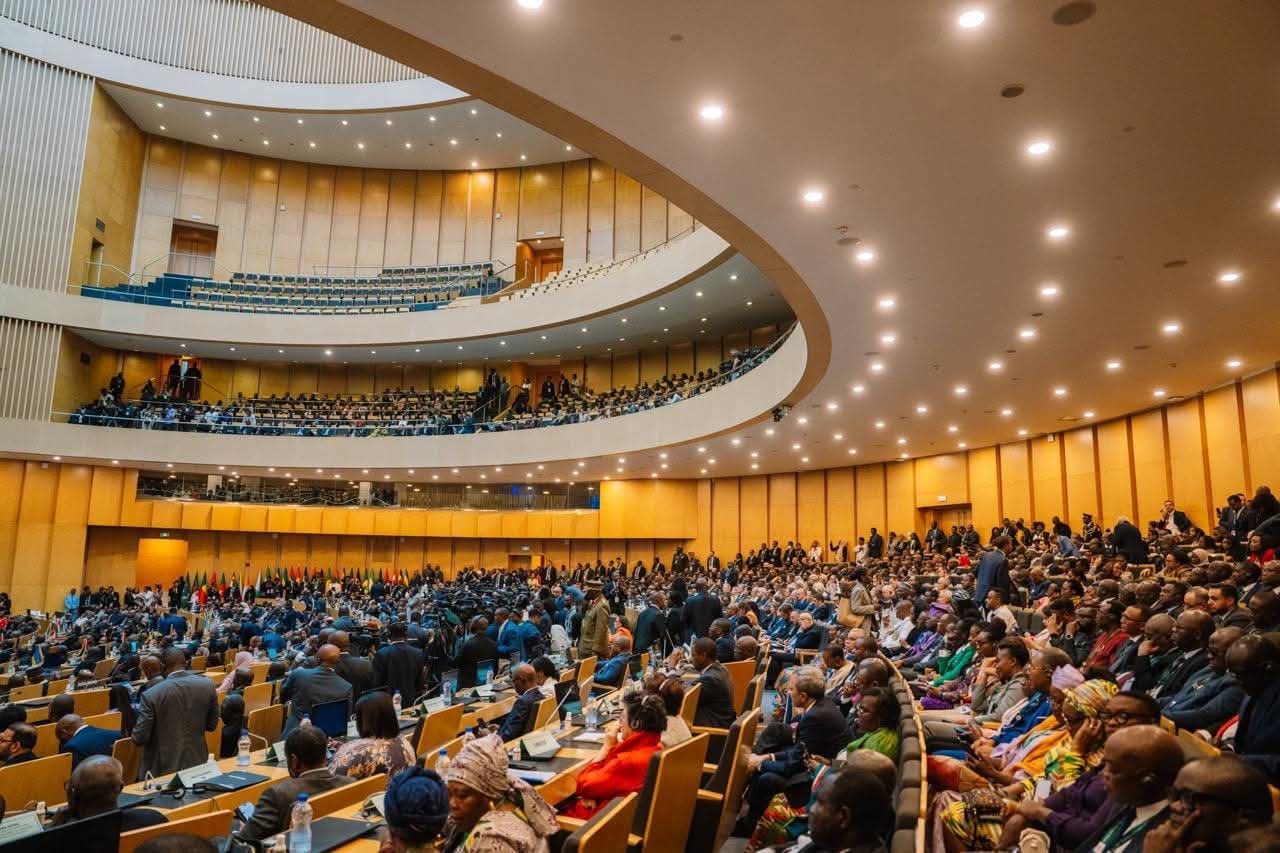
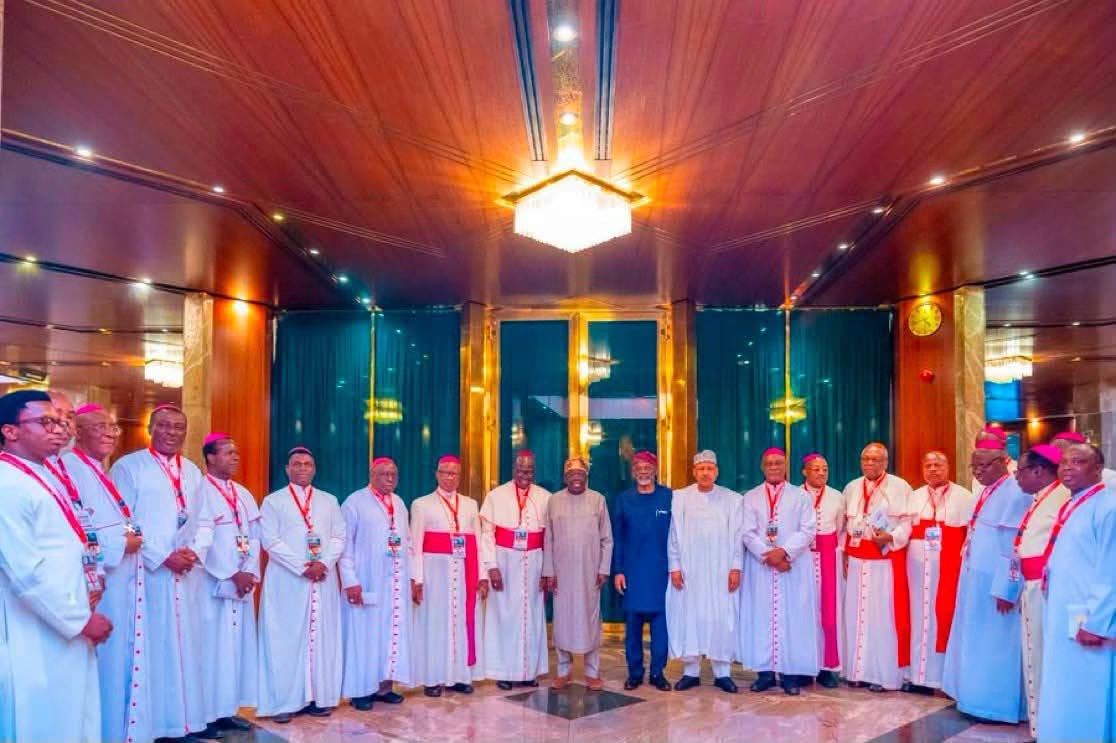
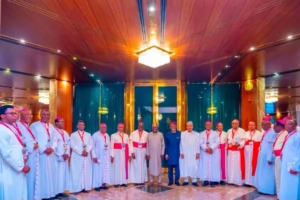
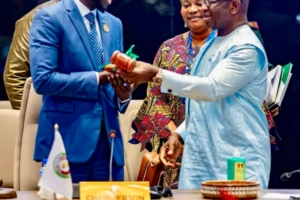
A cross-section of the Heads of State and Government, present distinguished ministers, ambassadors, diplomats, and the leadership of the UN at the event
Reforms in sustainable water availability and safe sanitation systems are underway
The President of the Republic of Angola and the outgoing Chairperson of the AU, H.E. João Manuel Gonçalves Lourenço, earlier on officially opened the 39th African Union (AU) Summit by calling for accelerated action to ensure sustainable water availability and safe sanitation systems.
He said, the 2026 AU theme is key, describing access to water as a political, moral and strategic priority essential for Africa’s development, public health, food security and stability which can no longer be overlooked.
The AU Chair, Lourenço highlighted progress in advancing Agenda 2063, mobilising investment for infrastructure, strengthening continental integration through the African Continental Free Trade Area (AfCFTA), and promoting reforms to improve AU efficiency and reduce bureaucracy.
Peace and security across the continent are crucial
Speaking on peace and security across the continent, Lourenço stressed that Africa’s development depends on “silencing the guns” and addressing ongoing conflicts, particularly in Sudan and the Democratic Republic of the Congo, as well as combating terrorism in the Sahel and Horn of Africa.
He reaffirmed the AU’s rejection of unconstitutional changes of government and warned against legitimising coups through subsequent elections.
Lourenço urged African leaders to adopt measurable commitments that deliver tangible results for citizens and reinforce a resilient, integrated and prosperous Africa aligned with Agenda 2063.
On his part, the Ethiopian Prime Minister, Abiy Ahmed emphasised that Africa should shift from reacting to global events to actively shaping the global agenda, especially as the African Union nears its 25th anniversary.
He called for unity, confidence, and greater continental influence in world affairs and further highlighted that true sovereignty includes owning Africa’s narrative and technological future.
Ethiopia positioned to lead in AI, technological advancement
Ahmed also hinted about Ethiopia’s establishment of an Artificial Intelligence (AI) Institute and plans for an AI University, and concluded with a forward-looking vision aligned with Agenda 2063.
In his words, “I warmly welcome you to Ethiopia a land where human origins are traced, where time is measured differently, where coffee was first shared with the world, a place where deep history, proven resilience, and bold ambition for Africa’s future converge.
“Today, as Africa gathers at a defining moment, we recognise that our continent’s most strategic asset is not only what we extract, but what we design, build, and govern. Progress is achieved when vision is translated into systems and ideas into lasting institutions.
“Here in Ethiopia, we have learned that responsible water management is central to guiding development wisely. The Grand Ethiopian Renaissance Dam now powers homes and industry, exports electricity to neighbouring countries, and shows how African ingenuity can drive shared prosperity across Africa.
“Rivers can become engines of stability when governed for shared benefit. On our land, targeted policy and innovation have enabled wheat self-sufficiency, and large-scale industrial investments are moving us from dependency to production.”
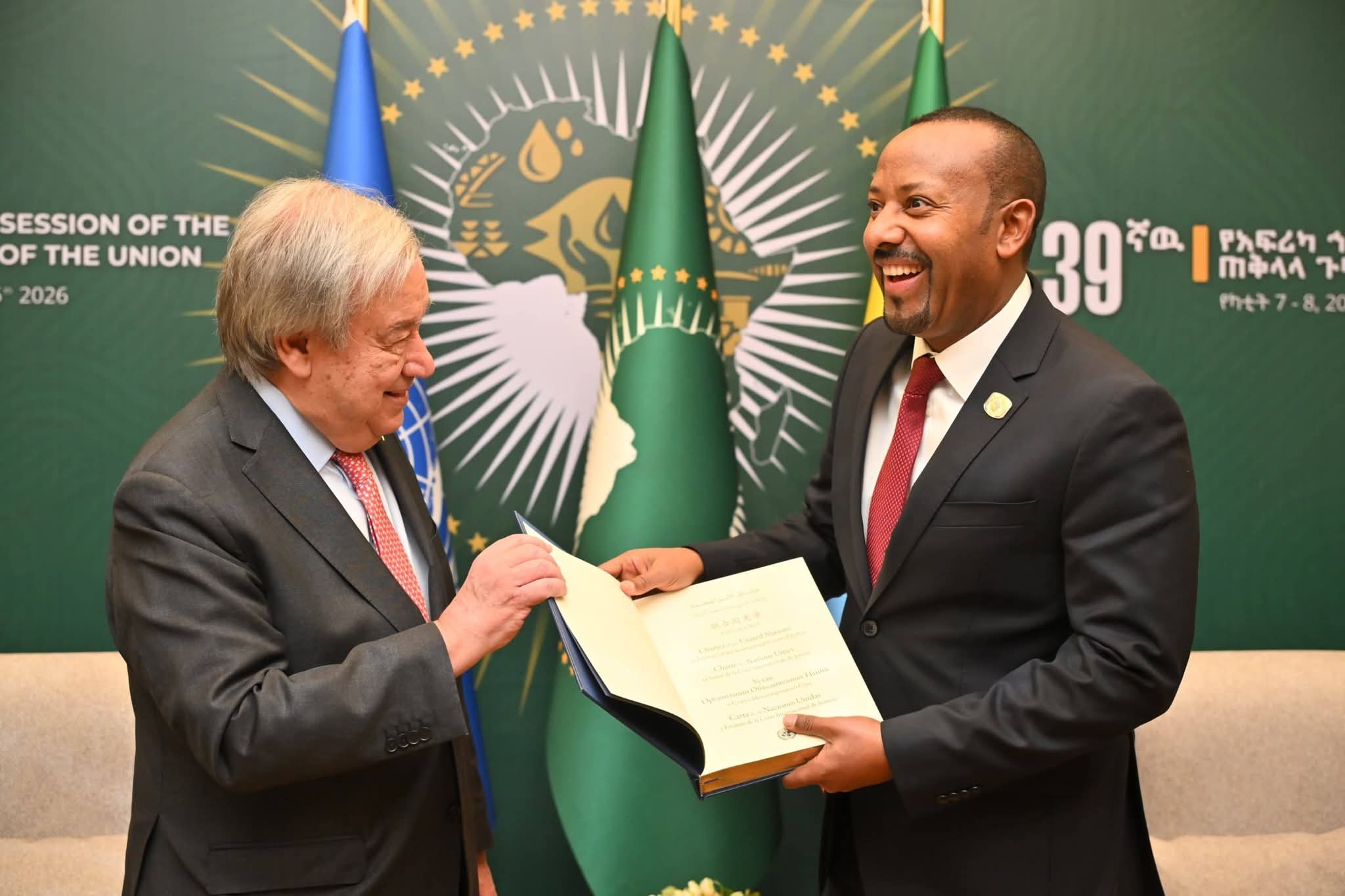
United Nation’s Secretary-General, António Guterres and the Ethiopian Prime Minister, Abiy Ahmed at the gathering
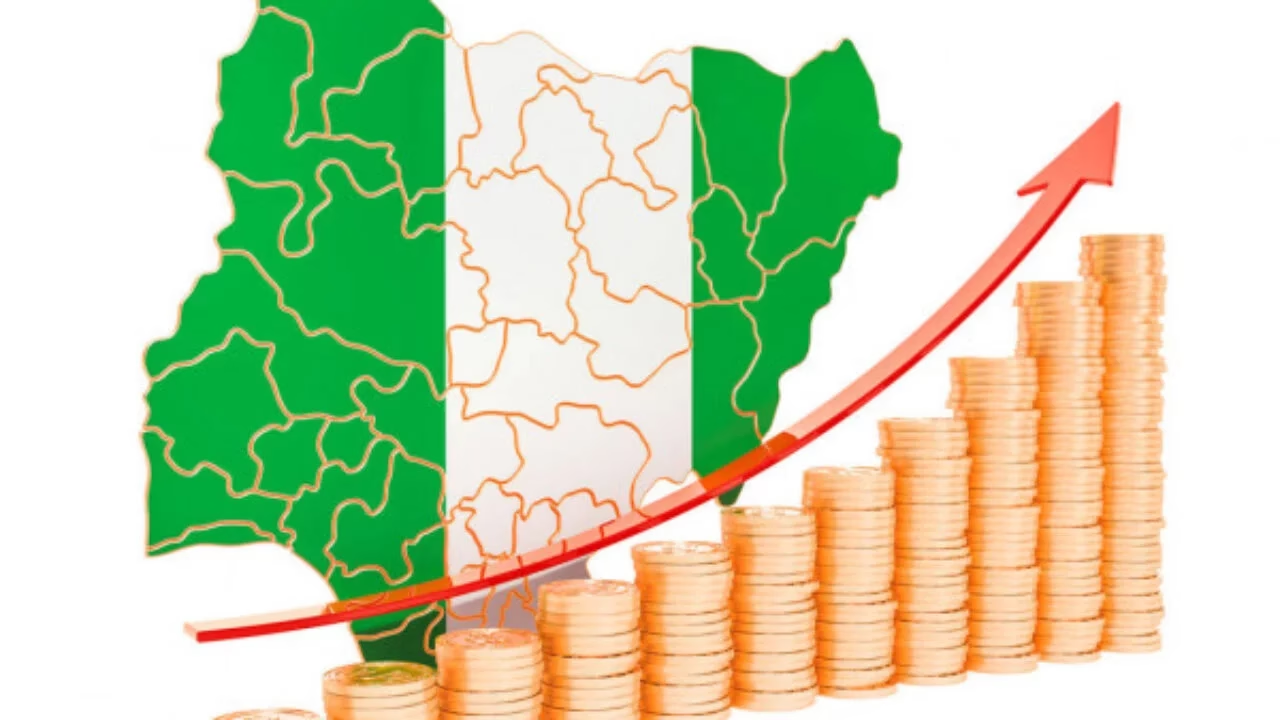
The Prime Minister noted that many African economies are among the fastest growing in the world, hence the need for deliberate efforts to sustain them.
“Projections show that Africa’s growth will be on par, if not above, that of Asia. This is a rare convergence in modern economic history. In Ethiopia, we expect growth of 10.2% by the end of this year. Over the next 25 years, we aim to move from a low-income economy to a globally competitive one anchored in productivity, industrialisation, innovation, and quality jobs.
“Yet growth alone is not enough. Our greatest wealth is our people. By 2035, Africa will add more young people to the global workforce than the rest of the world combined. This demographic reality must be harnessed with purpose, numbers alone will not deliver prosperity.
“That is why we are investing in maternal and child health, expanding early childhood education, and scaling school feeding programmes. Every child must arrive at school nourished, ready to learn, and prepared to contribute.
“We also strongly believe development must include all. Across Ethiopia, urban and rural areas are being transformed, designed to be green, human-centered, and resilient,” he frankly stated.
Ahmed explained that in Addis Ababa, the Riverside renewal has transformed degraded waterways into clean, vibrant public spaces, reducing flood risk, restoring dignity, and strengthening community life, noting that, “As Africa’s urban landscape expands rapidly, we must be intentional. The African city of the future is walkable, green, youth-centered, and grounded in dignity and belonging.
“In rural areas, modernisation is enhancing livelihoods and connecting communities to markets. This integrated approach links development with climate stewardship. One expression of this is the Green Legacy Initiative. We have planted more than 48 billion trees, restored ecosystems and built a living legacy for future generations.
“Yet the global development pathway has come at immense environmental cost, costs borne by communities far beyond those responsible. Therefore, climate action must be anchored in justice and equity, aligning finance, technology, and partnership to enable Africa to thrive. In this spirit, we hosted the Second Africa Climate Summit, and we are preparing to host COP32, ensuring Africa speaks with one voice and presents solutions to the globe.
“This same principle of integration guides our technological transformation under Digital Ethiopia 2030. We are building digital public infrastructure that places citizens at the center of service delivery. By linking Fida, our national digital ID, with payment systems and the muscle of data exchange, we enable secure access to services, seamless transactions, and responsible data sharing, fostering interest and driving our economy forward.
He disclosed that in 2020, Ethiopia established Africa’s first Artificial Intelligence Institute, building on the foundation, he said they are preparing to launch an AI University anchored in the Ethiopian philosophy of medemer synergy through purposeful collaboration.
“This institution will unite human values with machine intelligence, local context with global relevance, and scientific rigor with applied impact. It will ensure technology drives growth and positions Africa as a global contributor in the age of intelligence.
“Ethiopia is also continuing to invest in connectivity through Ethiopian Airlines. We connect people, link markets, and move goods. To sustain this momentum, we are building Africa’s largest airport a next-generation gateway that will anchor our continent in global value chains. Beyond aviation, Ethio Telecom is expanding across Africa, bridging the digital divide and linking our continent’s future through strategic partnerships.
“Yet connectivity must be complete. For a nation like Ethiopia, with over 130 million people, sustainable growth requires diversified access. Ensuring reliable access to the sea through peaceful cooperation is fundamental to our economic future and to long-term stability and prosperity in the whole of Africa.
Conclusion: “Sovereignty means owning our narrative.”
“Excellencies, we meet at a moment of profound global transition. In this era of uncertainty, Africa’s strength will lie in a union that is confident and united. As we approach the African Union Silver Jubilee, the moment marks a transition from foundational unity to functional sovereignty.
“Sovereignty means owning our narrative. Through initiatives like Pulse of Africa, we amplify African voices, because development is never complete without our story. Africa can contribute stability, scale, and solutions to a changing world. But we must do more than respond to crises. We must shape agendas turning vision into action and leading with purpose.
“Every river we manage, every city we design, and every digital platform we deploy must generate resilient opportunity and dignity. By 2063, Africa will be defined by what we secure, what we sustain, and what we share. Ladies and gentlemen, this is our moment, and this is our responsibility,” the Prime Minister emphasised.