




By Naanlep Dabee and Justine Dyikuk
When the news of the Tuesday, 3 February 2026, attacks on the Woro-Nuku communities in Kwara State by suspected Jihadists, which resulted in the death of about 200 people, broke, little did anyone know that at least 5000 of those victims were Plateau State indigenes who had migrated to the community for farming purposes.
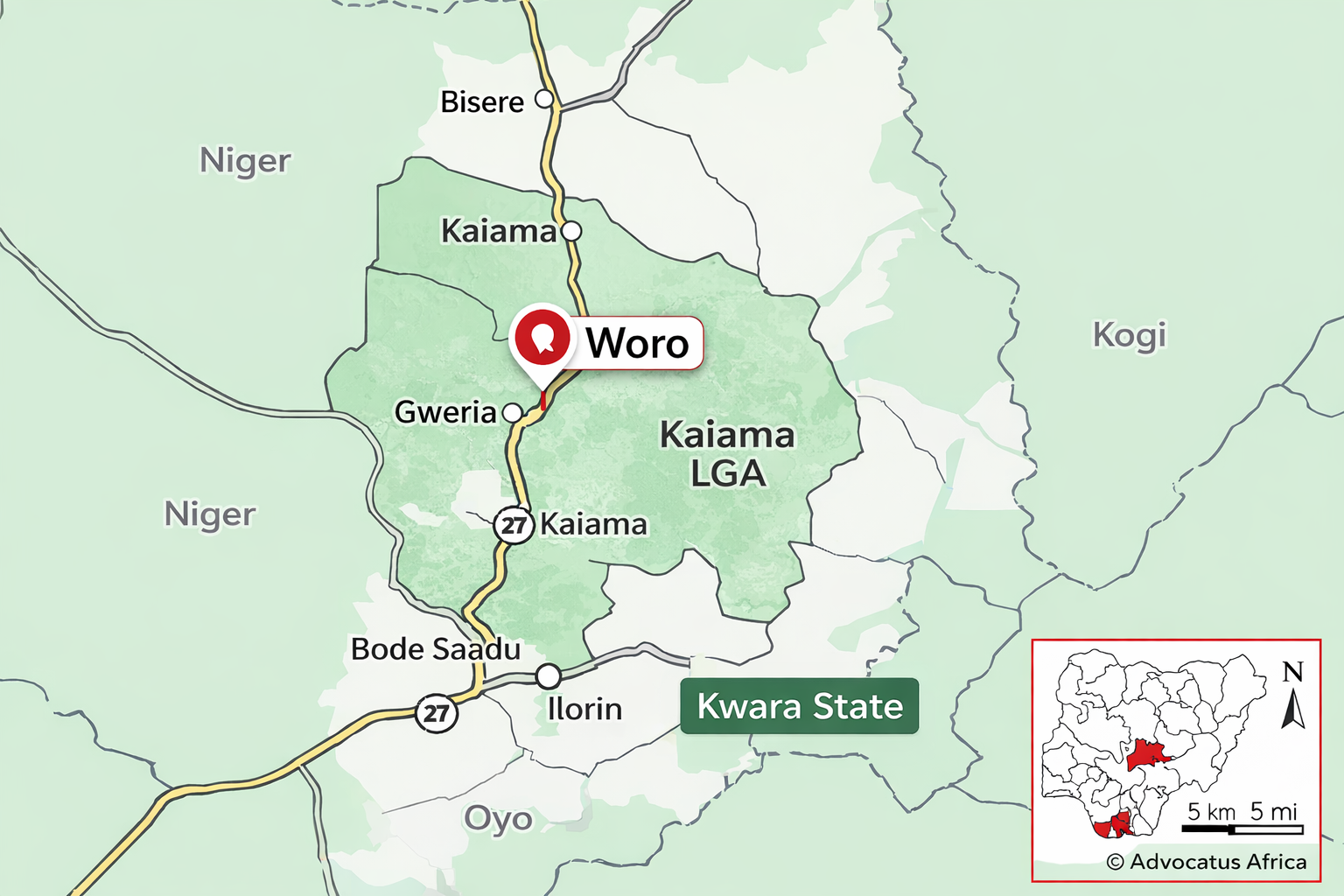
Google Map of Woro Community
In this exclusive story, Advocatus Africa uncovered the gory tales that connect Plateau and Kwara States in the assault on two communities of Kaiama Local Government Area, which occurred around 17:00 local time, and lasted for several hours into the night, leaving behind thousands of Internally Displaced Persons (IDPs) as helpless victims of homegrown terrorism who are nursing their wounds.
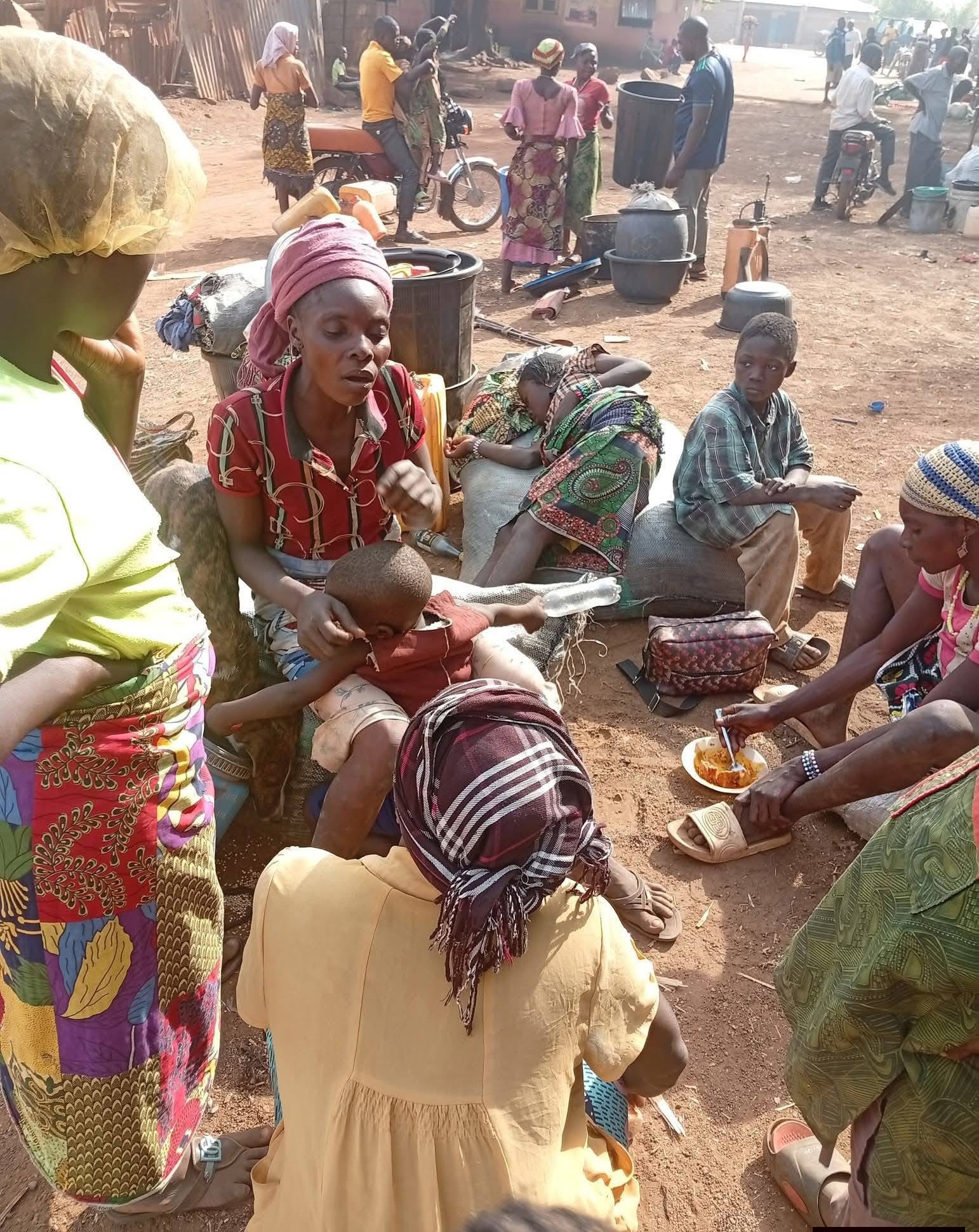
Some of the IDPs from Kwara arriving Ganawuri, Plateau State. Credit: Plateau Intelligentisia
The survivors, mostly farmers who had left Plateau State for the past 30, 25, 18, 15, 11, 6, and 3 years in that order, spoke to Advocatus Africa in Hausa Language, sharing their plight, that of injured victims, and of those who could not make it alive.
Narrating his ordeal, Mr. Net Danladi, a native of Nkun community of Gura District of Ganawuri Chiefdom in Riyom LGA, Plateau State, expressed frustration about the attack and displacement, saying, “We are not happy, as you can see people all around, fleeing the Woro area in Kwara State.”
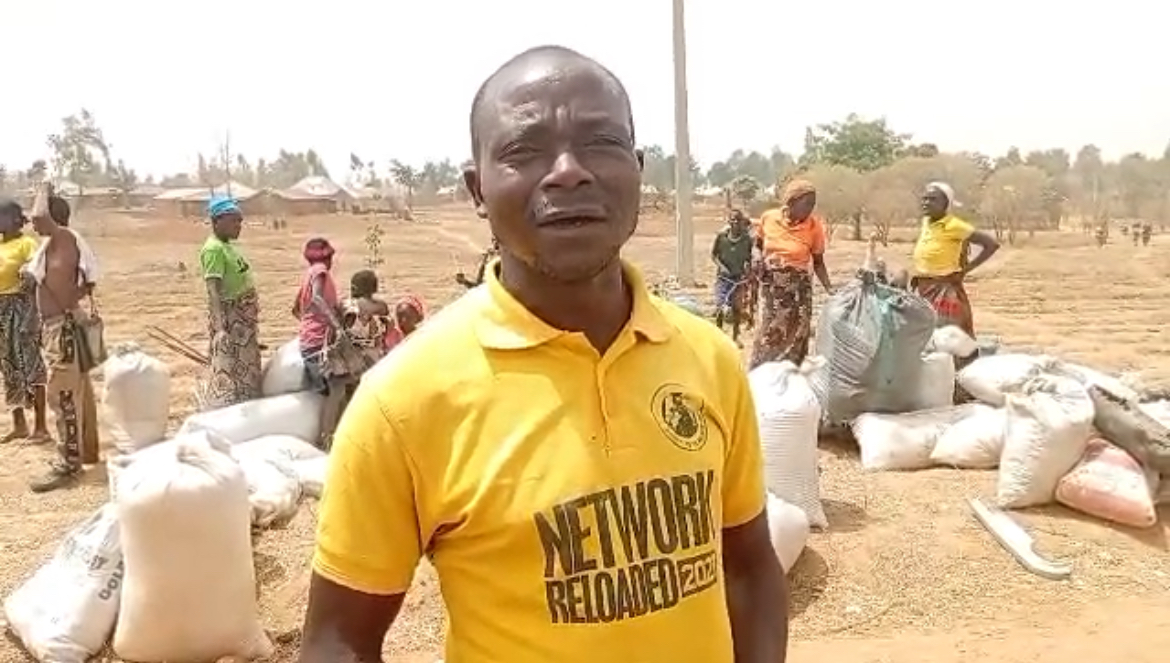
Mr. Net Danladi expresses frustration
The survivor lamented that “The entire area is filled to capacity, and even households find it very difficult to accommodate [their families]. In my house, 10 people are back. The house is congested and there is nowhere to stay. I don’t know where to keep these children; I don’t know where to keep my family.”
He used the opportunity to solicit support, saying, “We need the government to assist the entire community; to do something very urgent and tangible. A lot of lives have been lost already and those who have survived, we plead that the government should assist to keep them alive, especially the children, the younger generation.”
Another survivor and a member of St. Thomas Catholic Church, Woro, Mrs. Foi Danladi, who arrived at her native home of Nkun, spoke to Advocatus Africa at the spot of her evacuation from the truck that brought her home on Ash Wednesday.
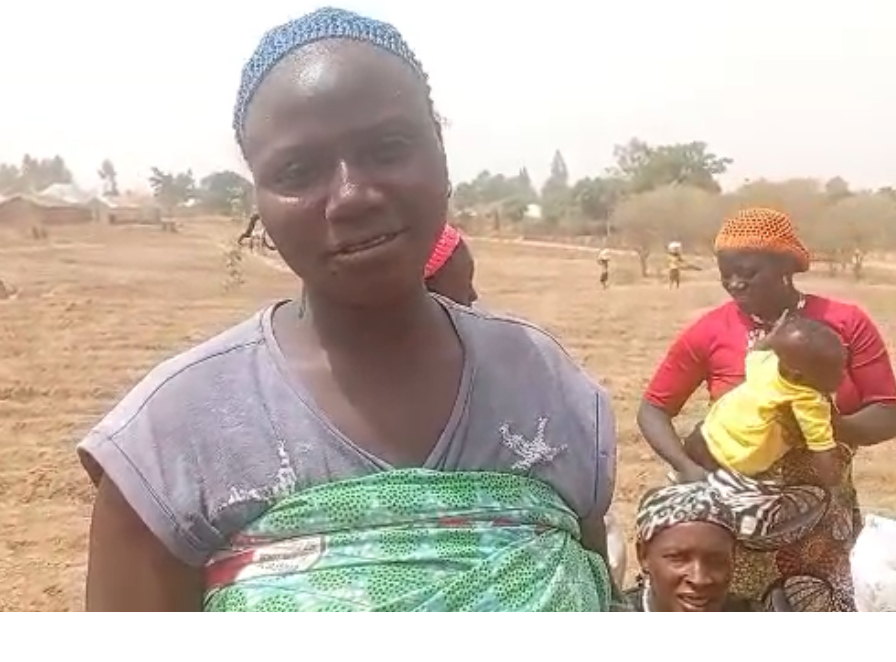
Mrs. Foi Danladi discloses that they are still crying, hoping that other women in captivity will be released
With the sign of ashes on her forehead (a mark given to Catholics as a sign of penance to begin Lent), Mrs. Foi narrated that, “We had returned from the farm and were preparing to cook supper when we heard the sound of guns. We started running, scampering for safety. As we were running, the attackers came after us on motorcycles.
“We ran throughout the night and hid in the bush. In the morning, we started hearing the sound of guns again. They were killing and setting houses on fire. They were also slaughtering and setting people ablaze.
“They also kidnapped many children and women. We don’t know where they are to this day. We are still crying, praying that God would make a miracle possible so that they can return safely.”
Mr. Gwong Deme, a father of 5 and the leader of Angwan Likita community in Woro, also spoke about how “4 people were killed” in his area on that fateful day.
“After we returned from work. Around 5 p.m., we heard gunshots. The terrorists had told the Emir of Woro that they would come and preach, but he refused. They stormed the community and started shooting sporadically, going after people on motorcycles and shooting them. Some people ran away and others hid.
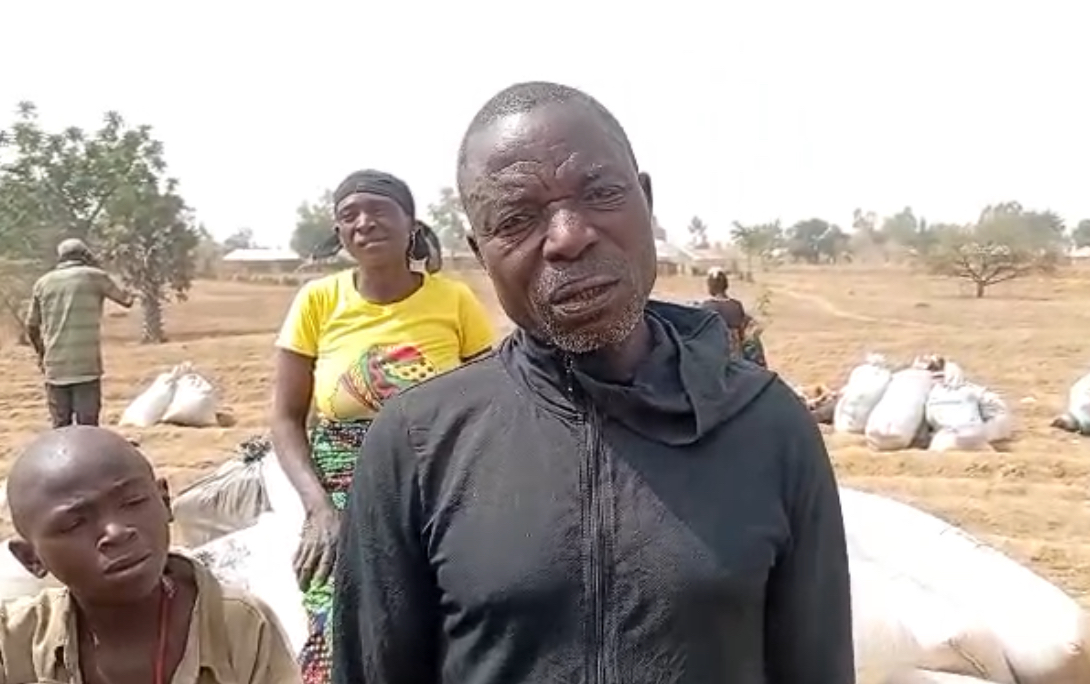
Community leader of Angwan Likita, Mr. Gwong Deme, regrets that 4 people were killed in his domain
“However, they overran some, tied their hands, and shot them at close range. We ran into the bush. Those who were still in the community were removed from their houses and shot; when we got back the next day, they had set shops and houses ablaze, including the Emir’s house,” he narrated.
The community leader said, “I spent 20 years there and raised my children there,” adding, “I always return home when I have the opportunity.”
He stated that the people of Plateau are more numerous in all 8 communities, stressing that he “lost a lot of property” because “Some of our farm produce is in the bush, including the goats and chickens we left behind – we were afraid to go back and retrieve them.”
Deme pleaded with the government to assist them because they have “No houses, and storage facilities.”
Corroborating his account, another victim and a member of St. Thomas Catholic Church, Woro, Mrs. Rebecca Deme, stated that “the bandits said they would come and preach.”
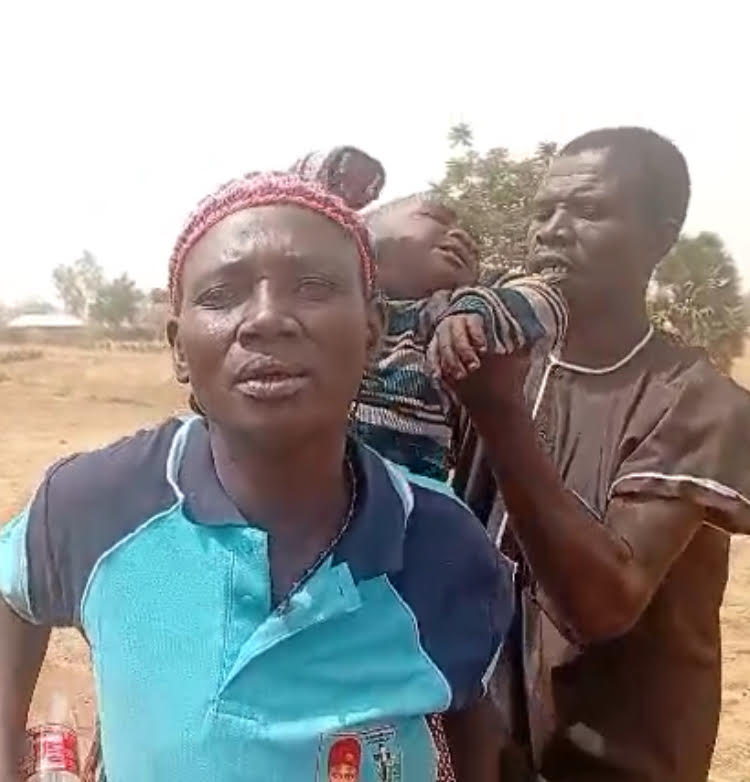
Mrs. Rebecca Deme claims that at first, the bandits chased the soldiers away
Providing a fresh perspective, she claimed that the bandits chased the soldiers at first, but when the Emir brought in military forces again, they did not show up.
However, “when we least expected it, when the soldiers had gone, they attacked the community. By the time the army was contacted again, the attackers had carried out the carnage and left before help could arrive.”
Excerpts of Mrs. Deme’s Interview in Hausa Language – She nurses a crying baby whose mother is still with the terrorists
Mrs. Deme, who is nursing a baby whose mother is among the dozens of women still with the terrorists, said she was also kidnapped on 6 February, but miraculously escaped.
“In my 18 years of stay in Woro, this kind of incident happened only once. Bandits entered a house and killed one person. We vacated the community, but the villages begged us to return, and we did. That incident was not as bad as this one. Over a hundred women are still with the group. We don’t know if they are alive or dead. As such, we would not like to go back.”
Another survivor, Mr. Peter Njim, 43, an indigene of Woro whose older brother was killed, revealed that “dozens of people were killed, ” but he was lucky to escape with 4 of his children.
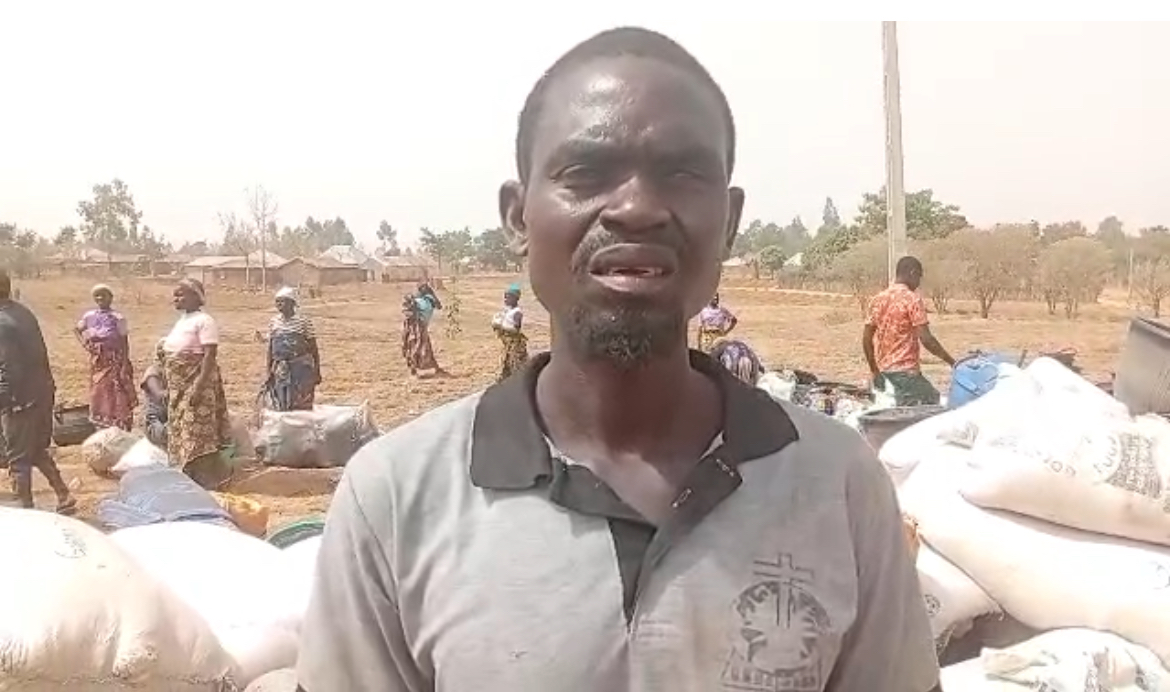
Heartbroken Peter Njim laments that the injured are still in the hospital
The father of 8, whose 4 children had died of natural causes, admitted that “We got help from our parents in Woro and Plateau, that is why we were able to return with our goods.”
Njim, who had stayed in Woro for the past 19 years, lamented that “Some of our people who were injured and shot in the leg are receiving treatment in the hospital.”
Urging for support, the farmer said, “We used to get a bumper harvest, but now, with the way things are, it appears difficult to get a place here to cultivate our crops. We only hope the government can help us.”
Mr. John Nyam and his wife, Mrs. Npian, who had been in the Kwara Community for 24 years, disclosed how the whole family ran and hid in the bush during the attack while soliciting “assistance with food and shelter to cater for their many children.”
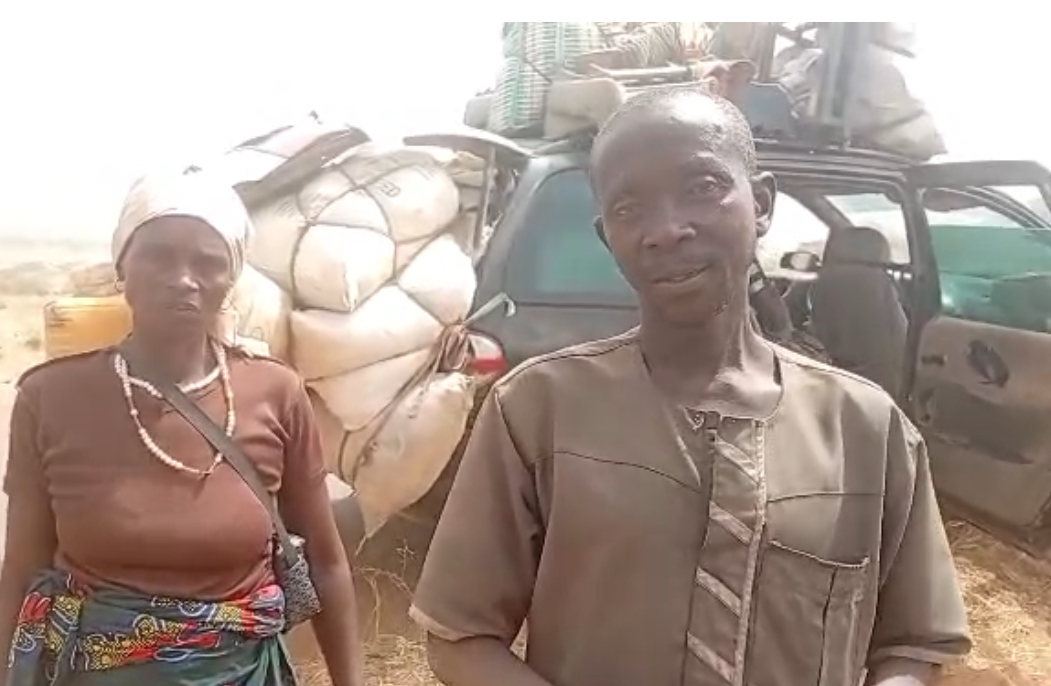
Perplexed couple, Npian and her husband, John Nyam, regret that their labour of 24 years in Woro has collapsed before their eyes
Other survivors gave a different account from that of 43-year-old Njim when they told Advocatus Africa that they had to sell some of their grains to flee the attack and return home to Plateau.
So far, official records (as seen in the link above) indicate that at least 707 IDPs have arrived in Ganawuri, with more on their way, which calls for urgent humanitarian aid because the survivors have constituted a strain on food, water, shelter and medical supplies in the volatile Plateau community.