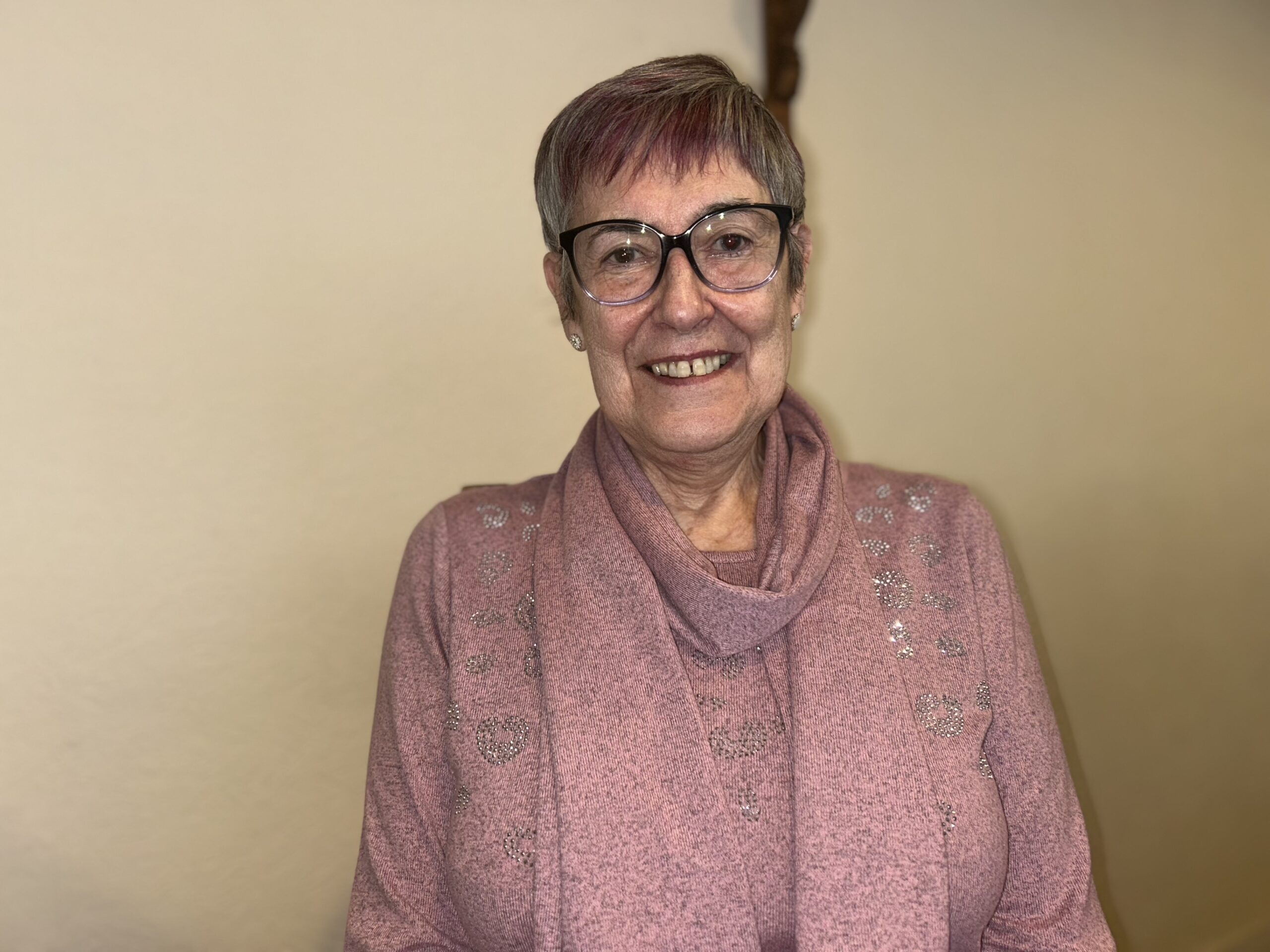


A US-based digital creator and diasporic journalist has criticised the World Bank for recommending that Nigeria should depend on foreign imports despite having the new Dangote refinery.
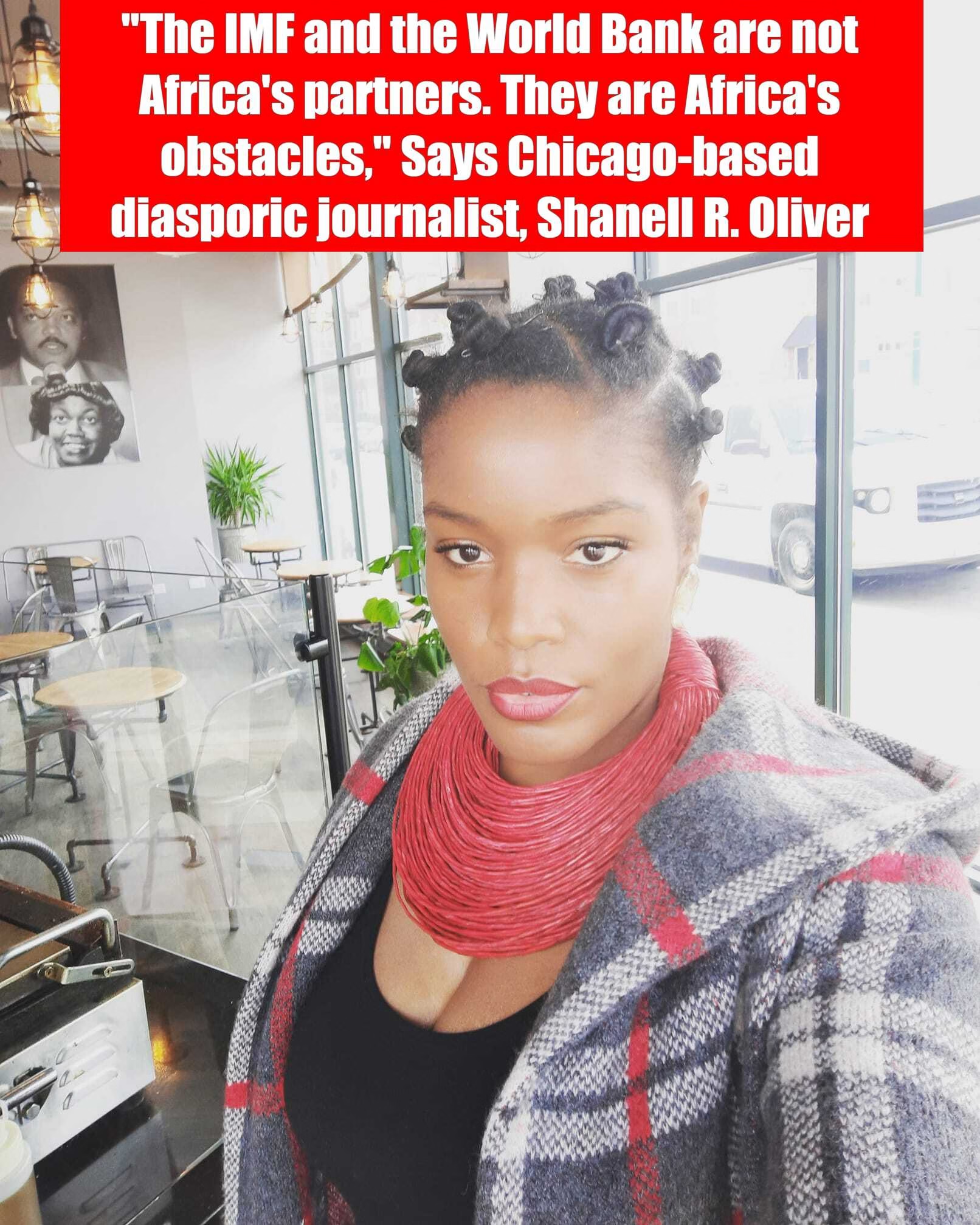
Shanell R. Oliver suggested that the two Bretton Woods institutions, the International Monetary Fund (IMF) and the World Bank, hinder the continent’s progress.
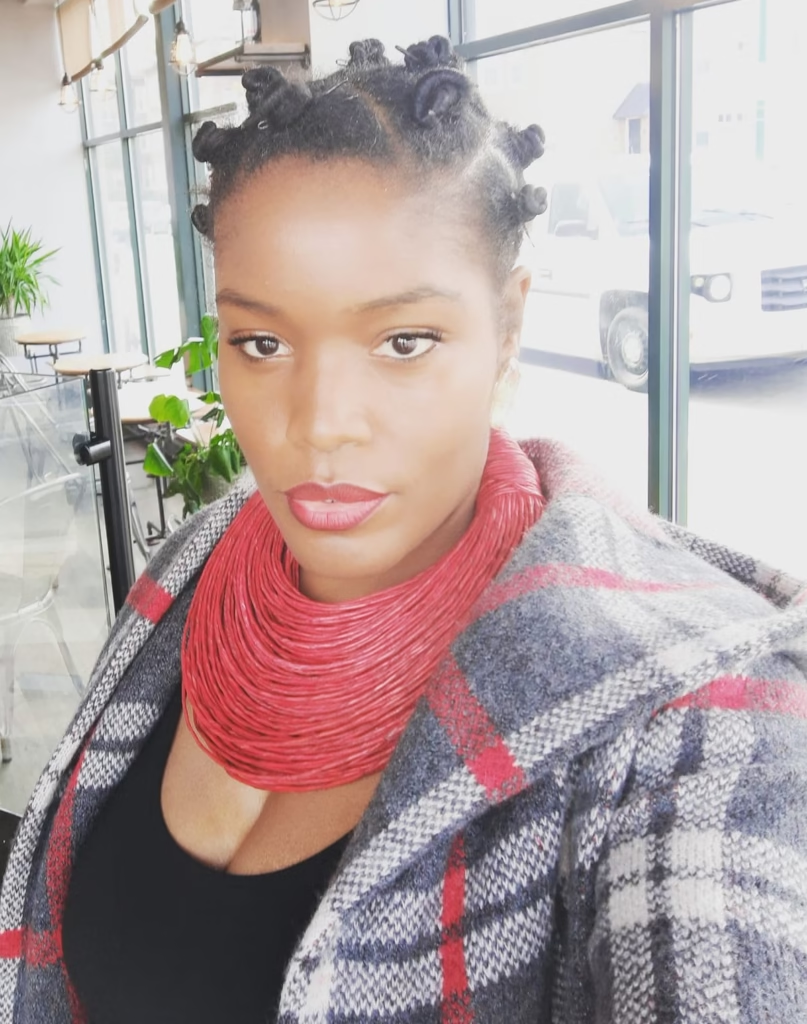
Shanell R. Oliver, Chicago-based digital creator and diasporic journalist. Credit: Shanell R. Oliver
“The IMF and the World Bank are not Africa’s partners. They are Africa’s obstacles. And it’s long past time that African nations treat them that way. And if you didn’t know, now you know,” Oliver stated.
Best known for documenting the African continent through her docuseries, “Africa The Beautiful,” Oliver explained that “Nigeria produces over 1.5 million barrels of crude oil a day. Aliko Dangote built the largest single-train refinery in the world on Nigerian soil. And still, his refinery was forced to import crude from the US, Brazil, and Algeria just to stay operational.
“When Dangote requested 15 cargoes of Nigerian crude, the NNPC delivered 6. The oil existed. It was being exported for dollars to service Nigeria’s IMF and World Bank debt instead. Then the World Bank published a report pushing Nigeria to reopen fuel imports to ‘compete’ with Dangote’s refinery. They pulled it after major backlash. But the message was already sent.”
Credit: Leadership.ng.
The journalist, who is known for the Docuseries Project, which she began in 2022 by travelling to all 54 African countries to share stories that challenge negative narratives and highlight the continent’s rich history and potential, decried the phenomenon of colonial economic policies.
“This is what economic colonialism looks like today. It doesn’t come in ships. It comes in loan agreements,” she said.
Oliver further expressed disappointment with the lack of inclusion of Africa in the World Bank’s top leadership roles.
“The president of the World Bank has always been an American. The managing director of the IMF has always been European.
“A British citizen’s vote in the IMF is worth 23 times more than a Nigerian’s vote. These are not neutral institutions. They were designed under colonialism and they remain colonial in character. Their conditions are reserved exclusively for Africa, for the nations that watched Thomas Sankari get assassinated for rejecting the IMF, that watched Patrice Lumumba get murdered for wanting to keep Congo’s wealth in Congolese hands,” she said.
The advocate for good governance also expressed concern about why Nigeria’s refinery is not celebrated by the West, questioning why the rules keep changing.
“Nigeria finally has a refinery, Africa’s largest, built by a Nigerian, supplying Nigeria’s fuel for the first time in decades, sending jet fuel to Europe during the global energy crisis.
“And the World Bank’s response is to tell Nigeria to let foreign importers back in to compete with it. They like to call it restoring competition. But let’s call it what it actually is. You see, the moment that Africa starts winning, the West finds a way to change the rules,” the digital content creator argued.
Asking rather rhetorically, she said, “Where was the World Bank when Shell was poisoning the Niger Delta?” but clarified that “Between 1976 and 2001, there were over 6,800 oil spills in Nigeria’s Niger Delta. European oil companies contaminated groundwater at levels 900 times above WHO safety limits.
Credit: Vanguardngr.com.
“A 2023 report described it as an environmental genocide. Oil spills in the Delta are connected to 16,000 neonatal deaths every year. Life expectancy dropped to just 41 years.”
Analyst lampooned the Bretton Woods institution, saying, “The World Bank issued no emergency reports, imposed no conditions on European governments. They didn’t say a word. But the moment a Nigerian builds a refinery that threatens European import dominance, they publish a report.
“Then they quietly take it down a couple of days after Dongote pushes back because they knew exactly what they were doing. And then they get called.”
She stressed that “The consequences of saying no have never been economic,” assuring that “They have always been existential.”
Oliver maintained that “Every nation has a sovereign right to determine what it does with its own natural resources,” and surmised that “No institution controlled by nations that didn’t just colonise Africa, but systematically genocided its people, looted its resources and built entire economies on African blood and labour have any moral authority over a single grain of African soil.”