



...Deputy Chairperson Demands Action, Resources for Women, Peace and Security
By Dangwam Jude Dabee
The African Union Commission has called for stronger institutional action, resources and accountability to ensure that its commitments to Women, Peace and Security translate into tangible improvements in the lives of women and girls across the continent.
Deputy Chairperson of the African Union Commission, H.E. Amb. Selma Malika Haddadi, made the call on Tuesday, September 15, 2026, at the African Union Headquarters in Addis Ababa, Ethiopia, during the launch of the Strategic Plan 2026–2028 of the Office of the Special Envoy on Women, Peace and Security.
Representing the Chairperson of the Commission, H.E. Mahmoud Ali Youssouf, Amb. Haddadi said the three-year Strategic Plan offered the AU an opportunity to move beyond declarations and embed Women, Peace and Security within the institution’s core planning, budgeting, programming and accountability systems.
“The question before us is, therefore, how we translate our commitments into the design of our policies, the allocation of our resources, the implementation of our programmes, and the measurement of our performance,” she said.
The call comes against the backdrop of conflicts and humanitarian crises across Africa, where women and girls are often among those most affected, while women peacebuilders and community leaders continue to contribute to conflict prevention, mediation and peacebuilding.
Amb. Haddadi stressed that Women, Peace and Security must no longer be treated as an issue at the margins of the African Union’s institutional priorities.
“Women, Peace and Security cannot sit at the margins of our institutional priorities. It must be central to how we respond to the challenges facing our continent,” she said.
She explained that conflict prevention and mediation, peace support operations, governance, humanitarian action, recovery and reconstruction, and sustainable development were interconnected areas in which women were both affected by challenges and actively contributing to solutions.
“Women are affected by, and contribute to, every one of these areas,” she added.
The Deputy Chairperson said the ambition should be to build a more coherent African Union in which its various organs and institutions work together to advance the Women, Peace and Security agenda.
She described the new Strategic Plan as an important framework for the Office of the Special Envoy, while stressing the need for stronger coordination among the African Union Commission, AU organs, Member States, Regional Economic Communities and Regional Mechanisms, civil society and development partners.
But for Amb. Haddadi, coordination alone would not be enough unless the commitment was reflected in how the AU conducts its own institutional affairs.
“If Women, Peace and Security is a priority of the Union, it should be visible in our planning and programming. It should inform resource decisions. And it should be incorporated into how we assess performance and report results,” she said.
She also placed accountability at the heart of the agenda, warning that the appearance of Women, Peace and Security in policies and official discussions should not be mistaken for progress.
“Our measure of progress cannot simply be whether WPS appears in our policies or discussions,” she said.
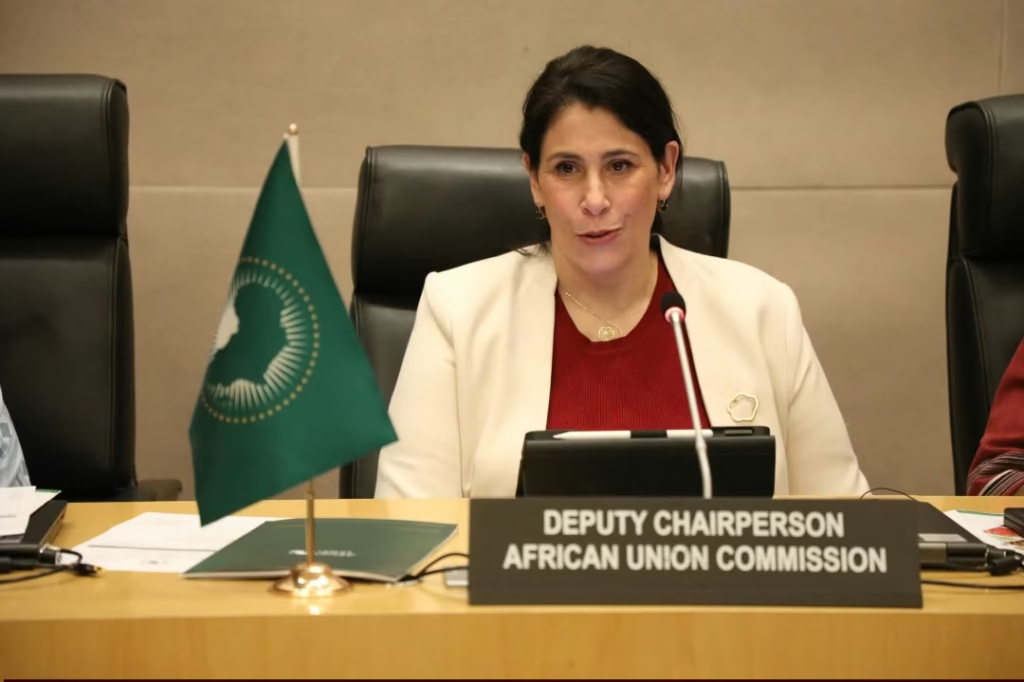
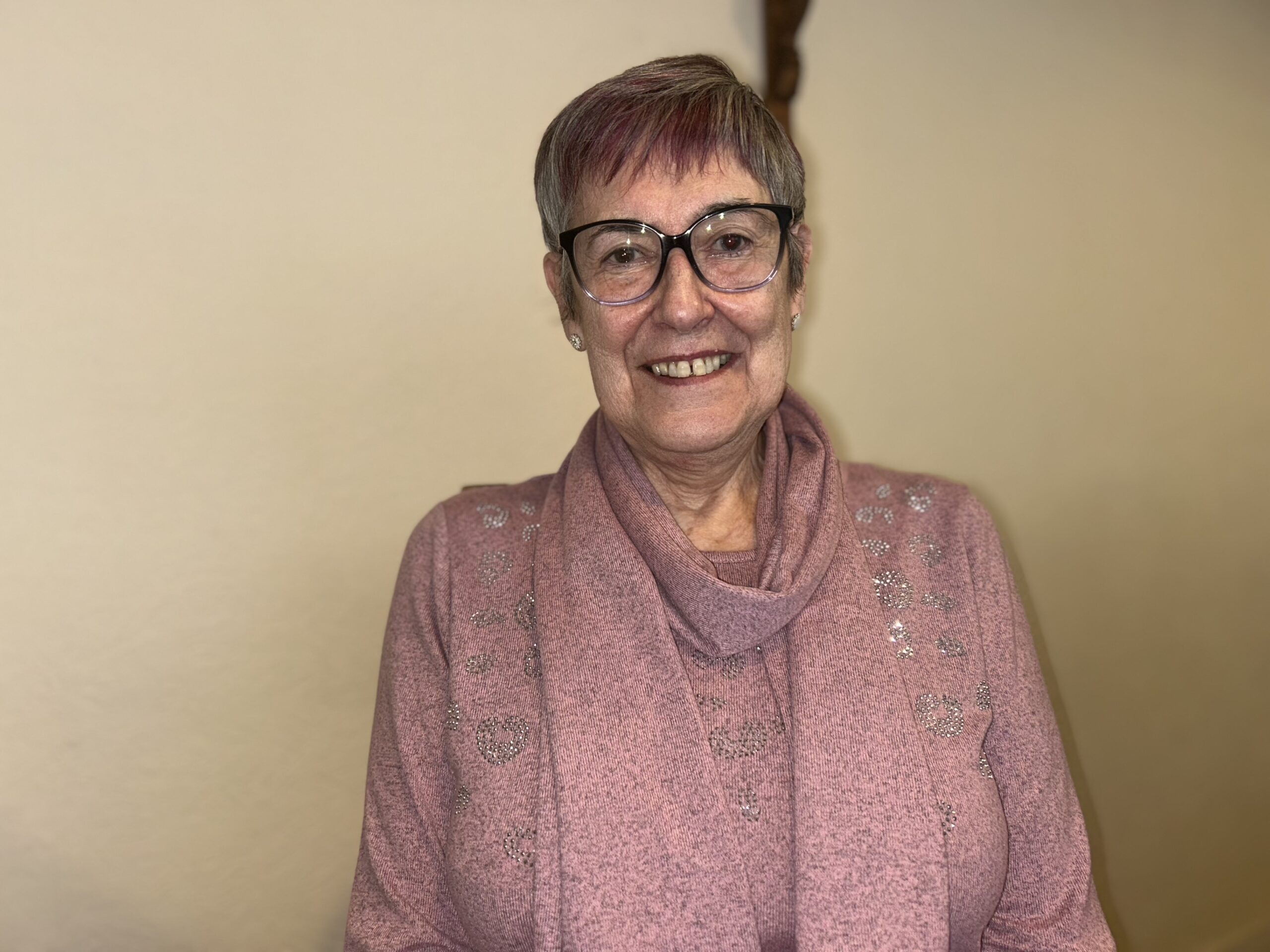
Deputy Chairperson of the African Union Commission, H.E. Amb. Selma Malika Haddadi.
“We must increasingly ask whether those commitments are changing the way our institutions operate and, ultimately, whether they are producing better outcomes for women and girls across the continent.”
Amb. Haddadi said responsibility for delivering the agenda belonged to the entire Union and could not be left solely to the Office of the Special Envoy on Women, Peace and Security.
“It requires leadership across the Commission and AU organs. It requires Member States and regional institutions to translate continental commitments into national and regional action,” she said.
She also emphasised the importance of sustained engagement with women peacebuilders and civil society, whose experiences and expertise, she said, must continue to shape AU policies and approaches.
Most importantly, Amb. Haddadi argued that Women, Peace and Security should not be viewed as another obligation added to the African Union’s already extensive responsibilities.
“Most importantly, it requires us to recognise that Women, Peace and Security is not an additional obligation placed upon the Union. It is part of delivering effectively on mandates we already have,” she said.
“We cannot speak credibly about preventing conflict, building peace and strengthening resilient societies without fully recognising the leadership, experiences and contributions of women.”
A three-year test
The launch of the 2026–2028 Strategic Plan now presents what the Deputy Chairperson described as an opportunity to institutionalise the agenda and make its implementation sustainable.
Amb. Haddadi reaffirmed her commitment to supporting that process, particularly by ensuring that Women, Peace and Security becomes increasingly anchored within the AU’s planning, budgeting, administrative and accountability systems.
“The success of this Strategic Plan therefore depends not only on the Special Envoy and her Office. It depends on how far we make its objectives part of our collective responsibility across the Union,” she said.
She challenged the African Union to use the next three years to close the gap between policy and action.
“Let us use the next three years to strengthen that coherence: to connect policy with implementation, commitments with resources, and ambition with accountability.”
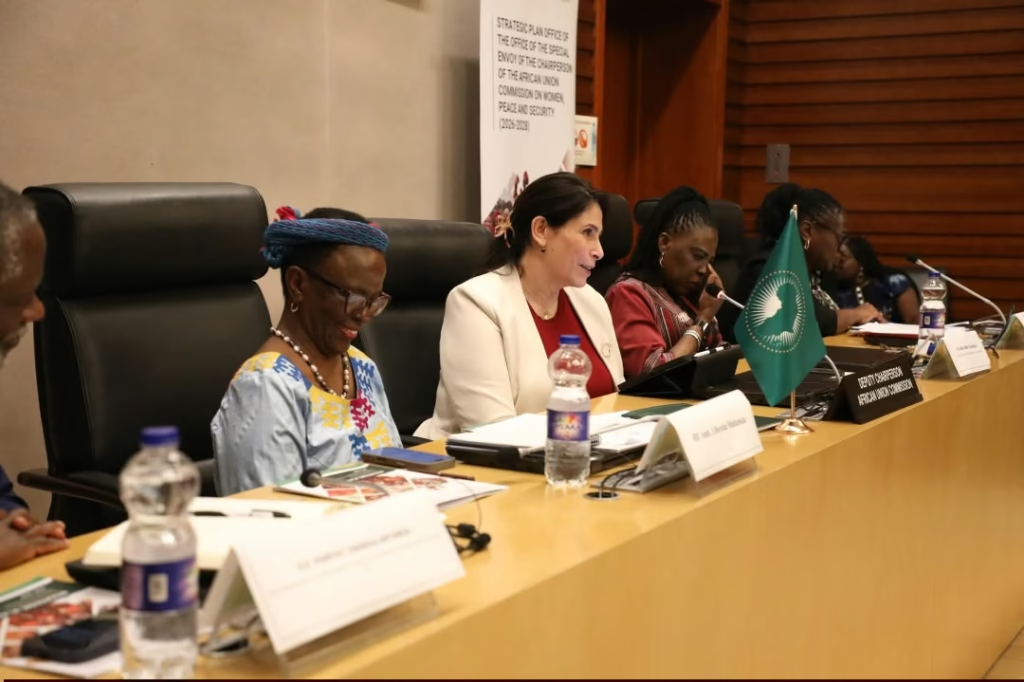
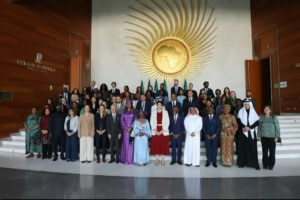
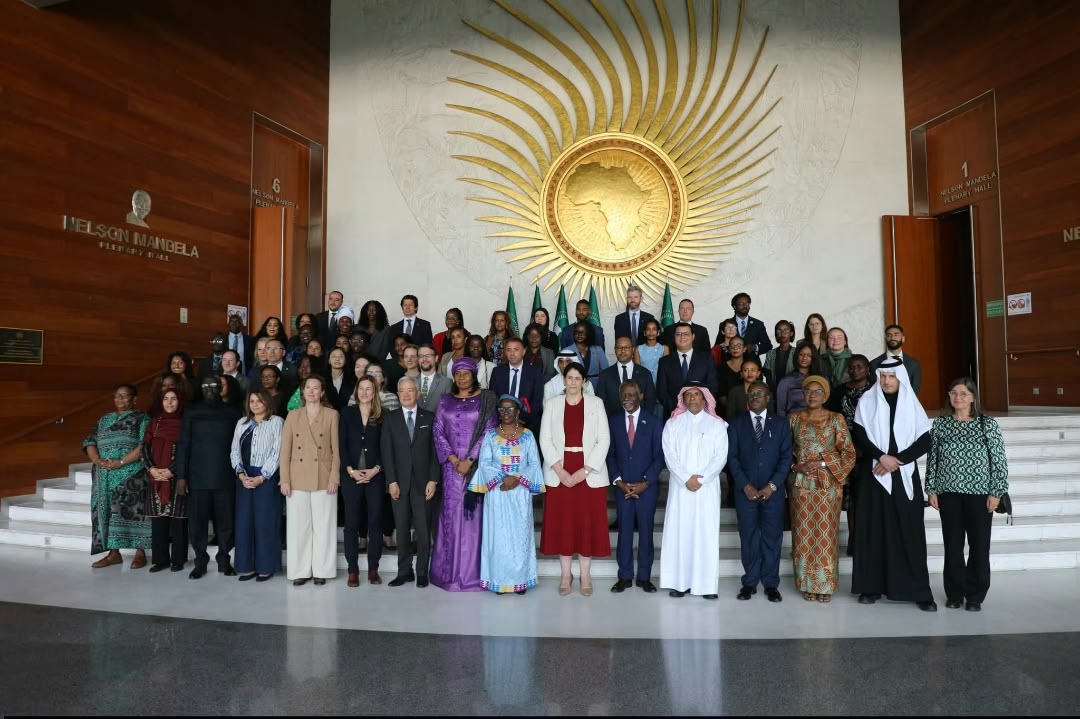
Officials at the launch of the Strategic Plan 2026–2028.
For women and girls living amid conflict, insecurity and displacement, the real test of the Strategic Plan will ultimately be whether decisions made in AU conference rooms produce safer communities, greater participation, stronger protection and meaningful opportunities for women on the ground.
Amb. Haddadi said the AU’s success must therefore be judged not only by what it says, but by what changes as a result of those commitments.
“Ultimately, progress will be measured not only by what the African Union says about Women, Peace and Security, but by whether those commitments show up in how the Union works and in the results we deliver.”
“That is how we build institutional ownership. That is how we make our commitments sustainable. And that is how we move from commitment to implementation.”