






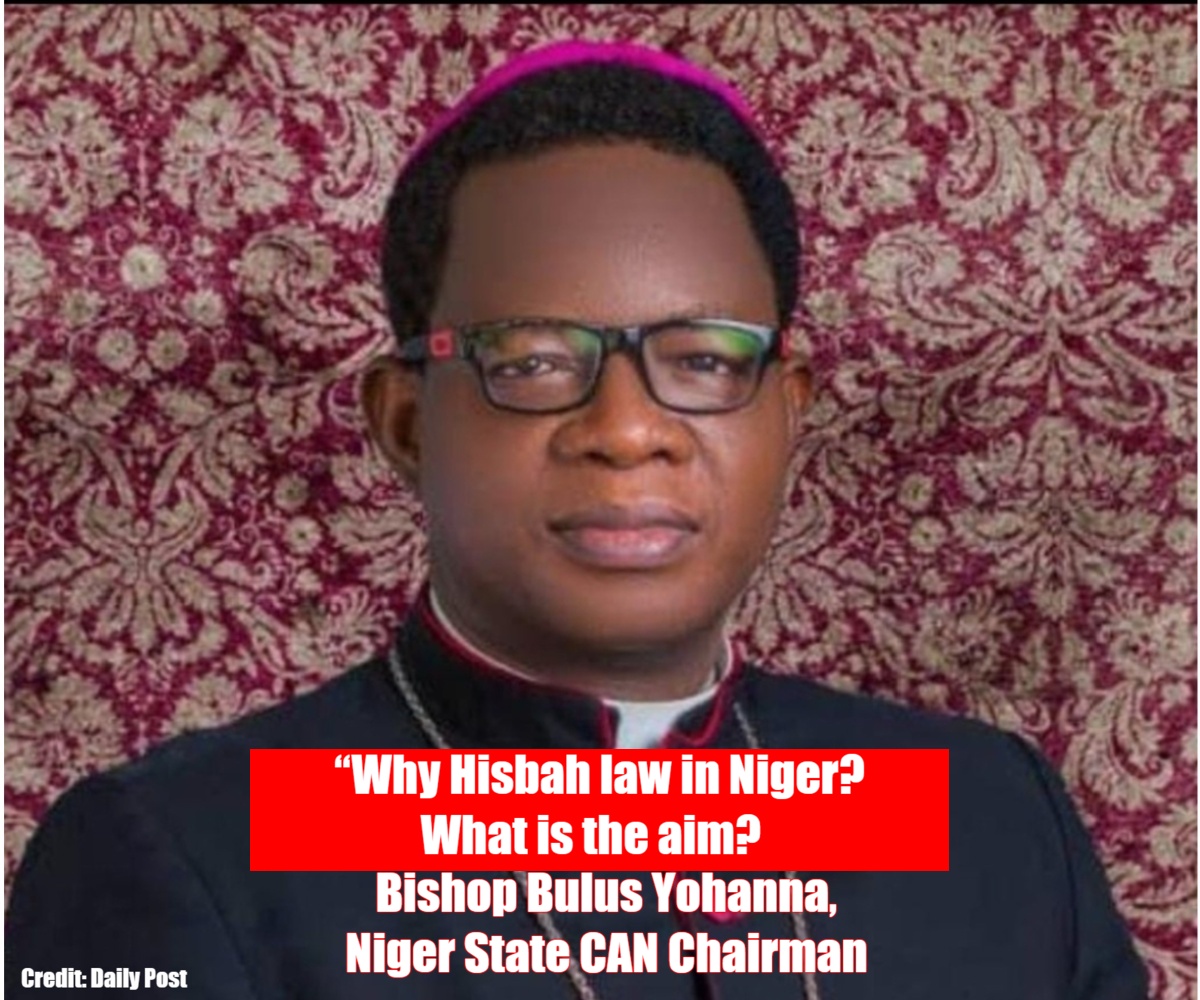
The Christian Association of Nigeria (CAN), Niger State Chapter has urged the Executive Governor of Niger State, North-Central Nigeria, His Excellency Mohammed Bago to decline assent to the proposed Hisbah Directorates Bill considering the so many lessons learnt from other states that tried to toe the same part in the past.
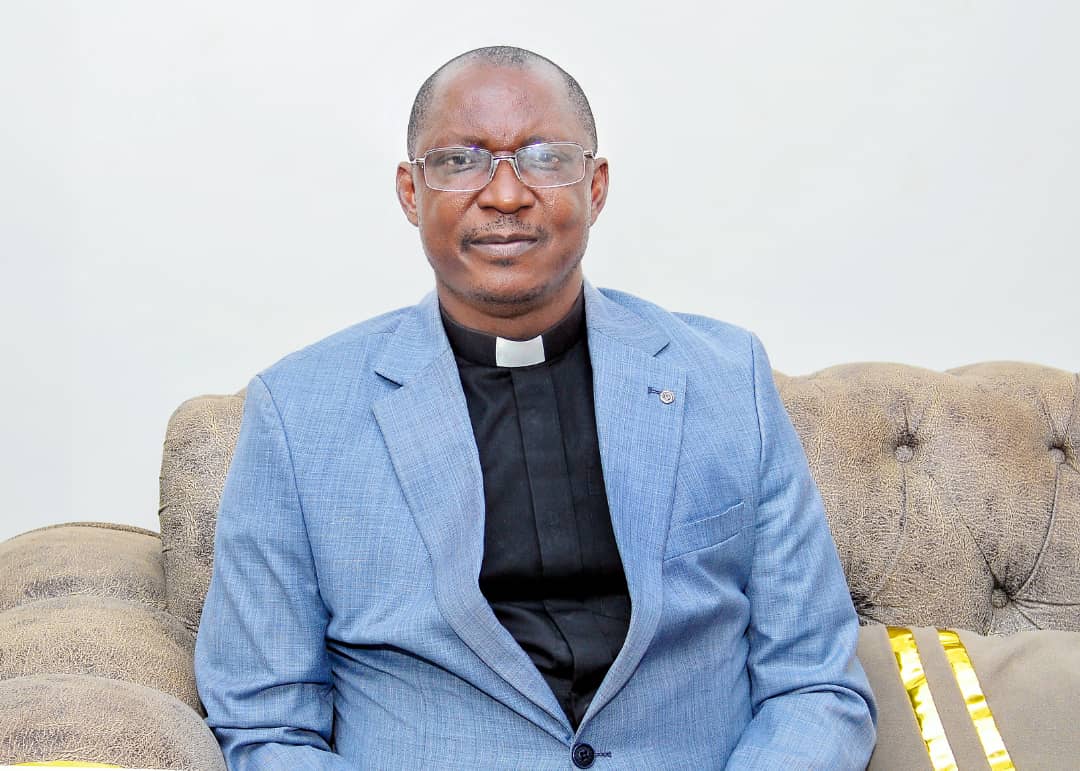
The state CAN Chairman, Most Rev. Bulus Yohanna, in a statement issued on Sunday 15 Feb. 2026 in Minna the Niger State capital cautioned that the proposed law could create division leading to attendant consequences in the state.
He described the bill as controversial and potentially harmful to unity, noting that Christians would not be subject to Hisbah regulations, hence his appeal for the rejection of the bill by the state governor.
Yohanna, who is also the Bishop of Kontagora Diocese, questioned the economic and social benefits of the proposed law and warned that Christians would not be subject to Hisbah regulations.
The statement reads in path, “Dear Farmer Governor Mohammed Umaru Bago, we, the entire Christendom, wish to draw your attention to what could easily create division amongst the people you govern.”
He rhetorically questioned, “Why Hisbah law in Niger? What is the aim? Of what benefit is it to our people economically and socially? Do they (lawmakers) realise that Christians will not be subjected to Hisbah law?”
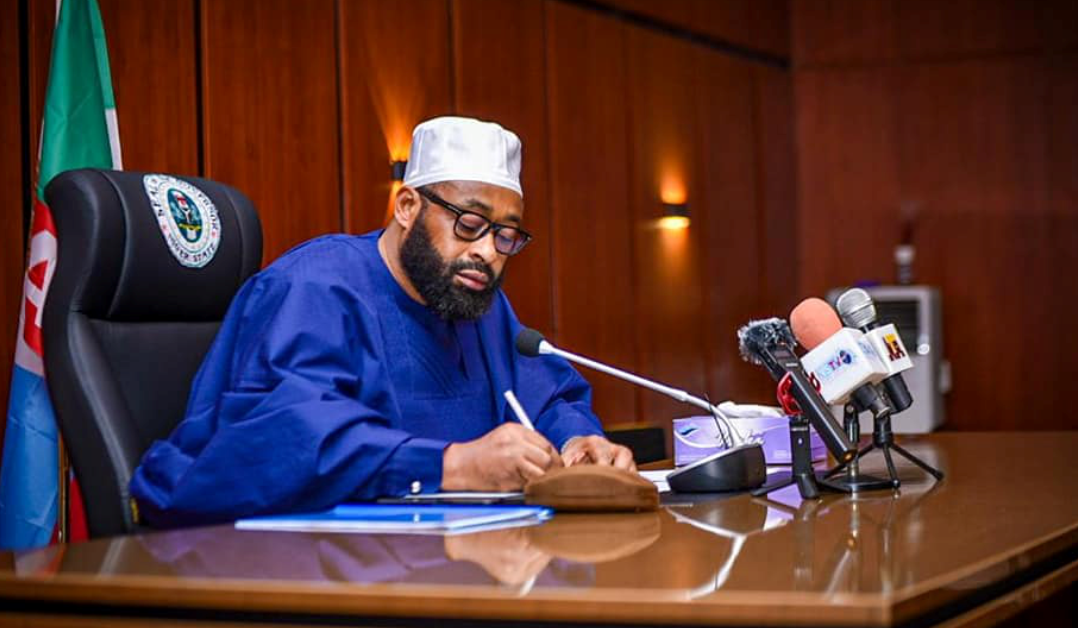
Executive Governor of Niger State, His Excellency Mohammed Bago. Credit: Gazettengr.com
He maintained that, “As a matter of urgency, we call on the Speaker and other members of the State House of Assembly to drop the Bill, except their aim is to incite and or anger a major group of people.”
The CAN chairman also faulted the public hearing process on the Bill, alleging that the association was neither invited nor notified.
“One would wonder whether the Christian Association of Nigeria, Niger State, was considered part of it. For the records, we (CAN) as a body were neither invited nor notified of such public hearing meant for critical stakeholders which obviously further indicates the segregation of Christians in sensitive matters in the state,” Yohanna stated.
The CAN chairman further reminded the Governor that Niger State is not a predominantly Muslim state and should look beyond religious divides and focus on what could foster unity rather than what could easily divide the people.
Yohanna also argued that the proposed Hisbah corps would duplicate the duties of existing security agencies, including the Nigeria Police and the Nigeria Security and Civil Defence Corps.
He stated, “By now, we should be thinking of what can strengthen our relationship and not use religion as a tool.
“Niger state is religiously a mixed state, and such law can only further buttress facts that there is truly marginalisation of Christians, and the Bill can only be perceived as a tool for persecution of our people.
“We have the Nigeria Police, Nigeria Security and Civil Defence Corps, Vigilante Groups and other recognised groups with constitutional powers to operate. Let us be sensitive and think of what can add value to our state and the people.”
He warned that the law could be perceived as discriminatory and urged the government to focus on policies that would promote unity and development.
Hisbah, a state-backed Islamic moral enforcement body, operates in several northern states, including Kano, where it is tasked with enforcing Sharia-related regulations.
The CAN Chairman called on the governor to act in the interest of peace and unity and decline signing or passing the bill into law, while urging the legislators to engage in activities that would move the state forward.
Amid warnings of rising Christian persecution, since December last year, US lawmakers have been pressing the Nigerian government to abolish Sharia law and dismantle Hisbah Commissions across the 12 northern states of the oil-rich, yet poverty-stricken West African nation.