


Luisa Campbell’s appointment as Secretary General of the Catholic Bishops’ Conference of Scotland has been met with praise and optimism, as it is expected to strengthen the principles of subsidiarity and co-responsibility within the Church.
This decision marks a significant milestone as she becomes the first woman layperson to hold this esteemed position.
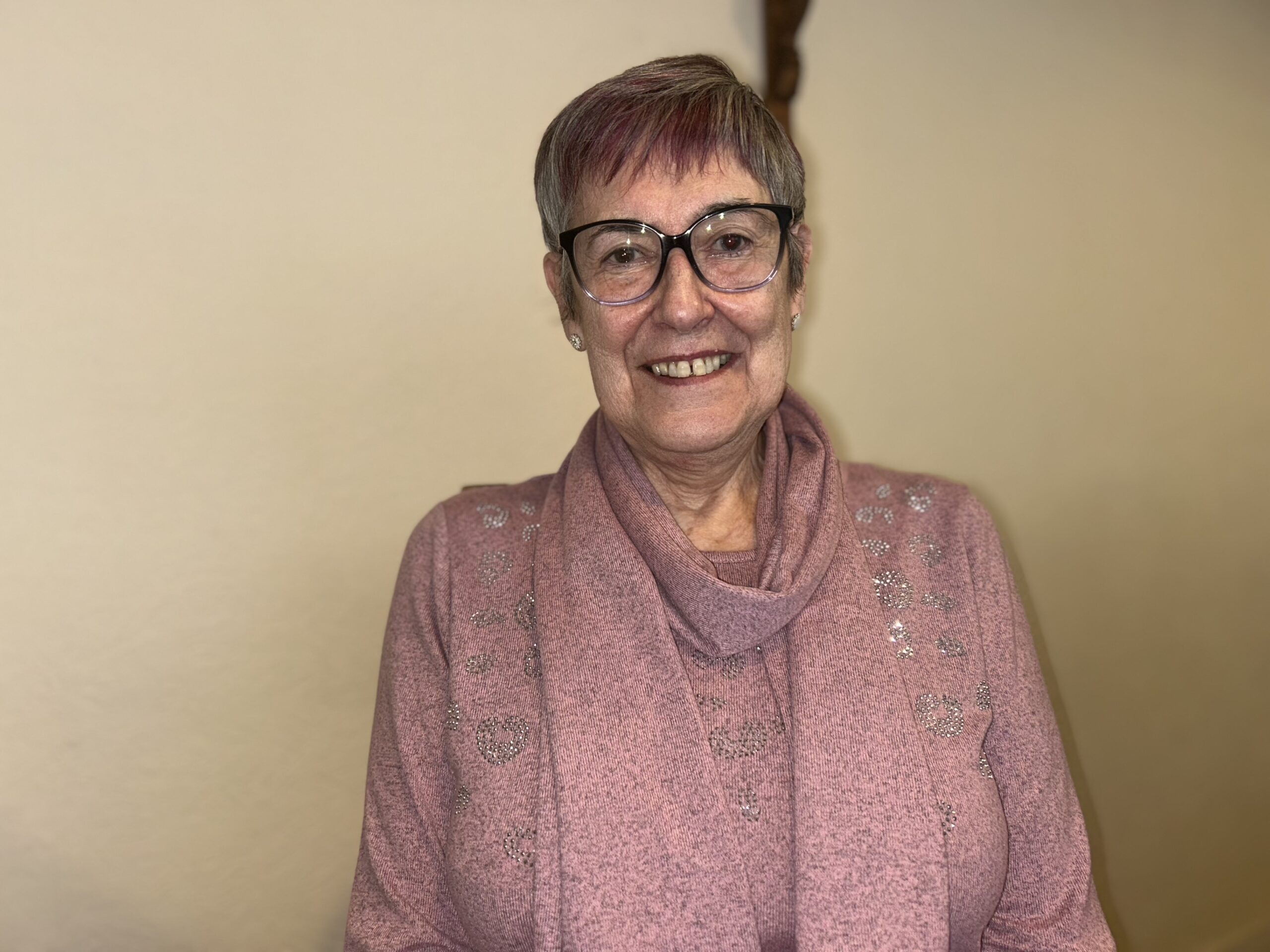
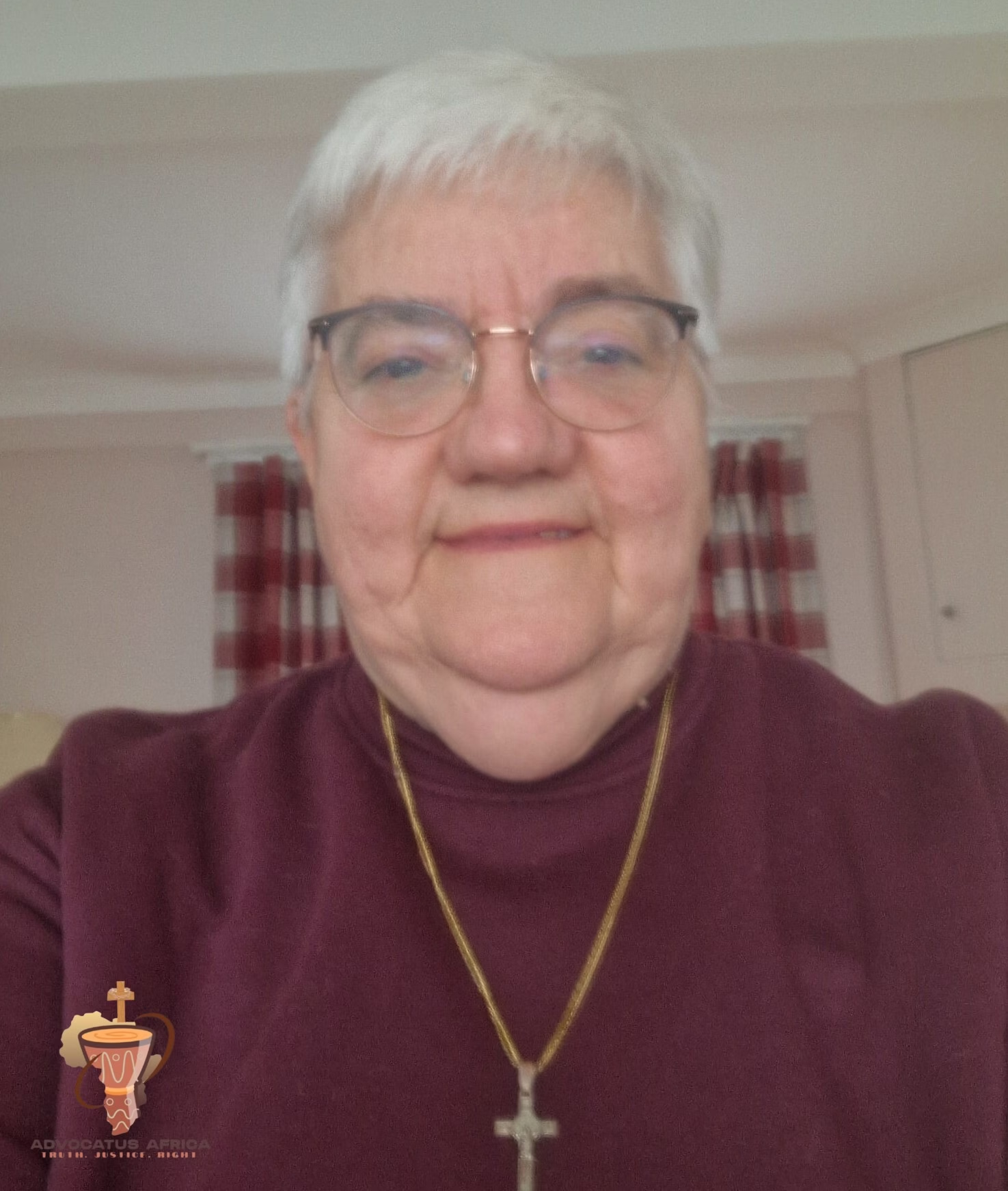
In an exclusive interview, Dr. Josephine Mary Smith, an accomplished scholar and chairperson of St. Brendan’s Yoker described the new Secretary General as “a woman with a significant role in the Church.”
Further reacting to the appointment, Dr. Smith lauded the development while bearing her mind on the place of communication as an effective tool for evangelisation.
Significant role of women “in the Church.”
“I am delighted by this appointment on every level,” she said, stressing that “Luisa has the skill set and desire to undertake this job.”

Dr. Josephine Mary Smith.
Smith lamented that “the lack of real and robust involvement of women in the life of the Church is seen by many lay people as a miscarriage of justice.”
The accomplished scholar observed that “Our Church promotes justice in so many ways but the lack of equality for women in the Church is at odds with this narrative.”
“My whole professional and academic degrees have been on Church matters.”
Smith bagged her Ph.D. from the University of Glasgow, one of UK’s Russel Group Universities, with a thesis titled “Church liturgy and catechesis: A critical examination of liturgical development in its relationship to catechesis in the modern Catholic Church.”
She shared her academic journey with Advocatus Africa detailing what motivated her to undertake a doctoral research in Catechesis and the Catholic Church in contemporary times, a terrain many would think is the exclusive reserve for clerics or consecrated persons.
“Since the age of 18….I am now 68 years old…my whole professional and academic degrees have been on Church matters.
“I worked for many years as Head of Religious Education Departments in Glasgow Schools. I have lectured on Liturgical Catechesis in major seminaries at Scotus, Cardross and Chesters. They were the home seminaries. Now all training is in Rome and Spain. I also carried out research at Maynooth in Ireland and Scots College in Rome,” said she.
The scholar also explained: “I have degrees in Theology and Liturgy from 4 Universities. I have worked as a volunteer worker in many parishes across the Archdiocese. This is my knowledge base and my primary passion and interest. So the chosen area for my Ph.D. was easy to select.”
“The essence of [the laity working with priests] is collaboration and service.”
Dr. Smith also told Advocatus Africa that she works with a lot of priests across the Archdiocese of Glasgow in areas such as liturgical, catechetical and pastoral endevours.
She highlighted various ways that the clergy-laity can further collaborate in critical sectors of the Church’s life in the spirit of subsidiarity and co-responsibility.
“I do work with many priests across the Archdiocese,” she said, adding that “The essence of this is collaboration and service.”

Dr. Josephine Mary Smith speaks at the send off of Fr. Ezra Maka Dauda at St. Brendan’s Yoker as Fr. Innocent Simon looks on.
She gave specifics of what she does in the Church saying, “I offer my skill set for the good of their communities. I prepare flyers, organise events, provide resources to tie in with the liturgical year.”
When asked in what ways does she think new evangelisation can target young people in a seeming capitalist society where work and money seem supreme, she drew attention to “the power of communication and animation.”
“I believe one of the challenges facing a 21st-century Church is to develop communication skills in those who exercise ministry. Everyone, priests, deacons, and laity can improve in the area of communication,” said she.
She pointed to the intersection between education and communication suggesting that the two strategies are not mutually exclusive.
“As a Church, we need to look at the deficits of poor communication.”
“As a Church, we need to look at the deficit effects of poor communication by imaginative initiatives to engage young people. I believe that the key to capturing the minds and hearts of young people is through education,” she said.
“We need…imaginative initiatives to engage young people.” Dr. Josephine Mary Smith.
Further clarifying the matter, she contended that “powerful and communication is what makes all our efforts in the new evangelisation effective.”