




In a fast-changing world, African scholars have called for a global Africa anchored on renewal, commitment and transformative change.
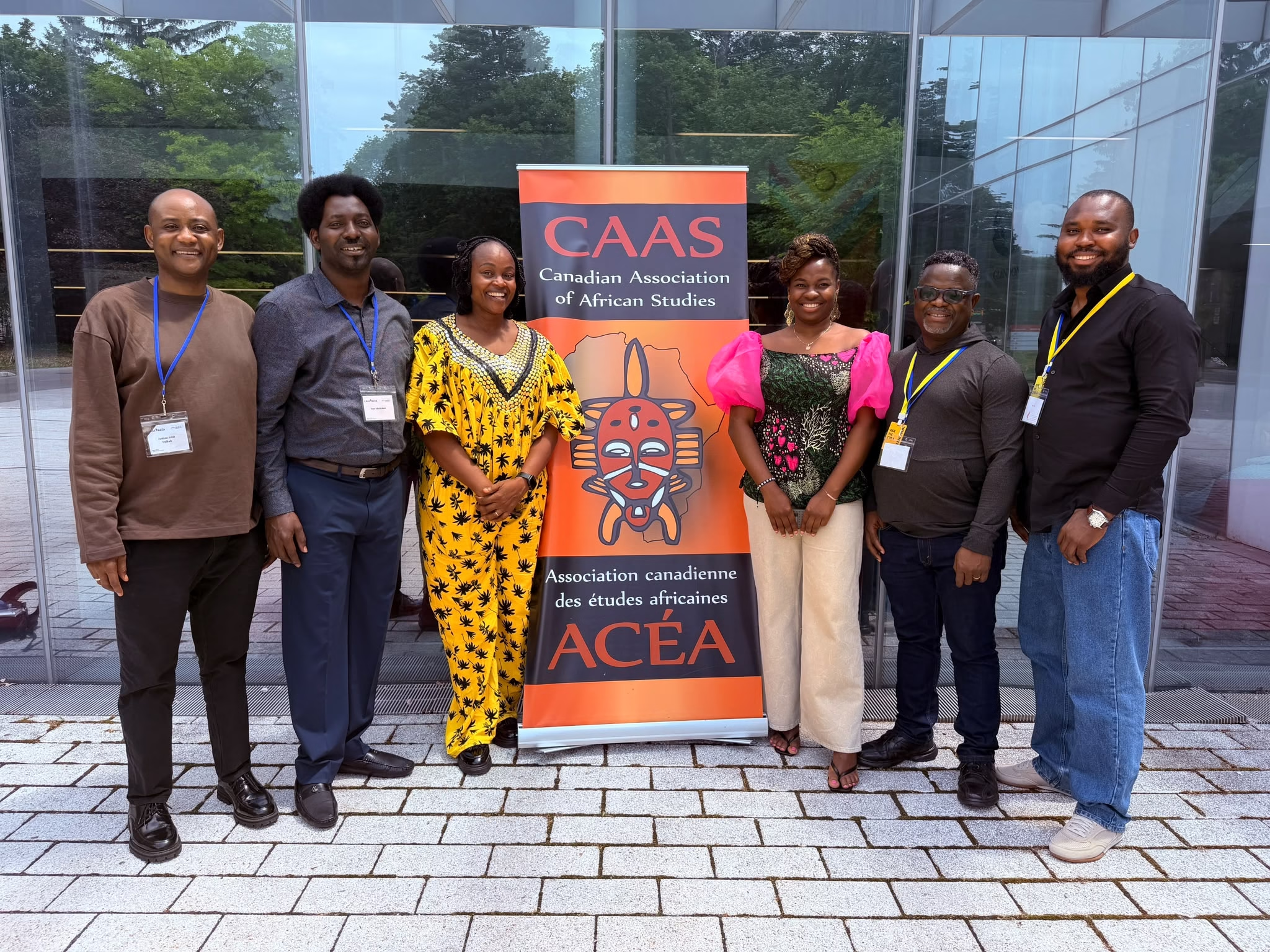
This call was made by the President of CAAS, Michael Akinpelu, at the joint ongoing 2026 Canadian Association of African Studies (CAAS) and Canadian Association for the Study of International Development (CASID) conference held at the Glendon Campus of York University, Toronto.
CAAS conference “represents a moment of renewal” for African studies, communities
In his welcome address, Akinpelu who noted that the conference “represents a moment of renewal for our African studies and community, particularly in a fast-changing world.”
According to him, the gathering “brings together scholars in various fields in the humanities and social sciences and constitutes an opportunity to affirm our shared commitment to the study and understanding of Africa and its global relationship in all their historical depth and contemporary complexity.”
With the theme, “Global Africa: Legacies, Change and Aspirations,” Akinpelu underscored that “Global Africa is a call to view Africa not as a geographical space but rather as an expansive cultural and intellectual network that has continually shaped global history and remains profoundly interconnected with world systems of knowledge, culture and creativity.”
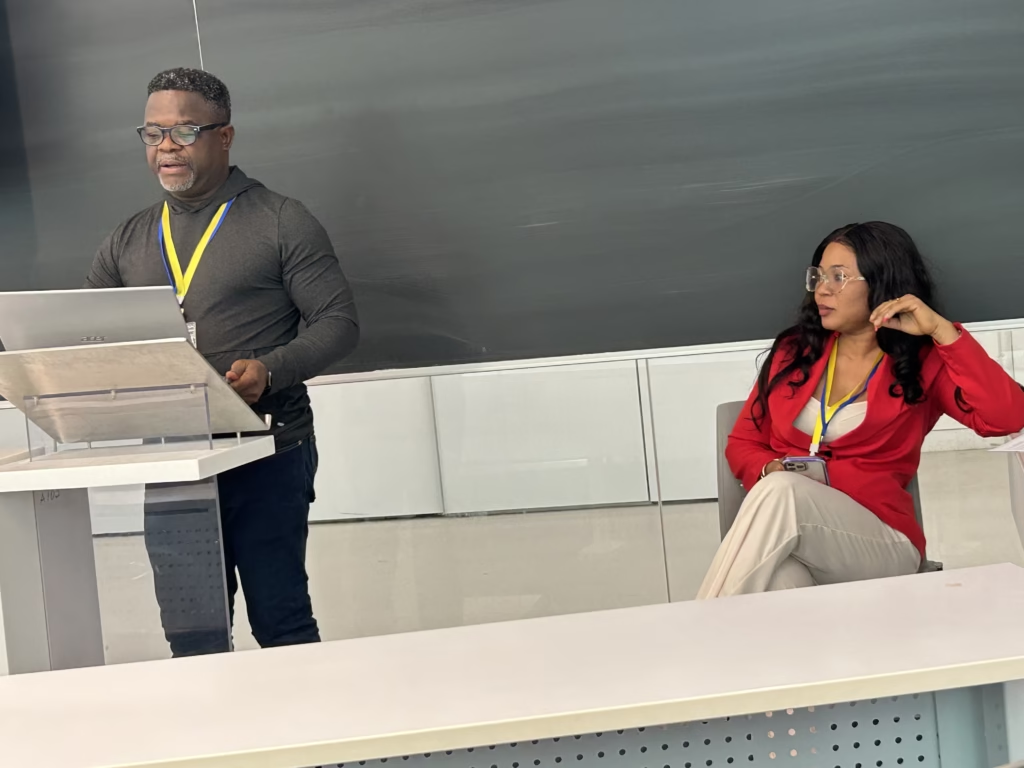
Associate Professor John Thomas during his presentation.
The conference is built on African legacies, change, and aspirations
The President of CAAS clarified that the conference is built on three pillars, which include legacies, change, and aspirations.
While underlining that “change reflects the dynamism of the continent across Africa and the diaspora,” he argued that the scholars gathered to reimagine innovative interdisciplinary methodologies for transformative global intellectual exchanges.
On aspirations, Ankinpelu insisted that African scholars are called “to imagine prospects for Africa beyond limits of inherited strictures” as well as to envision “opportunities that draw upon local wisdoms and global solidarities.”
On her part, the conference chair, Cynthia Kwakyewah, clarified that the year’s theme “was inspired by the desire to encourage conversations about current geopolitical shifts, demographic trends, and the global climate crisis, as well as their implications for Africa’s position in the world.”
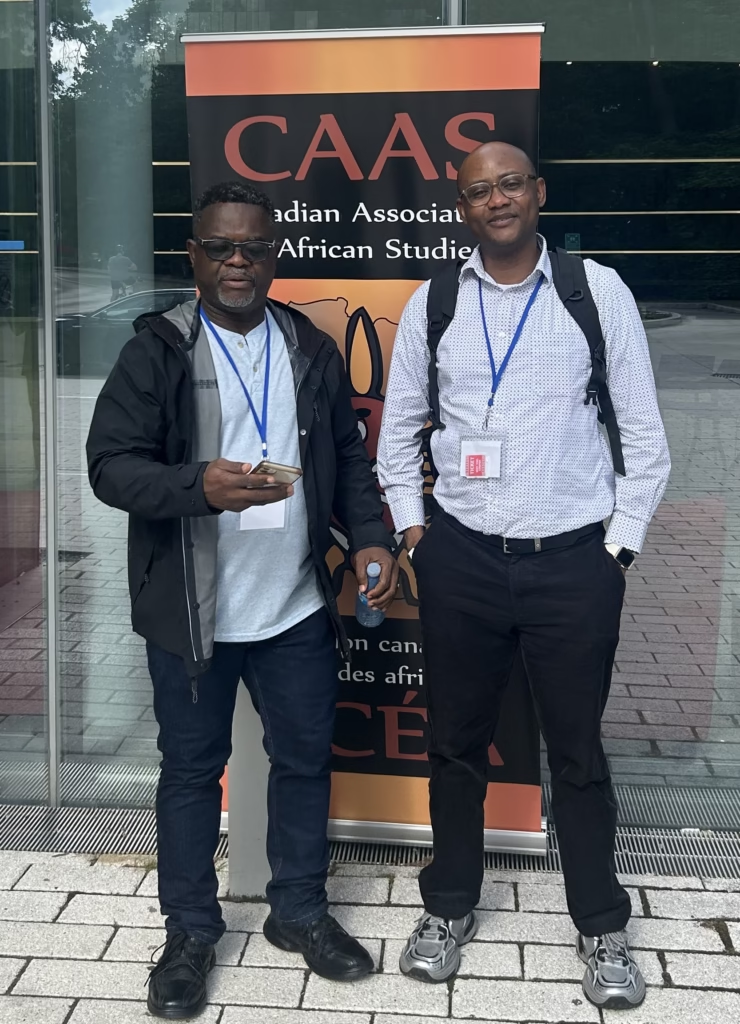
The University of Jos was presented at the conference – Associate Prof. John Thomas and Justine Dyikuk.
UN “predicts that by 2050, one in four people in the world will be African.”
Kwakyewah, who emphasised that “the United Nations predicts that by 2050, one in four people in the world will be African,” noted that amid the so-called green transition, “the continent is still recovering from the violence of colonialism.”
The conference chair warned against the “a new scramble [for Africa] driven by emerging powers.
Out of 1024 papers disclosed, organisers disclosed that 378 consisted of 110 panels, roundtables and creative contributions from about 600 scholars across the humanities and social sciences in African studies.