
The devastating effects of Boko Haram insurgency in Borno, Adamawa and Yobe (BAY States) in the north-eastern region of Nigeria, epicentre of the violence, have left 1.4 million children displaced in the oil-rich nation, according to the United Nations Children’s Fund (UNICEF).
The situation is worsened by twenty million out-of-school children in the country, according to the United Nations Educational, Scientific and Cultural Organization (UNESCO), which indicates that one in every five of the world’s out-of-school kids is in Nigeria.
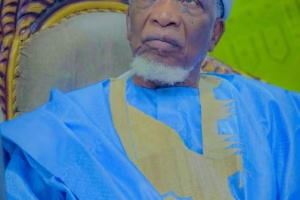
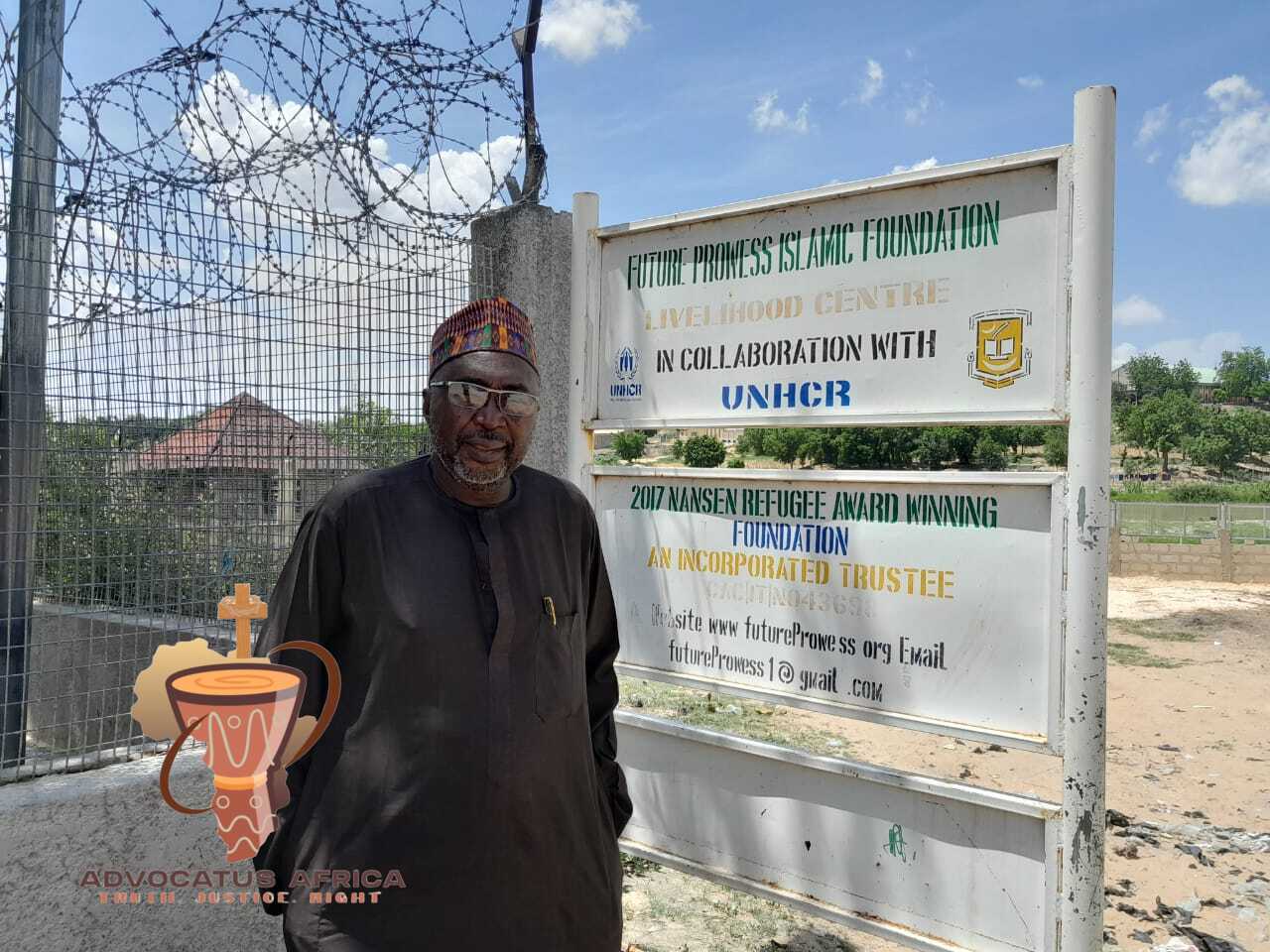
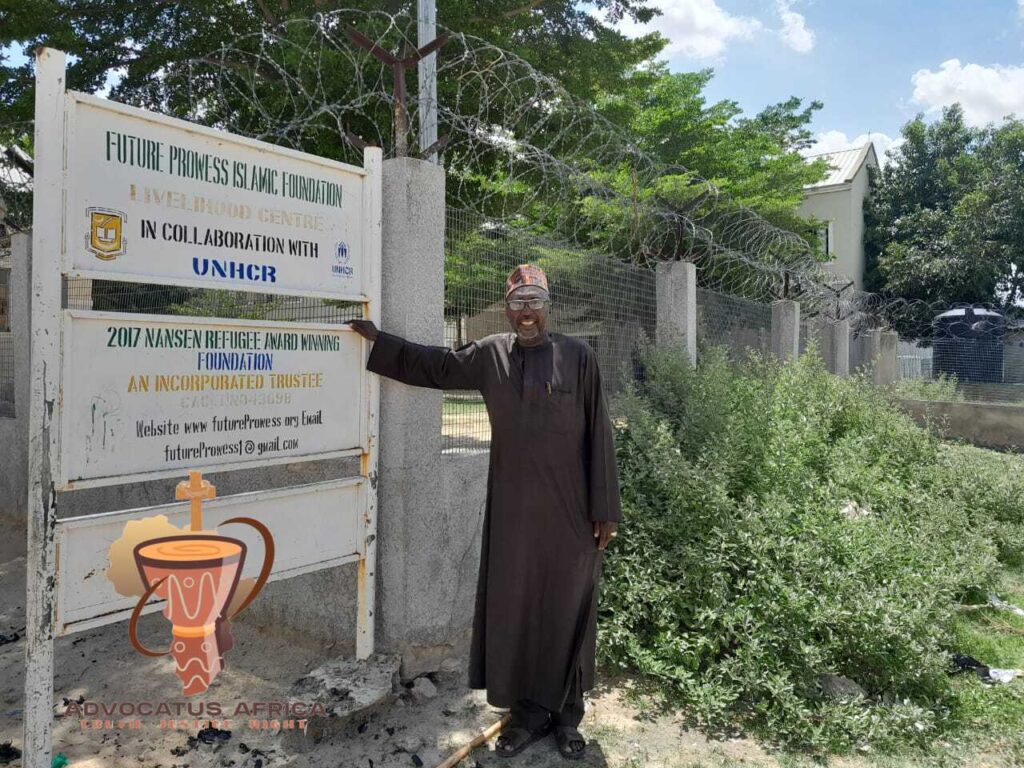
The cheering news is that Barrister Zannah Mustapha, a Borno-based Islamic cleric, lawyer, and educationist, has built a free school for orphans of slain soldiers and Boko Haram in Maiduguri, Borno state.
Future Prowess Islamic Foundation offers free education to vulnerable children. With foreign and local support from bodies such as the Office of the United Nations High Commissioner for Refugees (UNHCR), the International Committee of the Red Cross (ICRC) and the North-East Development Commission, including other spirited individuals, Mustapha offers hope and a future to deprived children.
The legal practitioner also heroically negotiated the release of 103 out of the 276 schoolgirls who were abducted from the Government Girls’ Secondary School, Chibok, Borno state, between 14 and 15 April 2014.
In 2022, the award-winning philanthropist received a National Honour in Nigeria and in 2014, the Daily Trust newspaper honoured him as an Unsung Hero. Other awards in his kitty include the World Humanitarian Award in 2016 and UNHCR’s Annual Nansen Award in 2017. Mustapha was identified as a CNN Hero at the 15th Annual CNN Heroes All-Star Tribute.
Mustapha, 67, spoke with Advocatus Africa in an exclusive interview at his riverside, Future Prowess School, Maiduguri, detailing his motivation and how we stormed Sambisa to secure the release of the abducted schoolgirls:
This interview has been edited for length and clarity.
What motivated you to establish a free school for widows and orphans of Boko Haram fighters?

I established The Future Prowess Islamic Foundation in 2007. It preceded the insurgency itself. As a legal practitioner who has practiced for more than 30 years, I felt I could contribute my quota to society because the government trained me without my parents spending ₦20 on my education. My last registration at the University was not up to ₦50. We have had scholarship opportunities, but here we are. We cannot give a scholarship to our children.
I felt that there was nothing that had brought me where I am except education. I wanted to give back to society. I felt the only candle that can light the future is education. That pushed me to establish The Future Prowess – to create a multi-cultural, multi-ethnic and multi-religious society that addresses the lack of embracing diversity. That is why I established the foundation.
“Nothing that had brought me where I am except education. I wanted to give back to society. I felt the only candle that can light the future is education. That pushed me to establish “The Future Prowess.”
We now admit students, orphans from diverse backgrounds, including children of those who died of natural causes. I started with 36 orphans. I enrolled all my biological children of school age into the foundation. I also asked the teachers to enrol their children as part of their commitment and they did.
Can you explain to Western readers what Boko Haram translates to and how you were able to get their children into your school?
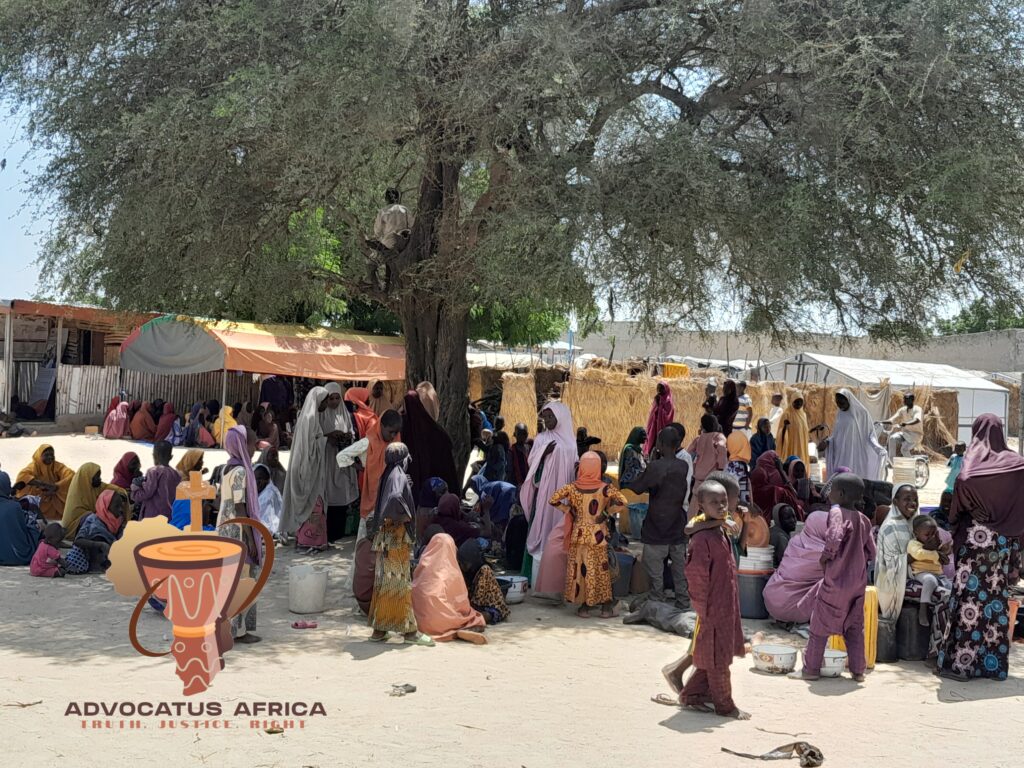
The Boko Haram translates as Western education is forbidden. The insurgency began in 2009. That was when a lot of insurgents were killed. They left behind widows and orphans. As someone who supports orphans, I thought of enrolling their children into our programme. I began an outreach to get widows by getting the mothers of these children, who are in the school. Although we had established a widow’s programme, we did not have a Parents and Teachers Association (PTA). As such, we made the widows within the foundation reach out to the widows of Boko Haram. It was scary at first because no one dared to identify with Boko Haram. It was seen as a taboo.
We convinced them that there is a haven for their orphaned children. It worked. They came out in their numbers. This was the time that the government was arresting them, but I discouraged suggesting that we should provide education for the women and children of the military who have lost their lives, including insurgents who have been killed. We wanted to give hope to these children – a future.
We suggested a curriculum in Kanuri or Arabic, including the mode of dressing. We told the women to cook for the children. They were willing. We picked some of them as a form of security because suicide bombing was rife and nobody wants their children killed. Remember, this was between 2010 and 2011, the height of the insurgency.
What was your relationship with the government, and how did your school gain prominence as an institution that welcomes enrolment of students from all creeds?
What exposed us the most was when President Obasanjo heard about our school, he visited the foundation in 2011. He said, “Zannah, you know we are no longer in government,” and I said, “Yes, Baba, I know. I just want to meet these Boko Haram elements.” I said, “Baba, I am not Boko Haram,” and he continued, “I know, but you have their wives. I want to meet them.” I obliged him and organised a meeting between him and the widows here in Maiduguri. That was when they came out to tell their stories. We even went to Yusuf Mohammed’s place – Bulabulin Ngaranam.
Obasanjo was very clever in his speech. He said, “First, I want you to know that I am not the President of Nigeria, but I am sure, as a former President, I thought I should come and speak to you; I came to condole you on the death of your husbands.” He asked the women what was happening. One of them stood up boldly and said, “Mr. President, we respect you, but I want you to know that, as I am speaking, my eldest son, who is 14, has been arrested by the military. My husband has two wives, one of them is still in captivity and I know they did not commit any crime. Instead of coming to me, why don’t you go to the government to tell them to release my people?” The former president responded by saying, “No! I came to console you. You should appreciate it.” He then gave them ₦ 1 million, urging that they should go and share among the widows of slain soldiers and Boko Haram fighters. In the end, they were all happy.
How did you engage in talks with the insurgents to free the Chibok schoolgirls who were abducted between 14 and 15 April 2014 from their dormitory?
What gave me insight was how Obasanjo handled the meeting with the wives of Boko Haram. The wife of a prominent Boko Haram leader, one of the first six top men, in our foundation, was detailed to contact the leadership, but she refused, suggesting that we should contact them directly. I convinced her that the group’s leader (Abubakar Shekau) knows me personally, assuring that the government contacted me to speak to them. He demanded to hear my voice.
I did a voice note and sent it to the woman to forward to him, stressing that “The government has placed a high premium on the Chibok girls. You do not need them because you said you will sell them. Won’t you consider giving them to the government?” Luckily, he replied that I should provide details about where we met last.
“The government has placed a high premium on the Chibok girls. You do not need them because you said you will sell them. Won’t you consider giving them to the government?”
– Barrister Mustapha
I replied that the last time we met was in 2008 at Bama. I had left my daughter at the American University of Nigeria, Yola, when I saw him standing by the gate of a garage. I stopped and asked where he was going. He replied that he was there to preach for Ramadan, as it was two days before fasting. He held two sticks of sugar cane and even gave me one. He also advised me not to enjoy it until I reach Maiduguri. After narrating this, he said, “He is the person, go and negotiate with him for the release of the girls.” Immediately, I went and told the government.
During the negotiation, the sect’s chief negotiator, the then Amirul Jaish (chief military commander), spoke to me rudely, calling me a pagan. I had to call him to order. When Shekau heard about it, he ordered the commander to apologise to me and he did. In fact, he told me to cool down and gave me one of the girls for free. He said, “This is free for him. Go and give him.” I asked, “Which girl is that? And he said, “Rebecca Mallum.”
After that, we started negotiations. They said they will release 10, but I pleaded for the release of 10 percent of the girls. That was how 20 plus Rebecca, who was handed over to me without payment, were released. I was only a negotiator; in terms of how much was paid, it is between the insurgents and the government. I went to Sambisa and collected the girls. They were not sexually molested. Some of them are now in the US, including Rebecca. They are studying. They keep in touch with me. When I went to the US, I met them.
“I was only a negotiator; in terms of how much was paid, it is between the insurgents and the government”
Mustapha
We also went for the remaining girls and got 82 released in 2015. In all, I secured the release of 103 girls. We had a cessation of hostilities. I went into Sambisa with the military in a convoy around 1 a.m. It was not up to 15 minutes before they gave us the girls. I came back with them and returned to the foundation. I had to reach out to the other students. That was how we got the Christian students.
Do you think that the media represent victims well in reportage? What is your take on insurgents’ use of media for propaganda and how can counterinsurgency experts or journalists help to quell the violence?
It is not such a balanced reportage because it is difficult to separate a person from sentiments and emotions. The media in Nigeria is so polarised. When the news portrays sentiments such as being a Muslim, Christian or a minority, it puts the media in a bad light.
Both local and international media report the agony of women and children somewhat as a good story, but they end up giving the victims a lot of stigma. Such an honest mistake happens in journalism because they want the audience to say this is what is happening. But you have done more harm to the victims, although you have published the story. At least, they know the type of agony they face because there is no psychological support or counselling.
“The media in Nigeria is so polarised. When the news portrays sentiments such as being a Muslim, Christian or a minority, it puts the media in a bad light.”
On Boko Haram’s use of media for propaganda, the lifecycle of the sect has lived on because of its use of propaganda. They make people like them. They give out various propaganda on what they do. That makes some people have a liking for them. They show that it is the military they are fighting, not civilians, but they kill civilians. This affects civilians more – physically and psychologically. The military sees them as enemies. By the time you stick with the military, you become the enemy of Boko Haram. So, civilians are caught between the devil and the deep blue sea.
As to whether victims such as widows and orphans try to draw the attention of the media to their plight, they are left to wallow on their own because nobody would like to identify with them. The role of communication and experts on counterinsurgency in ending the insurgency is that they have to be impartial umpires in their job.
What do citizens in the region think about the Islamic Caliphate that the sect ‘aspires’ to establish? Are there unhelpful government policies that militate against winning the war on terror and how can these be surmounted?
People do not take Boko Haram seriously because the person who is supposed to spearhead the movement will be somebody who is learned, aged and has attained a certain level of knowledge and acceptance. You received religion from your parents and now you are telling them that they are infidels, and you are trying to re-establish the society? – The society will not accept it.
I believe the unhelpful communication strategy of the government primarily lies in its current stick approach; instead, the government should adopt a more balanced approach, utilising both non-kinetic and kinetic methods.
African traditional values can be used in the fight against Boko Haram – You must accept diversity; this has been the case from time immemorial. It entails inclusive institutions where everybody should be part of everything. This is what I utilised, and the school has never closed for a day. We need to establish a platform to foster synergy and collaboration among government officials, counterinsurgency experts, and journalists, with a shared focus on achieving our objectives.
“I believe the unhelpful communication strategy of the government primarily lies in its current stick approach; instead, the government should adopt a more balanced approach, utilising both non-kinetic and kinetic methods.”
What role can international development partners play in mitigating the insurgency and what is your message to the government, Muslim/clerics, CSOs and the world?
Most times, international development partners do not realise the magnitude of the trauma or psychological scar that this unpleasant experience leaves on these children. They always come here to give bags, books, and other support, but nobody wants to venture into giving them psychological support. When you give medication and the person recovers, there is no way you can go to the donors and tell them I have done this or that without necessarily providing proof. So, the psychological is intangible. But donors need something tangible – evidence to show that they have done something. So, this brings about donor fatigue.
I want to use this opportunity to call on the government, religious leaders, CSOs and everyone in the world to create a global synergy for good. We must realise that God created everyone. If he wanted, the devil would not exist. But he allowed it for a purpose, help us distinguish between the good and evil. The story of the Good Samaritan calls for good neighbourliness. There is nothing to show that the Samaritan is a person of faith, but he remains a model for good.
One thought on “Award-winning Cleric recalls Shekau ordeal after securing release of 103 Chibok girls; Survivors in the US”