



…Between the fifteenth and nineteenth centuries, 12 to 15 million African children, women, and men were trafficked to the Americas to work under harsh conditions
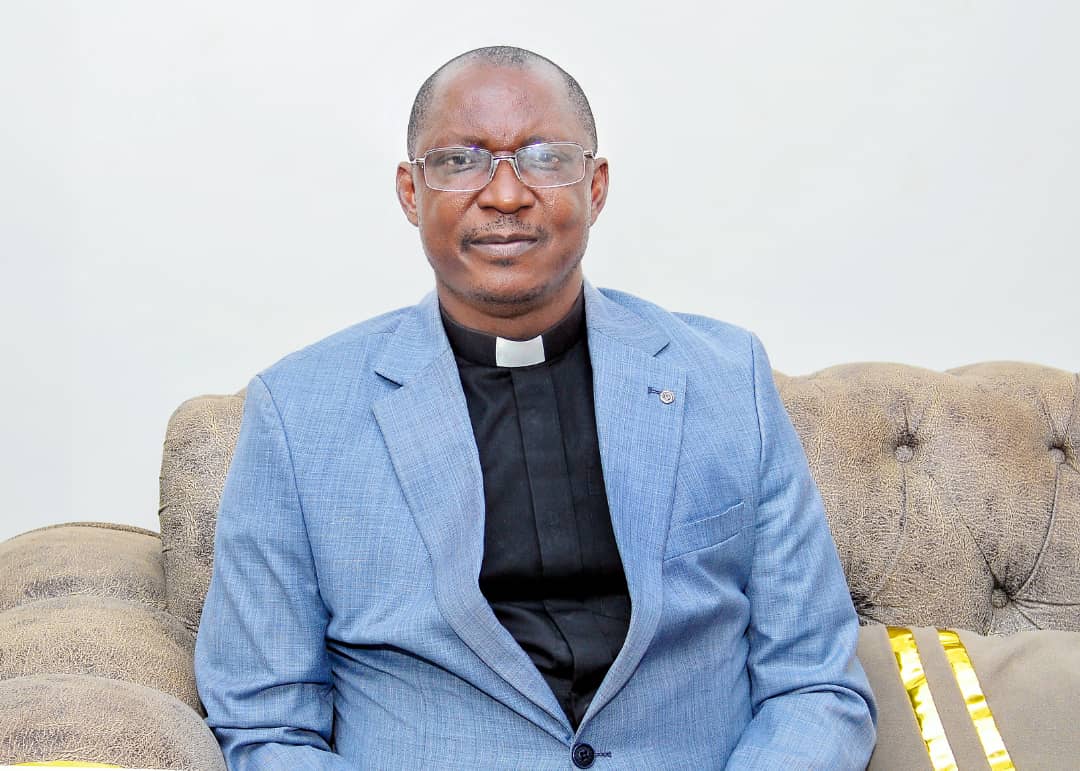
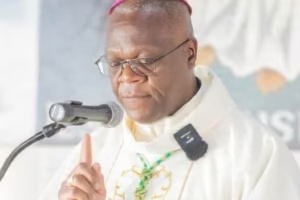
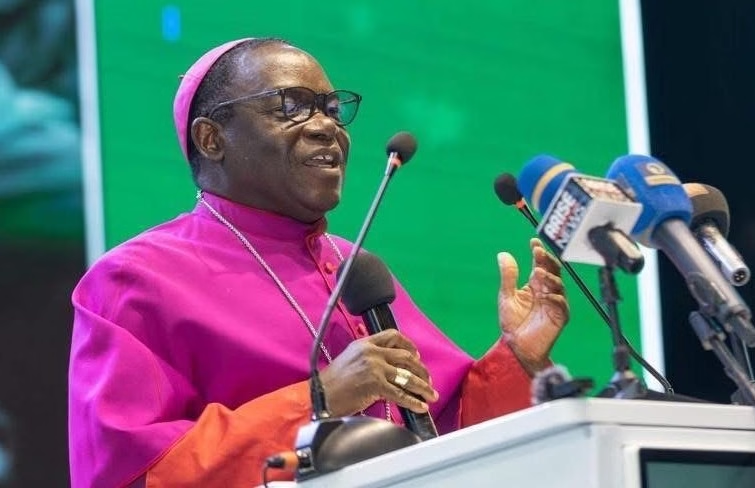
A famous Nigerian Catholic Bishop, Matthew Hassan Kukah, has supported campaigns for compensation for slavery, cautioning that such efforts should not overshadow the more profound moral and spiritual imperative of restoring human dignity.
Referencing Catholic moral theology, the Bishop of Sokoto Diocese, in the North West region of the West African nation, stated, “The issues of compensation, especially in financial terms, can easily become a distraction.”
Slave trade is “the highest expression of human depravity.”
This call followed a United Nations resolution that condemned the trafficking of enslaved Africans as evil. Emphasizing that “the evil [of the slave trade] manifests the consequences of fallen man,” the Prelate lamented that enslavement represents “the highest expression of human depravity.”
Condemning the transatlantic slave trade, which resulted in the trafficking of approximately 12 to 15 million African men, women, and children to the Americas to work under harsh conditions between the fifteenth and nineteenth centuries, the Bishop asserted that it unequivocally constitutes the gravest sin against humanity.
He insisted that global efforts should instead “focus on the key issues of human dignity with each of us taking responsibility.”
The renowned social critic told Crux, “Any culture or law that diminishes the human person, made in the image and likeness of God, falls within this category.”
The United Nations resolution described the enslavement of Africans as the “gravest crime against humanity,” a designation that followed a landmark meeting in Accra demanding reparations.
Movies that tell the historic tragedy of the trade/plantation systems
The slavetrade repatrations discourse cannot be complete without highlighting highly acclaimed historical films and television series that center on the transatlantic slave trade and the ensuing era of slavery in the Americas.
While 12 Years a Slave (2013) is based on the memoir of Solomon Northup, a free Black musician from New York who was kidnapped in 1841 and sold into slavery in Louisiana, Roots (1977 / 2016) is a landmark television miniseries based on Alex Haley’s novel tracking several generations of an African family, starting with the capture of Kunta Kinte in The Gambia in 1767.
Also in the list is Amistad (1997), directed by Steven Spielberg. This historical drama focuses on an 1839 slave mutiny aboard the Spanish ship La Amistad and the ensuing legal battle for the freedom of Mende captives.
Another intriguing film is Amazing Grace (2006), a biographical drama detailing the political campaign of British Member of Parliament William Wilberforce to outlaw the transatlantic slave trade in the British Empire.
Sankofa (1993) directed by Haile Gerima, is another landmark film that follows a contemporary African-American model who experiences a spiritual journey back in time to a colonial plantation, confronting the realities of the slave trade.
The horror of the slave trade is also highlighted in Passage du Milieu (2000), a French-Canadian docudrama that focuses entirely on the horrors of the “Middle Passage”—the forced deportation of enslaved Africans across the Atlantic Ocean to the Caribbean.
Just as Harriet (2019) tells the story of Harriet Tubman, who escaped enslavement in Maryland and returned on numerous rescue missions to free hundreds of enslaved people via the Underground Railroad, Toussaint Louverture (2012) narrates a historical miniseries detailing the life of an emancipated enslaved person who became the main architect of the Haitian Revolution, one of the most successful slave rebellions in history.
Conversations that “faded away” since the 1990s should be revived
Meanwhile, Kukah, a public intellectual recognized for delivering more public lectures than any other Nigerian, praised the Accra initiative led by Ghana’s President John Mahama and Barbadian Prime Minister Mia Amor Mottley for reviving a conversation that had “faded away” since the 1990s.
During a recent gathering of African and Caribbean leaders in Accra, participants emphasized the need for restorative justice and, through a 19-point global framework, called for reparatory justice.
They also demanded financial compensation, the return of cultural artifacts and human remains, and multilateral measures to address the severe sovereign debt burdens faced by nations in the Global South.