

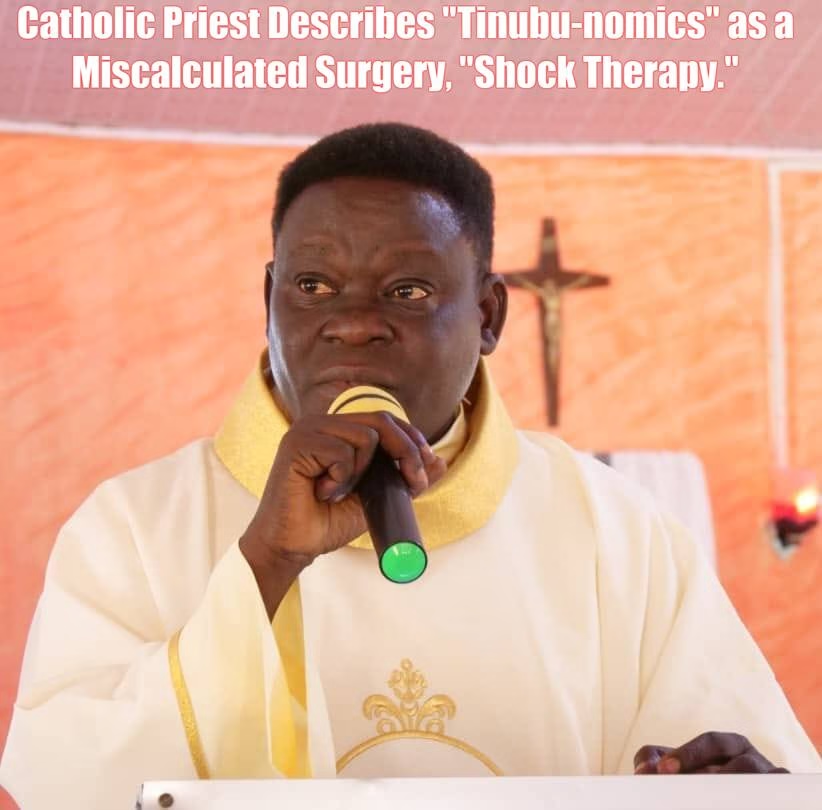
A prominent Catholic priest, academic, and community leader based in Adamawa State, north-east Nigeria, who is well known for his dual roles in religious administration and higher education, has critiqued the primary pillar of “Tinubu-nomics” while proffering solutions for a functional economy.
In a post titled, “How to bankrupt a nation while ‘wining,'” the Principal of St. Stephen of Hungary College in Gombi, Adamawa State, Fr. Louis Ngare stated that “the primary pillar of ‘Tinubu-nomics’ can be described NOT as a calculated surgery, but as a ‘shock therapy’ where the patient was accidentally unplugged to save on the electricity bill.”

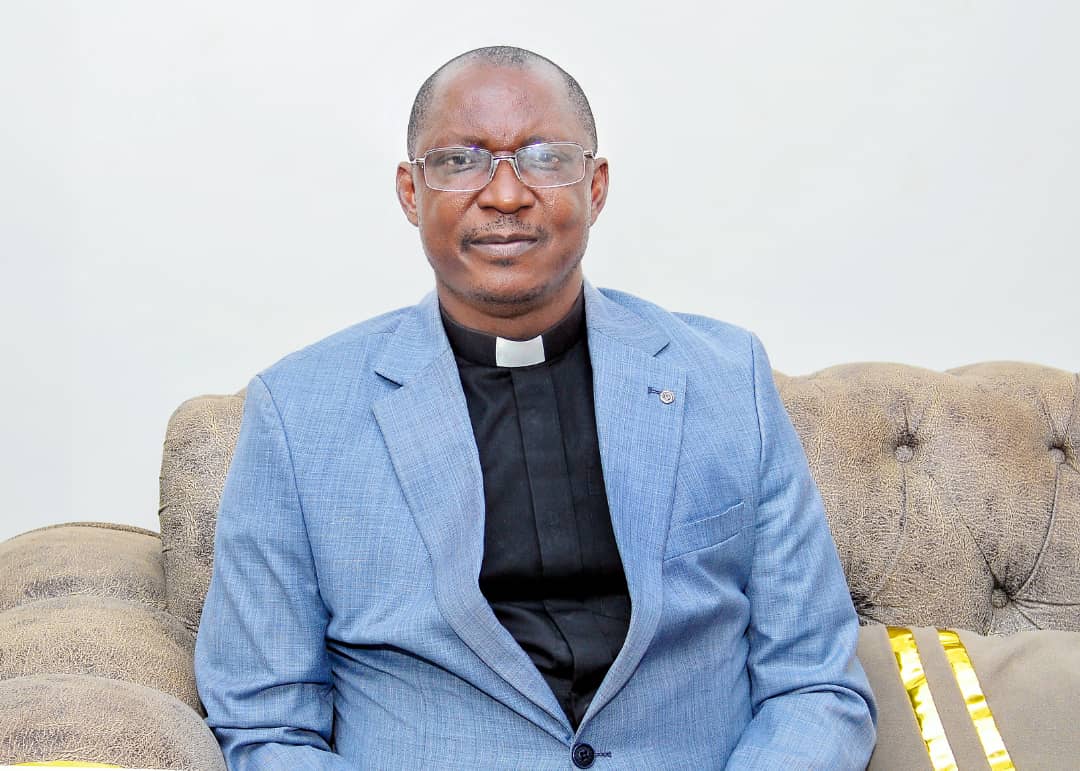
Fr. Louis Ngare, Principal, St. Stephen of Hungary College in Gombi, Adamawa State with some students. Credit: Louis Ngare
Citing the current disparity between promise and fulfilment, the educationist noted that “From 2023 [to] 2026, the disconnect between the spreadsheets in Abuja and the empty pots in Yola has created a masterclass in policy-induced vertigo.”
On the economy, the member of the clergy of the Catholic Diocese of Yola, who had joined the American University of Nigeria, Yola, first as an adjunct in the spring of 2019, as an instructor for philosophy courses in the General Education department, until November 2020, when he was hired as full-time faculty lamented that “While the government touts ‘tax harmonisation,’ businesses describe the reality as ‘taxation without representation—or electricity.’ The result is a mass market contraction where companies are now competing for the few remaining kobo in a shrinking consumer pocket.”
The cleric who served for six years as the administrator of St. Theresa’s Cathedral in Yola, while supporting Bishop Stephen Dami’s noble rehabilitation initiative of Internally Displaced Persons (IDPs), regretted that Tinubu’s “administration’s strategy of removing the petrol subsidy and floating the naira simultaneously is a fundamental miscalculation in timing—or a very expensive way to find out what happens when you jump out of a plane to check if your parachute is packed.”
The priest who serves as the National President of the St. Peter’s Old Boys Association (SPOBA), the alumni body for St. Peter’s Minor Seminary in Yola bemoaned the fact that the suffering in the country “was compounded by removing the fuel subsidy without having a functional transport or food security system in place, an act akin to removing the floor of a house while the family was still sleeping upstairs.
“The quadrupling of fuel prices didn’t just cause inflation; it effectively ‘taxed’ the poor out of the economy entirely.”
The author of Politics of Ethnic and Religious Alignments in Nigeria: A Philosophy of liberation for mutual coexistence (2012) and Matters Arising: A Christian Response to the Rise of Islamic Radicalism in North-Eastern Nigeria. (2013) underlined that “The unification of exchange rates sent the Naira on a scenic tour toward the bottom. While intended to attract Foreign Direct Investment (FDI), it mostly succeeded in making a loaf of bread look like a luxury investment. Domestic firms, unable to hedge against a currency that loses value faster than a New Year’s resolution, have seen their capital bases evaporate.
”A recurring critique of this era is the administration’s perceived administrative chaos, often masquerading as ‘bold leadership.’ By 2026, the government has managed the impressive feat of running multiple budgets concurrently, a move critics label as ‘historic incompetence’ where luxury spending for the elite remained ‘essential’ while capital projects for the public were treated as optional suggestions.”
Currently enrolled in a PhD programme with the University of Jos with a Special research interest in Experimental Philosophy with a special focus on its Ethical implications, Ngare detailed that “Ultimately, the corporate existence of Nigeria—the idea that 200 million people can continue to function as a single unit—is being tested by a series of existential stress tests.
“When the state’s economic policies result in 6 out of 10 citizens being unable to feed themselves, the social contract starts to look like a one-way eviction notice. This has fuelled secessionist sentiments, as regional blocs begin to wonder if they might be better off steering their own sinking ships.”
The member of the Teacher Registration Council of Nigeria (TRCN), a body for professional teachers in Nigeria, posited that the current “economic desperation has become the ultimate recruiter for industrial-scale insecurity. As the central government struggles to fund a unified security response, the push for regional policing grows.”
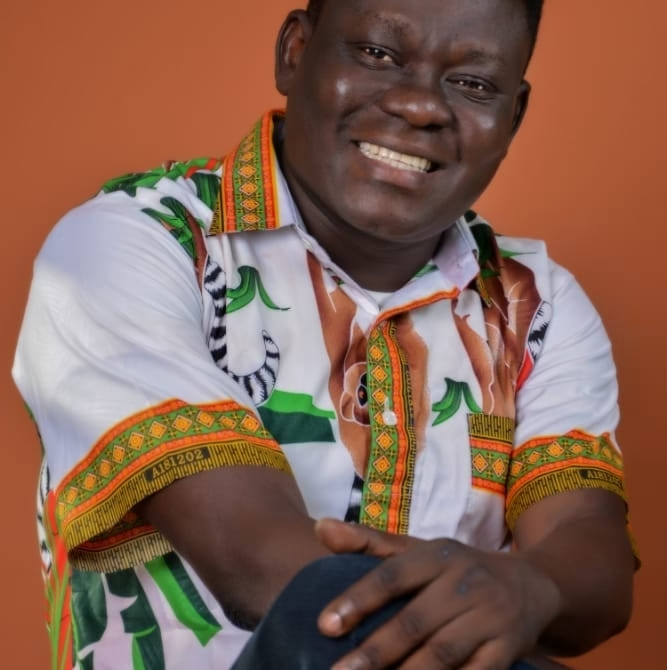
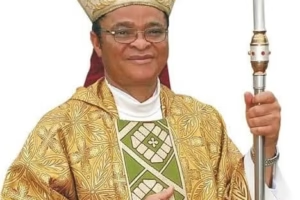
Fr. Louis Ngare, educationalist and advocate for positive change. Credit: Louis Ngare
The religious leader who contributes to academic discourse on national unity and social contract theory in Nigeria, emphasising the need for robust ethnic and cultural education to manage diversity, further lampooned the government over “the high cost of energy and foreign exchange [which] has forced multinational corporations to flee the country in what critics call the ‘Great Nigerian Ghosting.’
“This hollowing out of the corporate sector leaves Nigeria as a nation of consumers with nothing left to consume but imported goods they can no longer afford.”
Signposting, the cleric noted that “While practical, it signals a move toward a fragmented state where the center no longer holds—partly because it can’t afford the glue.”
Editor’s Note: All photos are courtesy of Louis Ngare.