



A visit to the remote islands of Scotland, UK, off the northwest coast of the country, reveals the finest expression of faith and culture and the romance between Gaelic and the English language.
Despite the tendency to place the English language over native languages, a visit to Griminish, a village in the Western Isles, shows most road signs written in Gaelic, with English translation underneath.
According to the 2022 Census, there are 26,120 people in the Outer Hebrides. 52.3% speak Gaelic as their first language, while some come from Episcopalian and Catholic traditions, 42% are members of the Church of Scotland, 28% from other Christian Churches and 13% Roman Catholic.
From schools to shopping malls and Churches where weddings and funeral ceremonies are held, community life is felt as Gaelic remains a conveyor belt.
Two promoters of the language in Griminish and Eriskay, who spoke to Advocatus Africa’s editor-in-chief in Benbecula, an island of the Outer Hebrides in the Atlantic Ocean off the west coast of Scotland, on the relevance of Gaelic, insisted that locals consider Gaelic as an indispensable tool for the promotion of education, culture (music, media, arts) and religion.
For Fr. Ross Crichton, Parish Priest of Saint Michael’s Catholic Church, Eriskay, “Gaelic culture is strongly linked to the Christian faith.”
He also underscored that “as a geographically limited language, unlike English, its cultural expressions are firmly Christian and have been for centuries as the language came to the country with the early Christian missionaries and peoples of the 5th and 6th centuries A.D.”
“We must encourage the ownership of Gaelic, our language and culture, in the upcoming generations” – Fr. Crichton
Fr. Crichton, who advocates that the faith should be included in the National and Local Gaelic, traced “the separation of language and faith” to “the influence of an Anglo-centric secularism” in what he termed “the colonialism of ideology,” while explaining that “language and faith act as body and soul.”

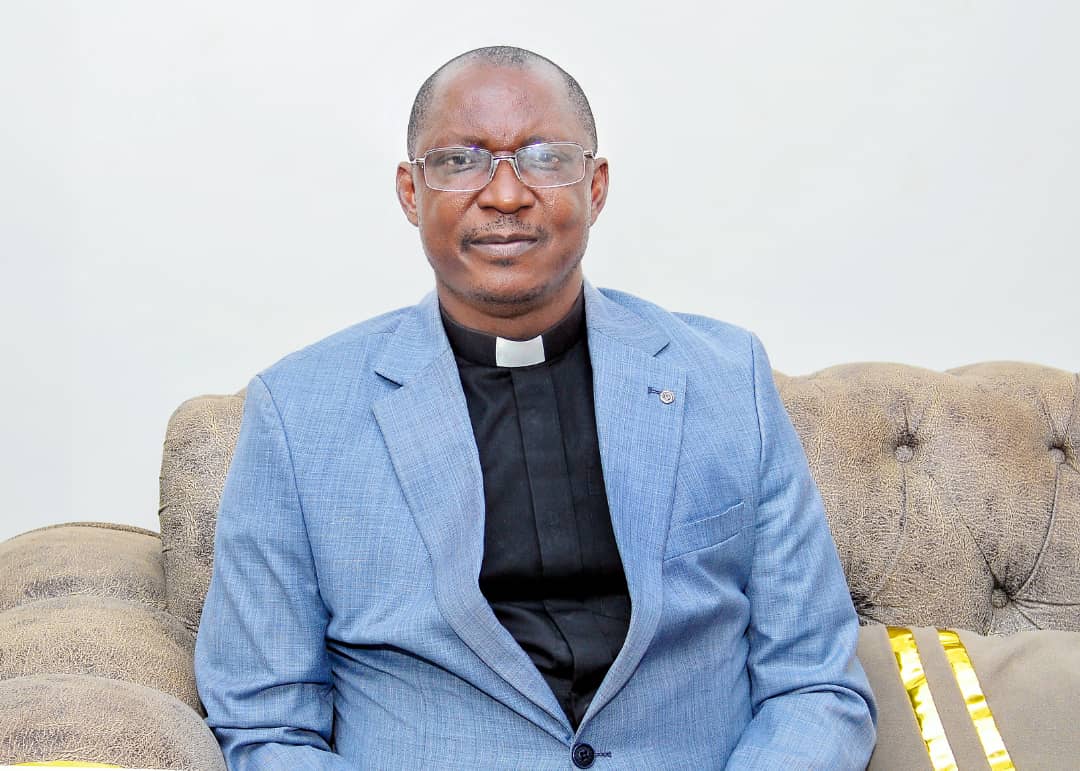
Fr. Ross Crichton, Parish Priest of Saint Michael’s Catholic Church, Eriskay. Credit: Soundcloud.com
The Gaelic speaker who works with the Gaelic Cultural Centre in South Uist maintained that “For at least 400 years, there have been efforts to destroy the language or diminish it under the influence of its more powerful linguistic neighbour, English…this has always been resisted until modern times.”
He lamented that although “the younger generation has abandoned it for the most part” because of the influence of the media and colonisation, “it [has] survived and retained a certain purity.”
On her part, another Gaelic promoter from Grimsay, Theona Morrison, linked faith and culture with identity.
She disclosed that “Our cultural identity frames how we relate to the world around us, in the case of the Gaels, it is not about owning the land but belonging to it and working in relationship with it and the people that also inhabit it.”
“The Gaels are the closest we have in Britain to indigenous people whose language and faith are inextricably linked to the place where they live, which in turn, is influenced by the tides, the seasons, and the weather. This is expressed through their culture in which faith is anchored.” – Morrison
The member of the Church of Scotland who spoke of influences on the Gaelic language said, “The Gaels are the closest we have in Britain to indigenous people whose language and faith are inextricably linked to the place where they live, which in turn, is influenced by the tides, the seasons, and the weather. This is expressed through their culture in which faith is anchored.”

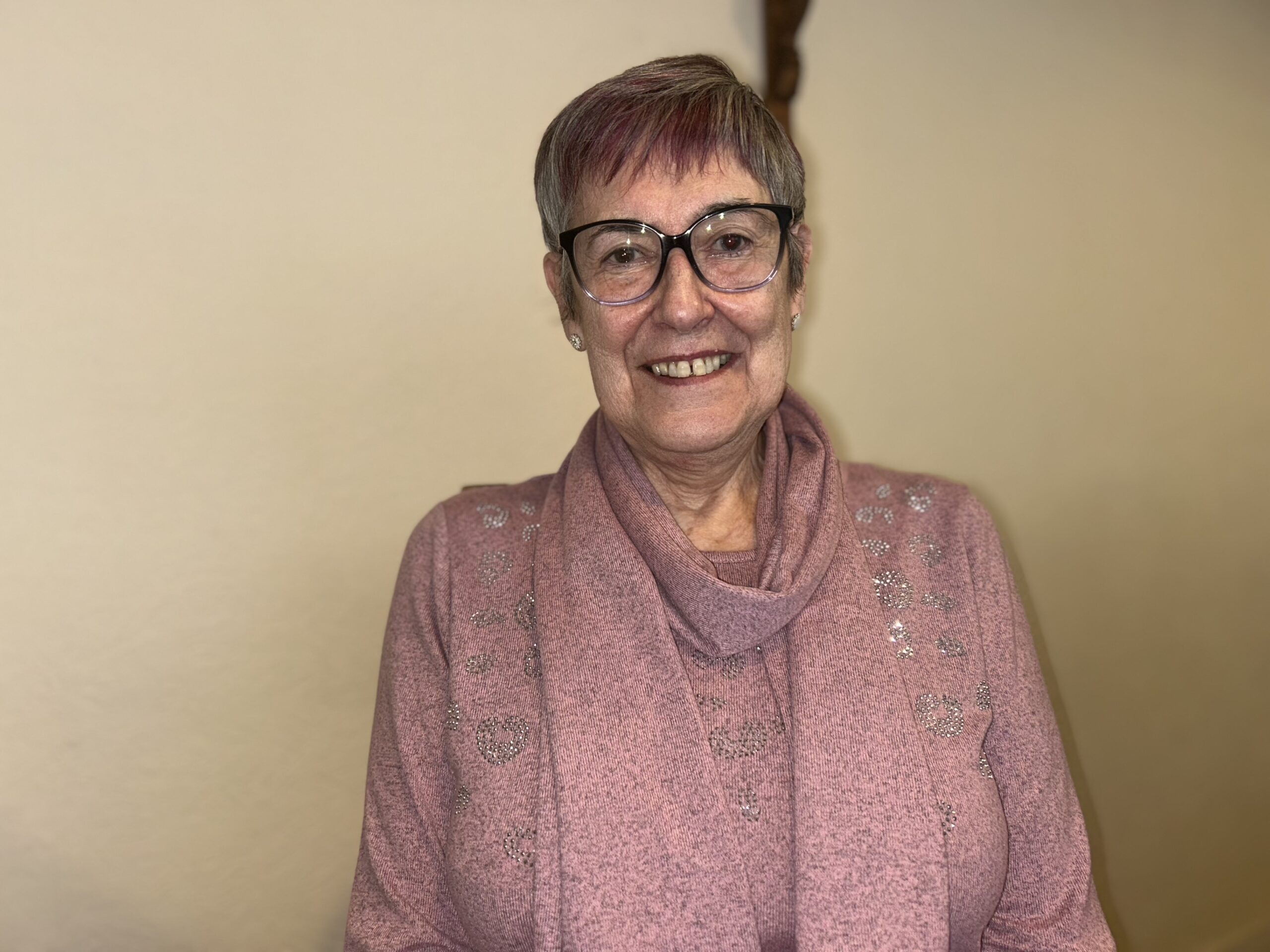
Gaelic promoter from Grimsay, Theona Morrison. Credit: @donnaloumac/@lilymacd.
Morrison narrated how a man who visited Uist some years ago asked her if people who work in health and social care in the islands use Gaelic with the patients. She answered, “Yes! If they had the language, they would use Gaelic.”
According to her, “He said that was very good because he was a surgeon in New York in the US – that he had worked with Italian immigrants who had been living in the US and using American English for 40 years, but when something happens, like a stroke, they would revert to speaking their mother tongue.”
Meanwhile, Fr. Crichton traced the difficulty with Gaelic Medium Education to Gaelic being “solely a language of academia, not the language of the home.”
The priest of Argyll and the Isles Diocese decried that in previous generations, Gaelic was forbidden in public education but sighed that it “survived because it was the language of the home,” asserting that “parents and the wider community have a duty in passing on the language.”
Like Africa, where dozens of indigenous languages have either been suppressed or gone extinct, no thanks to balkanisation and its concomitant effects of post-colonial hangovers – modernism, secularism, and globalisation, the power of retaining cultural identity lies with the purveyors of tradition.
With the voices of custodians from the home front, the classroom, the church, and the press, the future of faith and culture is sealed.
Crichton maintains that “The tide is turning as people seek to rediscover their cultural roots,” adding that “we must encourage the ownership of Gaelic, our language and culture, in the upcoming generations.”
For Morrison, “Undoubtedly, there is a job of work to be done to bring faith back into action.”
Editorial Note: Featured Photo of Editor-in-Chief, Justine John Dyikuk at Berneray West Beach, Isle of North Uist Outer Hebrides, where the story was conceived and interviews were conducted.