






By Daniel Magaji
The Catholic Diocese of Bauchi is situated in northeastern Nigeria. It covers the territories of Bauchi and Gombe States, with a vast combined land area of about 69,000 km², making it one of the largest dioceses in Nigeria by geographical size. The region lies within the Sudan–Sahel savannah belt, marked by open grasslands, wide plains, and seasonal rivers. It experiences a tropical climate with a long dry season from October to May, often intensified by the harmattan, and a short rainy season from June to September. Much of the diocese is rural, with scattered settlements and challenging terrain, factors that significantly shape pastoral outreach and missionary activity.
Although the total population of the area runs into about 9 million or more, Catholics remain a small minority, estimated at 70,000–100,000 faithful, roughly 1% of the population. This minority status has given the diocese a distinctly missionary character. Today, pastoral ministry is carried out by 63 diocesan priests, 4 military priests, 16 religious priests, 4 transitional deacons, 10 religious sisters, and 37 seminarians, alongside other pastoral agents.
Early Missionary Foundation From Edinburgh
A decisive turning point in the history of the local Church came with the Edinburgh Diocesan Mission to Bauchi in the early 1960s. Inspired by a strong missionary vision of the holy Father Pius XIII, and his encyclical “FIDEI DONUM” promulgated on the 21st of April 1957. The generosity and the missionary zeal of Scottish priests, drawing on the experience of a similar missionary enthusiasm of the SMA missionaries already on the ground, laid firm foundations for evangelisation. Frs. Danny Simpson and McAllister (1964) were among the pioneers, later joined by other Scottish missionaries – Fr. John McKinnon in 1964, Frs. Tony McNally, John Gibbons, and David McCann in 1965, Fr. John Agnew in 1966. The last priest was Fr. Aidan Canon, who came in 1976 and eventually left in 1991.
“A decisive turning point in the history of the local Church came with the Edinburgh Diocesan Mission to Bauchi in the early 1960s.” – Fr. Magaji
In 1965, Fr. Danny Simpson opened the strategically important but isolated mission of St. Giles, Gambar, an area difficult to access, especially during the rainy season. Missionary outreach soon expanded to the Tangale people around Billiri, where St. Andrew’s Mission was established, an area in the North-East of Nigeria that is popularly known for snakes. These Missions opening a new horizon for evangelisation in the region.
Political Crisis and Missionary Trials
The mission developed amid intense national upheaval. In December 1965, the death of Fr. John Gibbons, parish priest of St. Michael’s Bauchi, following a tragic road accident, deeply affected the young mission. To honour the memory of the Scottish missionary, the Church, which is now the Cathedral, was renamed St. John’s. Barely a month later, Nigeria was plunged into crisis by the January 1966 military coup, which claimed the lives of key national leaders and destabilised the country. These events disrupted missionary work and highlighted the fragility of Church structures in Northern Nigeria.
Growth through Religious Congregations
Despite these challenges, the mission expanded steadily. In 1973, the Ursuline Sisters – Sr. Patricia Fogarty, Mary Teresa Ryan, and Mary McCluskey from Edinburgh arrived in Bauchi, marking a major boost to healthcare and social outreach, particularly in Gambar, where a clinic was expanded and officially opened in 1974. Their dedicated service left a lasting legacy and inspired further missionary commitment beyond Bauchi.
In 1977, the Sisters of the Holy Child Jesus arrived in Bauchi town to strengthen Catholic education and parish ministry, consolidating the Church’s presence in the urban centre.
Structural Challenge
By the mid-1970s, however, declining missionary vocations in Scotland led to a gradual withdrawal of personnel. The mission was eventually returned to the Diocese of Jos around 1981, but limited manpower hindered sustained growth across such a vast territory.
These challenges underscored the long-recognised need for a distinct ecclesiastical structure for Bauchi, capable of ensuring continuity, local leadership, and long-term pastoral commitment—an aspiration that ultimately shaped the emergence and identity of the Catholic Diocese of Bauchi as a missionary Church rooted in perseverance, service, and hope today.
The Fruits and Footprints of Edinburgh Mission in Bauchi
The mission of Edinburgh was fruitful. It had so many footprints. The most important of them was the fact that the Edinburgh mission came to Bauchi with faith, education and health. These are seen in the current state of the jurisdiction of the diocese of Bauchi and in the cultural behaviour of the people. Their way of life and their source of livelihood, as well as access routes, have now been created through the influence of the then Edinburgh missionaries.
“Edinburgh mission came to Bauchi with faith, education and health.” Fr. Magaji
These missionaries walked in search of connecting routes to nearby communities to evangelise the people. Today, these roads created by the missionaries have become the major roads facilitating activities in this jurisdiction, called Bauchi. It links to the markets for trading goods and services, to hospitals, and routes that lead to urban areas, and many aspects of the significant activities of the people.
Another significant footprint of the Edinburgh missionaries in Bauchi was the creation of the first parishes. These parishes bear names important to the Scottish community. Saint Giles Gambar and Saint Andrew’s Parish Billiri were the first parishes to be created. These are important Saints, especially the Patron of Scotland. The remains of a great missionary from Edinburgh, Fr. Gibbons is a continuous testament of the union between Edinburgh and Bauchi.
“Another fruit of this mission is the cooks, housekeepers, interpreters and family members these priests trained in school and other human endeavours.” – Fr. Magaji
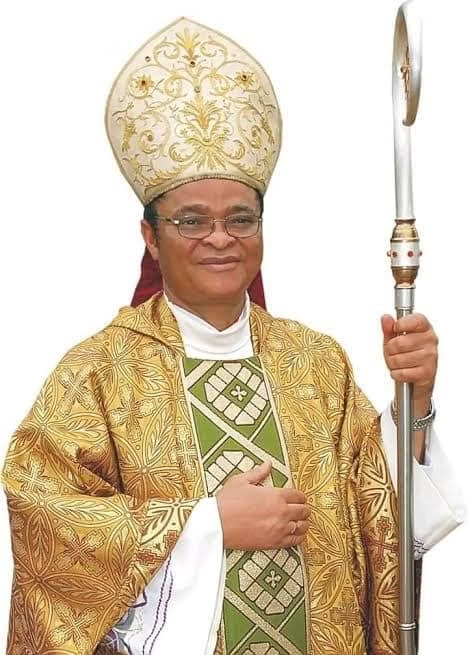
Another fruit of this mission is the cooks, housekeepers, interpreters and family members these priests trained in school and other human endeavours. Today, these people have become prominent men and women in society – Priests in the Diocese of Bauchi and beyond. Most importantly, the first indigenous Bishop John Malachy, of pleasant blessed memory, was the son of the housekeeper of Monsignor Danny Simpson. Monsignor Simpson had trained the Bishop’s father as a young boy until he became a seminarian, a priest, and finally a bishop. His counterpart, Fr. Prof. Andrew Dewan of Pankshin Diocese, is a Lecturer at Plateau State University, Bokkos. The father of the current Vocation’s Director, Fr. Francis Kushi, was the altar server of Fr. Aidan Canon.
My Comparison of the Church of Bauchi with Edinburgh
The Church in Bauchi is a vibrant faith community with lots of youth populations grow invocations, respect for the clergy, good attendance at mass, and the people trying their best to give their all to the Church. But the faith struggles due to mitigating factors such as poverty, the lack of technological advancement, a Church centred around the priest, the diversity of cultures, the rate of illiteracy of the local people due to lack of access to good education, and many other factors bring about challenges and cause a slow growth and development of the diocese.
“The Church in Bauchi is a vibrant faith community with lots of youth populations grow invocations, respect for the clergy, good attendance at mass, and the people trying their best to give their all to the Church.” – Fr. Magaji.
Edinburgh has Gothic churches, a high sense of orderliness, the spirit of co-responsibility between the priest and the people, and a good taste of accountability. Despite these magnificent structures, material wealth and technological advancements, the Church suffers a great challenge decline in invocations to the priesthood and the religious life; a decline in the attendance of masses compared to the olden days.
“Edinburgh has Gothic churches, a high sense of orderliness, the spirit of co-responsibility between the priest and the people, and a good taste of accountability.” – – Fr. Magaji
I pray for a revival of young people embracing the vocation to the priestly and religious life. May the faith grow stronger so that the Church in Edinburgh and the whole of Europe overcomes the challenges of secularism. I am glad to share this rich history and connection between Edinburgh and Bauchi. I am proud to be part of the Edinburgh mission. I thank God for this connection and pray it lasts.
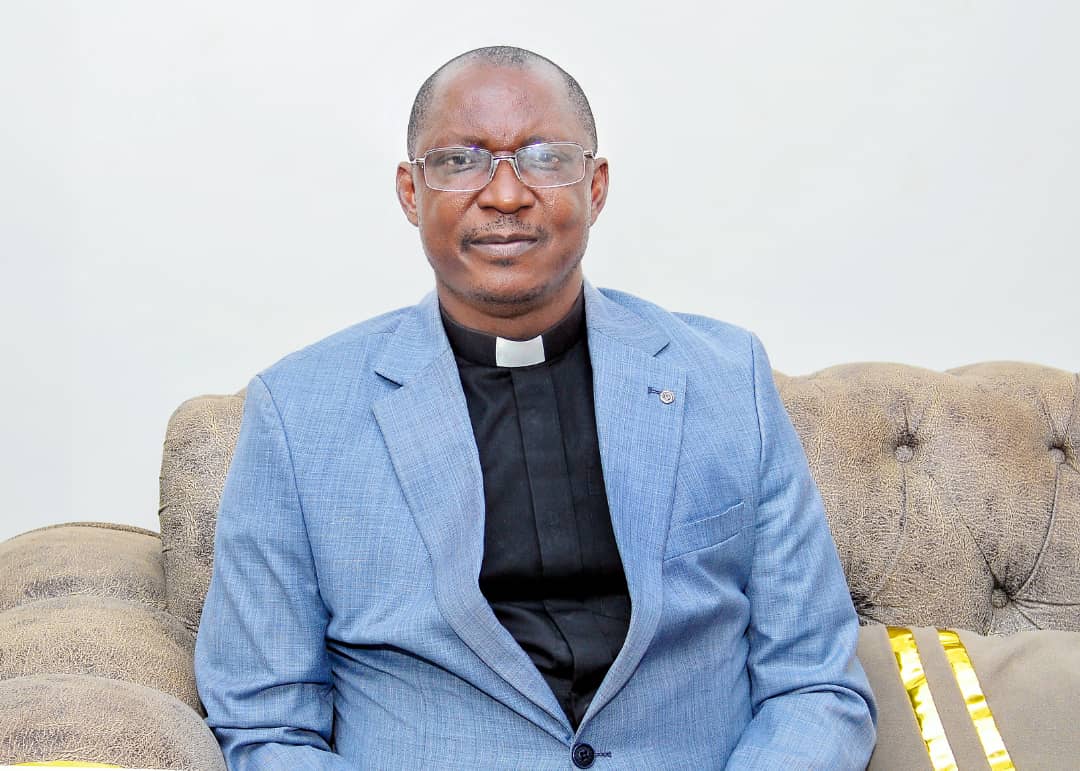
Fr. Daniel Magaji, a priest of the Bauchi Diocese, currently a fide donum priest to the Archdiocese of St. Andrew’s and Edinburg gave this presentation at St. Peter’s Parish Morningside, where he is an associate priest.


This is great