
In a country that is easily combustible on religious and ethnic lines, a lady of Igbo extraction, in South- eastern Nigeria, who undertook her National Youth Service Corps (NYSC) in Kebbi State, north-west, has shared a viral post about how she was treated with respect.
The NYSC is a mandatory one-year programme for Nigerian graduates under 30 in Kebbi State, meant to promote national unity, reconciliation, and development.
Usually, participants (Corps Members) undergo a 3-week orientation and serve in various sectors, often in states other than their own.
“I served in the North, Kebbi State, to be precise. And I can boldly say I never, I repeat never, received half the insults I got yesterday from the Northerners, ” Uche Nwayiocha wrote on social media.

Uche Nwayiocha in 2017 during her service year in Kebbi. Credit: Uche Nwayiocha
Her post emphasises themes of national unity, inter-religious tolerance and personal growth during her service year.
According to her, “I was loved there. The love of God exuded from me to light up every life that came my way. At some point, a ruler’s wife sent for me in Birnin Kebbi. She is ‘hajia’, so I was led to her inner room where I saw her face. She told me she had heard good things about me and made me promise that whenever I return to Kebbi, I must come and see her. That door of relationship is open for life.”
Nigeria is divided by a largely Muslim north and a predominantly Christian south, although there are Muslims and Christians in each part of the country.
The old wounds of the civil war have lingered on, creating a separatist movement in the south and complicating the already strained perception of people from both sides of the divide.
Nwayiocha‘s story is impactful given that it teaches lessons in global citizenship and being a de-tribalised Nigeria.
She further narrated that “So when I now see people reacting with tribal sentiment over a relationship heartbreak from five years ago and asking why I would even consider a Yoruba man, it really disappointed me,” stressing, “May tribe and religion never be the end of us in this country.”
The Igbo Lady shared that “In my last post, I shared how I wanted to marry a Yoruba man 5years ago, but his mother refused because I am ‘Omo Ibo’.
“Some Yorubas reacted too, but the reactions from many of my fellow Igbos made me shake my head. It showed me how deeply tribalism has eaten into the fabric of unity in Nigeria.
The former Corps member detailed that “before I, Uche, left for ‘ugwu Hausa,’ (Hausa land), my mum quietly packed two hijabs inside my luggage. When I got to Kebbi, it was not easy at first. The weather was harsh. The dry air, the coughing from natives, especially in public vehicles almost would make me throw up, like everything felt strange.
“But I knew I would be there for a year, so I decided to blend. I stopped feeling irritated, stopped complaining, got me some nose masks to help with journeys.”
She stated that sometimes she would walk out of Chikin gari (town) to “sit at Mohammed’s shop at Kalgo bus stop, where he sold minerals, ‘kankara’ (ice block) and ‘suya,’ (roasted meat) We would gist, but he smiled most of the time, for lack of understanding my ‘Turanci,’ (English) and I would carry on speaking in the nonsense.”
Nwayiocha learnt “small Hausa words,” wore “short hijabs,” and discovered that “I realised that in the North, both Christians and Muslims wore hijabs, not about religion.”
She nostalgically recounted how “some teenage girls came to the station giggling” and “jointly gifted her” a full hijab, a long gown worn by women which covers head to toe, stressing, “I wore it.”
The Lady also reminisced about what transpired during her place of Primary Assignment (PPA), in the north, saying, “Even at my PPA, they observed my character and how I didn’t discriminate. Before long, the same Hausa people helped arrange paid accommodation for me away from the corpers’ lodge at Gidan Kofa, a place mainly for those teaching in the government ‘makaranta’ (school).
The PPA constitutes the one-year posting to a place of primary assignment, often in education, health, or agriculture.
On fasting and prayer life in the region, she disclosed that “During fasting periods like this, I would even remind them when it was time for prayers. They would wonder what kind of human being I am after laughing out loud.
“They knew I was a Christian, yet when they shared ‘kosai’ (bean cake) and maybe ‘dankali’ (potato) after breaking fast, they always sent my own to the office.”
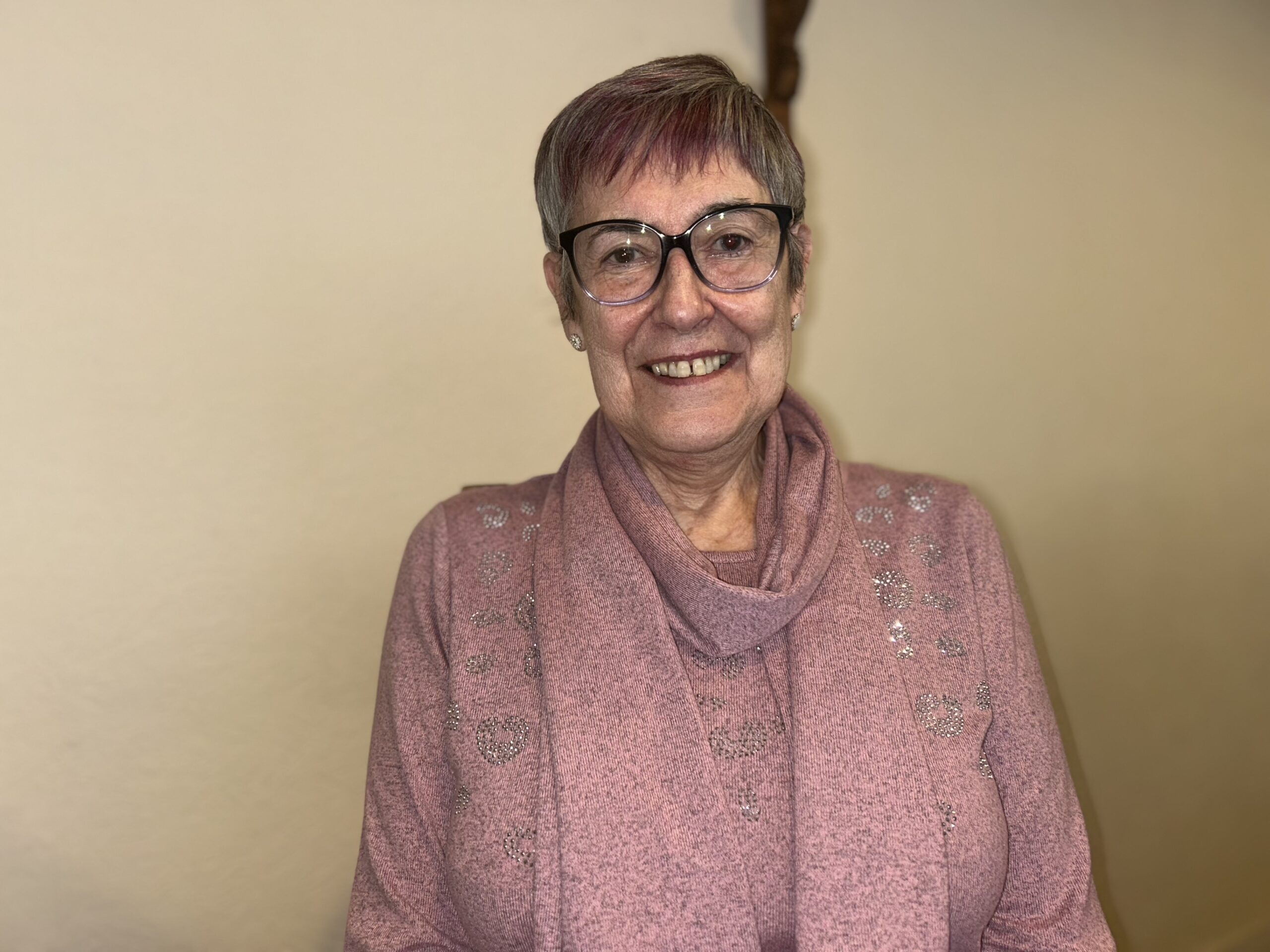
Born Ugochukwu Blessed Uchechi, the gospel singer and professional Master of Ceremonies (MC), is a broadcast journalist currently serving with Wazobia FM Lagos.

Ugochukwu Blessed Uchechi. Credit: Uche Nwayiocha
During her service in 2017, she worked at the FRCN Equity Radio in Birnin Kebbi, where she was given the northern name Sarauniya (Queen).
Youth Corps members undertake Community Development Service (CDS) by designing to benefit the local host community and receive a monthly stipend of N33,000. Graduates over 30, part-time workers, or those with security exemptions are exempted and receive certificates.
The programme, which is a prerequisite for many jobs in Nigeria, prepares the youth for valuable work experience, networking, and exposure to different cultures ahead of the labour market.
Because of the growing security challenges, there have been incidents of kidnapping and violence, which have raised concerns among parents about the safety of corps members.
Despite the few challenges, Nwayiocha‘s experience has the capacity to inspire a lot of young people afraid of being posted to various parts of the country to serve, while healing a divided nation towards entrenching peace, unity and progress.