





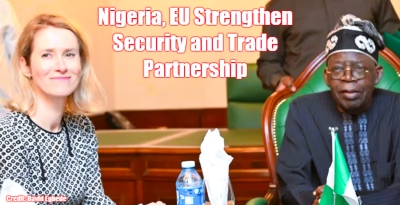
President Bola Ahmed Tinubu on Tuesday held a high-level meeting with Kaja Kallas in Lagos, reaffirming Nigeria’s commitment to strengthening diplomatic and economic relations with the European Union (EU).
The engagement brought together key figures in Nigeria’s security and economic structure, reflecting the seriousness of ongoing discussions between both parties.
The meeting, which followed earlier engagements in Abuja, focused on deepening cooperation in areas considered vital to both regions.
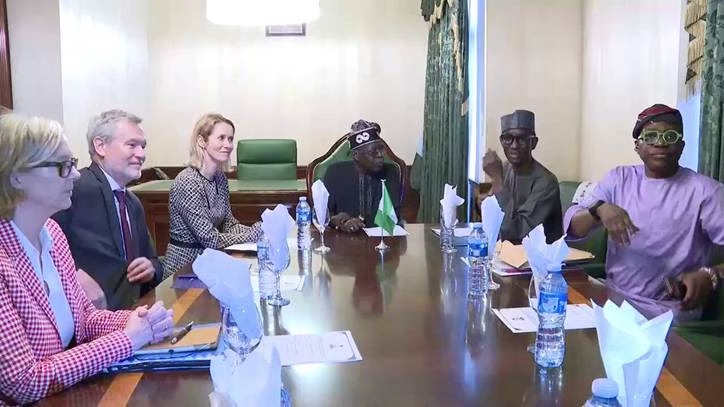
President Bola Ahmed Tinubu receives EU High Representative Kaja Kallas during a high-level meeting in Lagos. Credit: Advocatus Africa.
Seeking Stronger Global Alliances to Address Internal Security
It comes at a time when Nigeria is seeking stronger global alliances to address internal security challenges and economic pressures.
The presence of top government officials highlights a coordinated effort to align national priorities with international opportunities.
This development signals a growing recognition of Nigeria’s strategic importance in global affairs.
The talks emphasised the need to strengthen collaboration in both security and economic sectors, with both sides exploring practical pathways for partnership.
Discussions centered on improving responses to evolving threats, including insurgency, cyber risks, and broader regional instability.
At the same time, both parties considered opportunities to expand trade and investment in critical sectors such as infrastructure, technology, and natural resources.
The EU expressed interest in building long-term economic ties that support mutual growth and stability.
Nigeria, in turn, is positioning itself to benefit from increased foreign investment and technical cooperation.
The success of these engagements will depend largely on implementation and sustained commitment from both sides.
Focus on Security Cooperation and Economic Opportunities
Central to the discussions was the need to deepen security cooperation, with both Nigeria and the EU acknowledging the urgency of addressing evolving threats.
From terrorism and insurgency to cyber risks and regional instability, both sides emphasised intelligence sharing and coordinated responses as key pillars of future collaboration.
The EU delegation highlighted the importance of working with reliable partners like Nigeria in maintaining regional and global stability.
Alongside security, trade and investment were identified as critical areas for expansion, particularly in sectors such as infrastructure, technology, and critical raw materials.
Nigeria’s vast natural resources and strategic position in Africa make it an attractive partner for the EU’s long-term economic plans.
However, analysts stress that the true value of such agreements will depend on implementation, transparency, and the ability to translate diplomatic engagements into tangible benefits for ordinary Nigerians.