

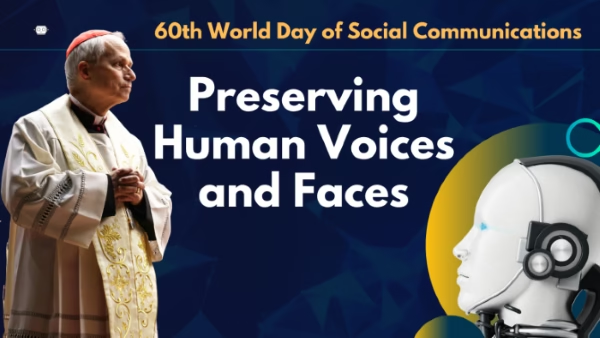
The Catholic Church, educational institutions, and society have been urged to be deliberate in guiding the use of Artificial Intelligence (AI) to safeguard human dignity and identity amid rapid technological advancement.
Prof. Godfrey Danaan, Professor of Media and Communication Studies at the University of Jos, Central Nigeria made the call at the 60th Diamond Jubilee Celebration of World Communications Day 2026.
The event was organised by St. Augustine Major Seminary (SAMS) in collaboration with the Catholic Media Practitioners Association of Nigeria (CAMPAN) in Plateau State.
“Technology may connect us, but it must never replace us. AI is reshaping how we think about ourselves, and in many ways, human dignity is increasingly under pressure,” Danaan lamented.
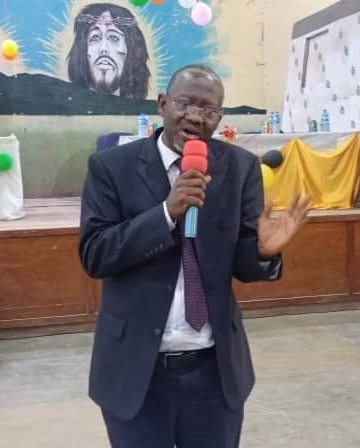
Prof. Godfrey Danaan, Professor of Media and Communication Studies, University of Jos, Nigeria.
He identified deepfakes as a major threat, describing them as AI-generated manipulations of images, videos, and voices that “blur truth and fiction.”
“The crisis of our time is not merely AI itself; it is the erosion of trust. When your face or voice can be copied and manipulated, your dignity can also be stolen,” he said.
“AI must remain subordinate to human intelligence and moral responsibility.”
With reference to Pope Leo’s message for World Communications Day, the guest speaker stressed that “our faces, voices, and identities are sacred expressions of our humanity and should never be manipulated carelessly.”
Danaan acknowledged the opportunities AI offers for evangelisation, noting that “AI has simplified many aspects of ministry and expanded the reach of the Gospel. Today, sermons, teachings, and spiritual reflections can reach millions of people globally within seconds.”
He added that the Vatican has consistently emphasised that “AI must remain subordinate to human intelligence and moral responsibility” and that technology must support the common good.
The professor raised concern over the weak digital presence of many Catholic dioceses in Nigeria, particularly on Facebook.
After reviewing about twenty dioceses, he found that only a few maintained active and engaging platforms in the 21st century.
“The Diocese of Nsukka stood out as one of the most active dioceses in terms of regular content creation, engagement, and consistent updates. Lafia Diocese and Kontagora Diocese also showed strong levels of activity and interaction,” he stated.
Other dioceses, including Sokoto, Makurdi, and Bauchi, showed moderate activity, while several had pages that were “only minimally active, while others appeared almost abandoned online.
“This absence is dangerous because visibility matters in today’s digital culture. If people search for a diocese or Catholic institution online and find no active presence, they may wrongly conclude that little or nothing is happening there,” he warned.
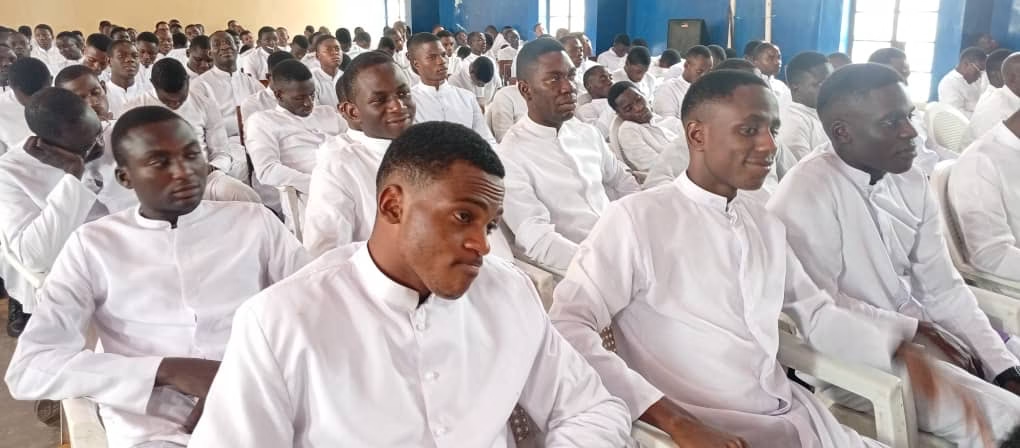
Some Seminarians at the event.
“Every diocese should have a structured media presence.”
Danaan urged the Church to become more deliberate about digital engagement, recommending that “every diocese should have a structured media presence” and that “every parish should understand that evangelization today includes responsible participation in the digital world.”
He called for greater media and AI literacy, reiterating that people must understand “how AI works, how misinformation spreads, and how digital manipulation occurs.
“Educational institutions, seminaries, churches, and families must take this responsibility seriously,” he said, advising individuals to limit exposure of their voice and facial data online, use verification tools, and rely on credible sources before sharing information.
“The challenge is not whether AI will exist, but whether humanity will guide it wisely. Technology must never harm the people it was created to help. We must shape technology before technology shapes us,” Prof Danaan stated.
“Every technological development must uphold the dignity of the human person.”
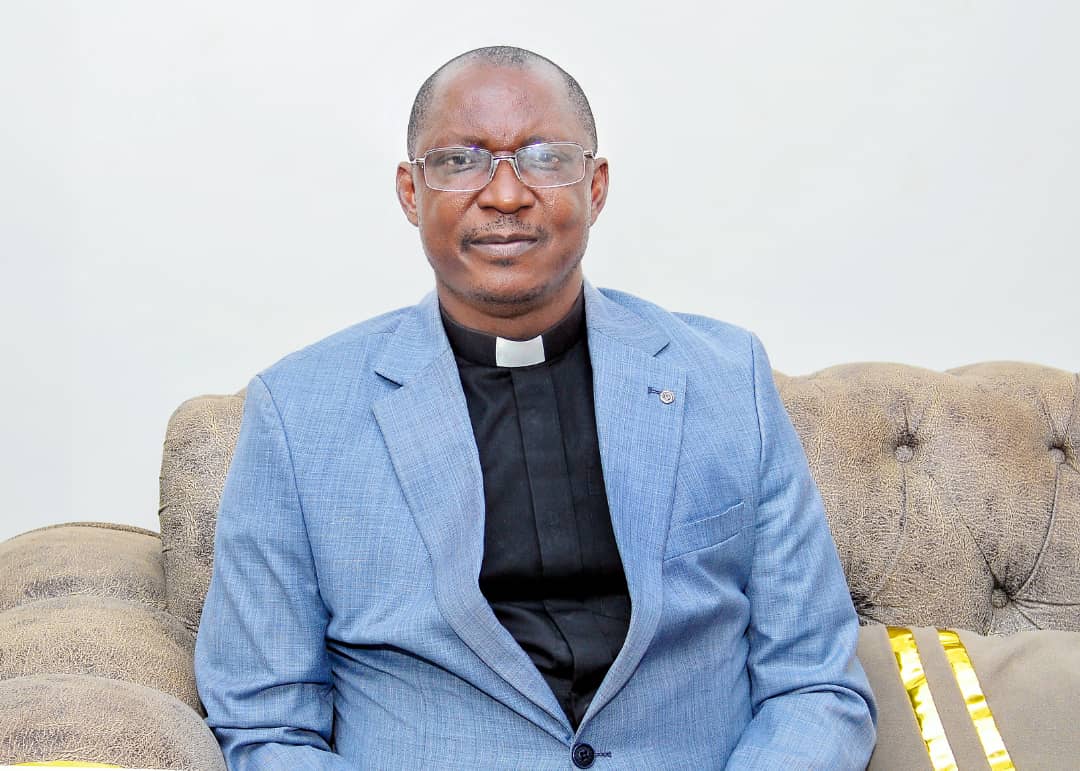
The Rector of St. Augustine’s Major Seminary, Jos, Very Rev. Fr. Dr. Peter Hassan, acknowledged the contributions of AI to communication, education, healthcare, pastoral ministry, research, and security, but warned of its dangers when misused.
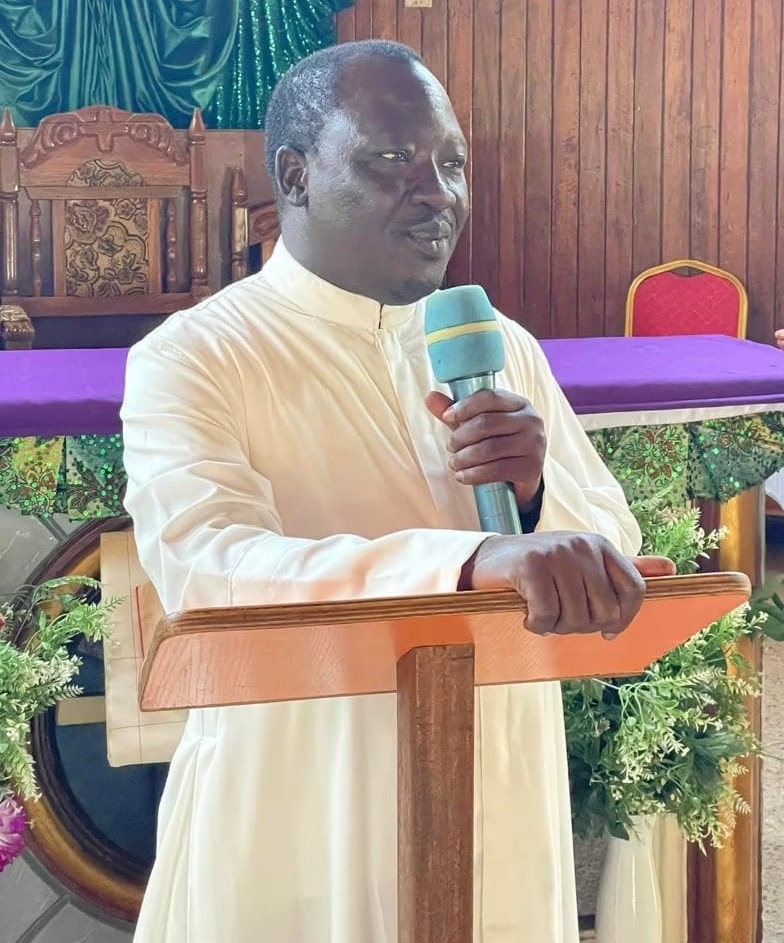
Very Rev. Fr. Dr. Peter Hassan, Rector, St. Augustine’s Major Seminary, Jos.
“We cannot deny the enormous benefits that artificial intelligence and modern communication technologies brings. However, while the Church acknowledges these benefits, she also raises a prophetic voice concerning the dangers that accompany the misuse of these technologies,” he noted
“Artificial intelligence, when detached from moral responsibility and respect for the human person, can become a threat to truth, freedom, identity, and dignity.”
He added that young people, especially seminarians and students, are vulnerable to “a digital culture that can weaken reflection, moral discipline, genuine community life, and spiritual depth.
“As educators and formators, we must therefore ask: How do we embrace innovation without losing our humanity? How do we use artificial intelligence without allowing it to redefine the meaning of truth, conscience, and personhood? How do we ensure that technology remains a servant of humanity and never its master?” Hassan rhetorically asked.
He said the Church’s position remains clear; “Every technological development must uphold the dignity of the human person, promote the common good, and respect ethical responsibility. No machine, however intelligent, can replace the human conscience enlightened by God.”
“The rise of artificial intelligence does not inevitably lead to the decline of human capacities.”
Prof. Gonsum Christopher Longji of Plateau State University, Bokkos, speaking on “The Rise of Artificial Intelligence and the Decline of Human Capacities: Myth or Reality?,” maintained that the impact of AI depends on how societies integrate it within their cultural and ethical frameworks.
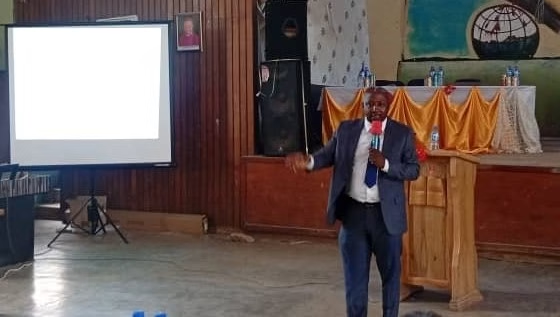
Prof. Gonsum Christopher Longji of Plateau State University, Bokkos, Central Nigeria.
“There is a growing concern that overreliance on AI technologies may undermine critical human capacities if not balanced with context-sensitive pedagogies.
“The rise of artificial intelligence does not inevitably lead to the decline of human capacities. Instead, it reshapes how these capacities are expressed and utilised. The strongest academic position today is that AI does not simply ‘decline’ or ‘enhance’ human capacities, it restructures them.”
He stressed that “uncritical dependence can weaken specific skills like deep attention and independent reasoning,” he emphasised.
Also at the event were the Communications Director of the Archdiocese of Jos, Rev. Fr. Oscar Pam and the Chairman of CAMPAN Plateau State, Mr. Roland Longs.
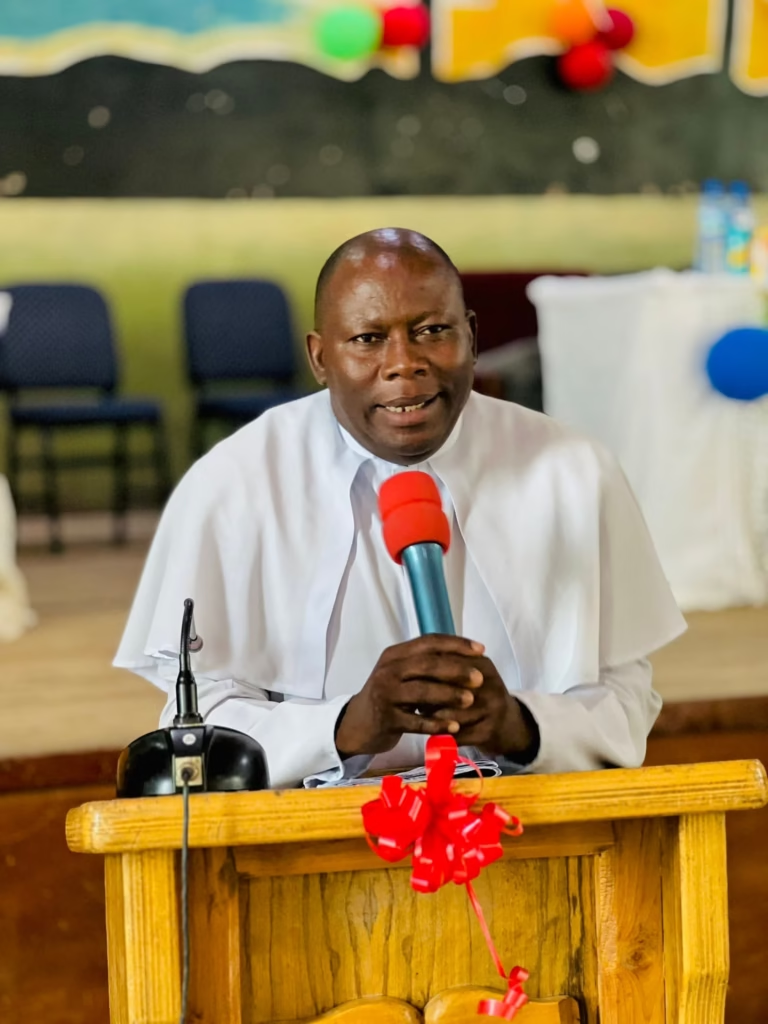
Rev. Fr. Oscar Pam, Communications Director of the Archdiocese of Jos.
In their separate speeches, they commended the organisers of the event, hoping that it would bear positive fruits in the communication apostolate of the Church in Nigeria.
On the partnership between SAMS and CAMPAN, Mr. Longs noted that it has created an opportunity for media practitioners to interact with students and inspired them towards moulding good communicators for future missions and the propagation of the Gospel of Jesus Christ to other nations of the world.
Editor’s Note: Featured photo is courtesy of RVA News.