



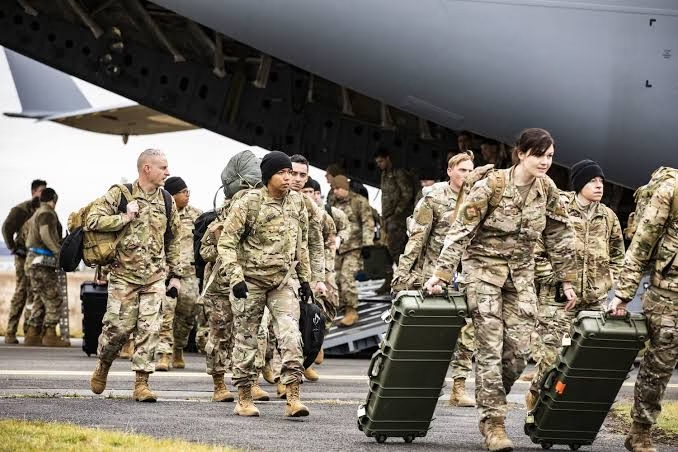
Despite the rising attacks in Nigeria’s Middle Belt Region, the United States has withdrawn most of its military personnel deployed to Nigeria after completing a joint counterterrorism operation in the Lake Chad Basin.
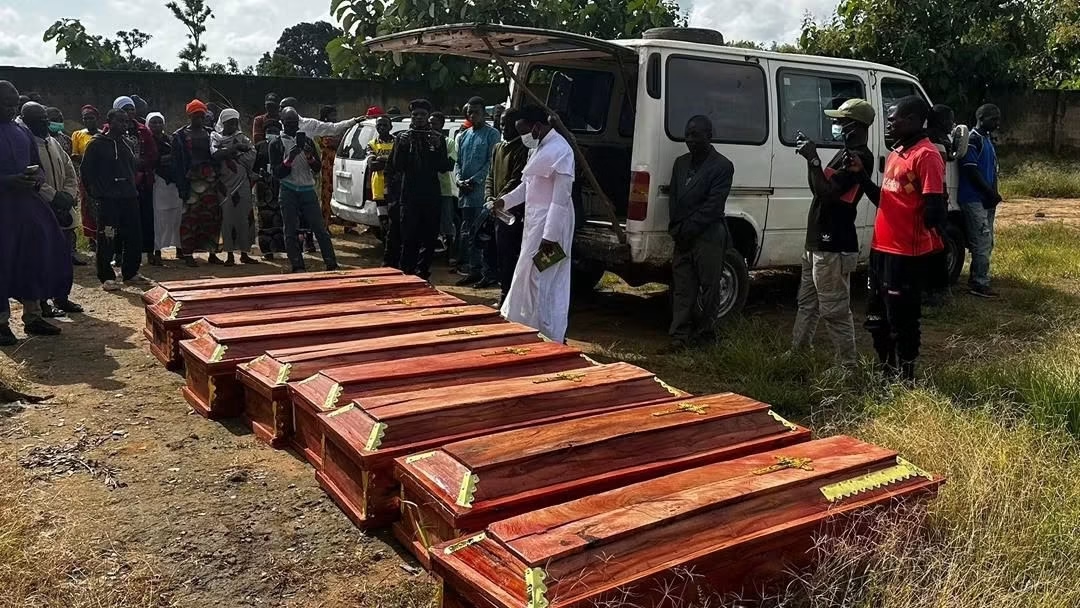
The area remains a critical flashpoint, with reports from civil society groups indicating an average of about 120 attacks per month throughout central Nigeria.
In February 2026, the U.S. deployed around 200 military personnel to Nigeria to aid in intelligence and counterterrorism efforts against ISIS and extremist groups in the Lake Chad Basin.
The deployment followed Nigeria’s redesignation as a Country of Particular Concern (CPC) by US President Donald Trump, along with a commitment to enhance counterterrorism support.
Disclosing the withrawal move, during a virtual press briefing on the outcome of the African Chiefs of Defence Conference 2026, the Commander of US Air Forces in Africa, General Dagvin R.M. Anderson, who lauded the ongoing intelligence cooperation with Nigerian authorities said, “I think the partnership that we’ve shown recently with Nigeria, where Nigeria’s a very capable and large country — it’s got a strong economy; it’s got a large, educated population; it’s got a very capable military.”
He added that “there are things that we have learned in the counterterrorist fight over several years that we were able to assist and integrate with them to help them with their intelligence and help with the intelligence sharing that eventually led to a cooperative effort to where we were able to bring some unique capabilities that the U.S. brings and be able to prosecute together the number two leader within the ISIS or Daesh organization who is responsible for much of their global operations, their global media, and their recruiting.”

Credit: www.theglobalstatistics.com.
General Anderson stated that the two countries will work together on effective counterterrorism efforts going forward.
“So I think as we go forward, that is an example of how we’re looking at engaging with partners to help them be more effective by only bringing unique U.S. capabilities that allow the partner to be effective in these fights,” he stated.
The U.S military chief assured that despite the withdrawal, the collaboration between Washington and Abuja remains active, particularly in intelligence-sharing targeted at Islamic State (ISIS/Daesh).
Anderson stated that the mission justifying the deployment of US forces is complete, allowing most troops to withdraw. He added that the US will continue to provide intelligence support if Nigeria requests it.
“And so that operation in the Lake Chad Basin of Nigeria not only helped the countries in that immediate region; it also helps countries globally as that disrupts the ISIS network.
“And so — and then we have withdrawn much of our forces that were just there for that operation, but are continuing the partnership that Nigeria has asked for to help continue with the intelligence sharing and the understanding that’s necessary to be able to prosecute these difficult tasks,” he noted.
The US Air Force commander described Nigeria as a strategic regional partner with a capable military, highlighting that cooperation between both countries has led to significant achievements in the fight against ISIS.
He emphasized that ongoing collaboration among African governments, international partners, and the private sector is vital for addressing security issues and fostering economic growth and investment in the region.
Editor’s Note: Featured photo is courtesy of naijanews.com.