
The Vatican has officially turned down a request from the German Bishops’ Conference to allow qualified laypeople, including women, to deliver the homily during Holy Mass.
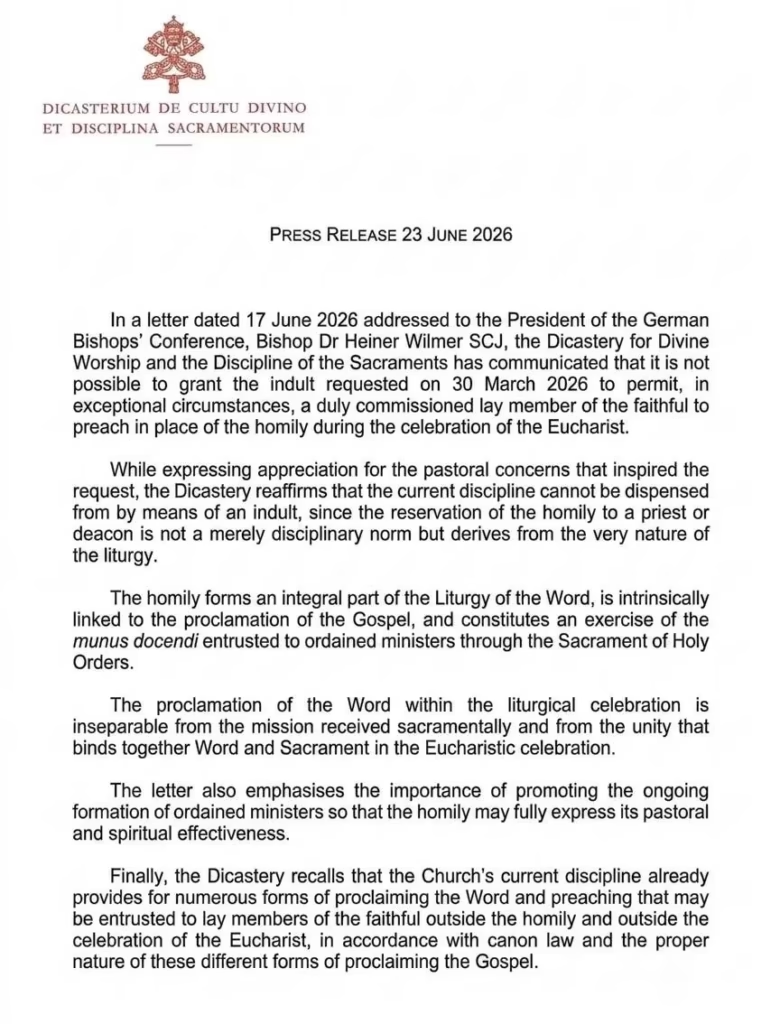
In a letter dated 23 June 2026 issued by the Vatican Dicastery for Divine Worship and the Discipline of the Sacraments, Rome denied the German bishops’ petition for a special dispensation (an indult), stating that the current restriction cannot be bypassed.
Reasons for the Rejection
The Vatican’s decision highlighted theological and liturgical principles rather than administrative rules, stressing that the nature of Sacred Liturgy provides that the homily be served for ordained ministers (priests or deacons).
“The reservation of the homily to a priest or a deacon is not merely a disciplinary form but derives from the very nature of the liturgy,” the Dicastery emphasized.
Additionally, the injunction drew upon the sacramental connection between the minister and the sacrament, highlighting that the homily is an integral part of the Liturgy of the Word, which is intrinsically linked to the proclamation of the Gospel reserved for priests and deacons because of the sacramental mission received through Holy Orders.
“The homily forms an integral part of the Liturgy of the Word, is intrinsically linked to the proclamation of the Gospel, and constitutes an exercise of the munus docendi entrusted to ordained ministers through the Sacrament of Holy Orders,” the statement noted.
The Catholic Church maintains that during the Eucharistic celebration, the ordained priest acts in persona Christi (in the person of Christ), underscoring why the homily must be delivered by someone who has received sacramental ordination.
The Vatican dismissed proposals to circumvent the rule by creating a semantic distinction between a “homily” (reserved for clergy) and a “sermon” given by a lay person, insisting that its placement immediately after the Gospel legally and liturgically serves the same function.
Background of the German Proposal
Through Bishop Heiner Wilmer, chairman of the German Bishops’ Conference, the Bishops had formally requested the permission of the Vatican to allow qualified lay faithful to preach at Mass.
As part of the synodal way, the initiative originated from resolutions passed during Germany’s “Synodal Way”—a multi-year reform process involving both bishops and lay representatives.
Advocatus Africa gathered that the process was aimed at addressing pastoral challenges and expanding roles for non-ordained members, particularly women, who cannot be ordained under current Catholic doctrine.
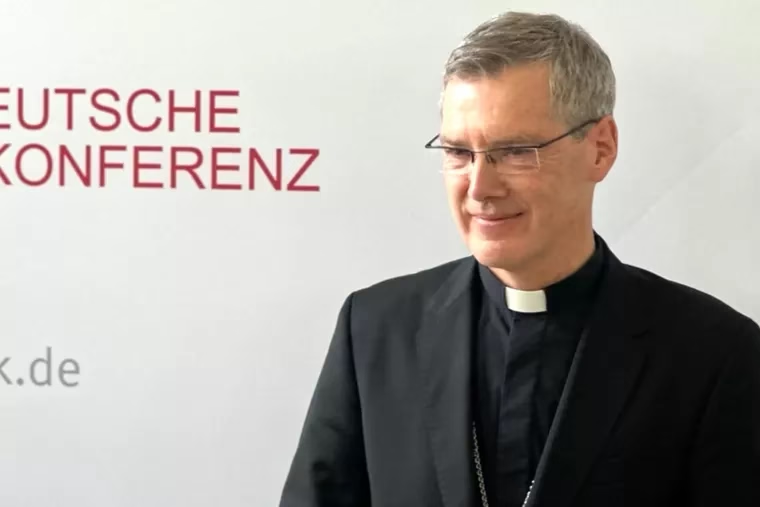
Bishop Heiner Wilmer, chairman, German Bishops’ Conference. Credit: Rudolf Gehrig/EWTN News / EWTN/NCR).
To this end, the German bishops adopted specific regulations to commission theologically trained lay Catholics to preach on Sundays and feast days under exceptional circumstances, which they submitted to Rome for approval.
Conclusion
While the Vatican firmly closed the door on lay preaching during the Eucharistic liturgy, it explicitly noted that lay faithful are encouraged to contribute to evangelisation in other ways.
The Disastery observed that “the Church’s current discipline already provides for numerous forms of proclaiming the Word and preaching that may be entrusted to lay members of the faithful outside the homily and outside of the Eucharist, in accordance with Canon Law and the proper nature of these different forms of proclaiming the Gospel.”
Outside of Mass, laypeople are fully permitted to preach and give sermons during prayer services, catechetical events, or other liturgies outside of the context of Holy Mass.
Lay members can also collaborate closely with clergy by helping to research and prepare the content of the homilies delivered by priests and deacons.
The letter emphasized “the importance of promoting the ongoing formation of ordained ministers so that the homily may fully express its pastoral and spiritual effectiveness.”
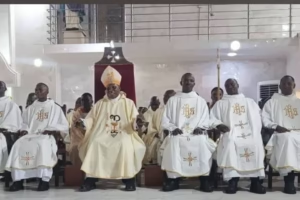
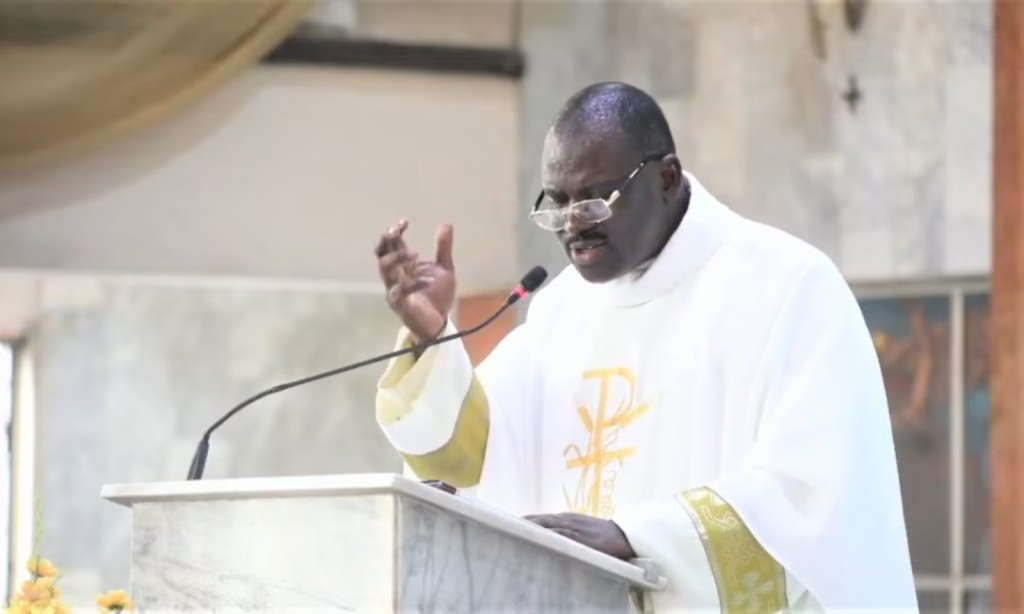
Editor’s Note: Illustrated photo of Fr. Mike Umoh is courtesy of Nigeria Catholic Network.