





By Dangwam Jude Dabee
The Catholic Bishops’ Conference of Nigeria (CBCN) has warned that the country’s deepening insecurity, poverty, failing infrastructure and what it described as assaults on human dignity are threatening the social fabric of the nation, calling on government, political leaders and citizens to work together to restore hope and build a society centred on the value of human life.
Their message was not only limited to the challenges facing the Catholic Church only but offered a broad assessment of the condition of the Nigerian society, touching on insecurity, poverty, education, infrastructure, technology and artificial intelligence among others.
The Bishops made the call in a communiqué signed by Archbishop Matthew Man-Oso Ndagoso of Kaduna, President of the CBCN, and Bishop Peter Olukayode Odetoyinbo of Abeokuta Diocese, Secretary of the Conference issued at the end of their Second Plenary Meeting for 2026, held from September 10 to 18 at the Our Lady and St. Kizito Pastoral Centre, Oke-Gada, Ede, in Osogbo Diocese, Osun State.
They commended Pope Leo XIV for his recent encyclical, Magnifica Humanitas (On Safeguarding the Human Person), urging Nigerians to study the document and apply its principles to contemporary social challenges.
According to the bishops, human dignity is “an inalienable gift rooted in being created in the image and likeness of God,” and is “intrinsic, unconditional, and inviolable.”
They stressed that a person’s dignity does not depend on what he or she can achieve, contribute or possess, but on the inherent worth of every human being.
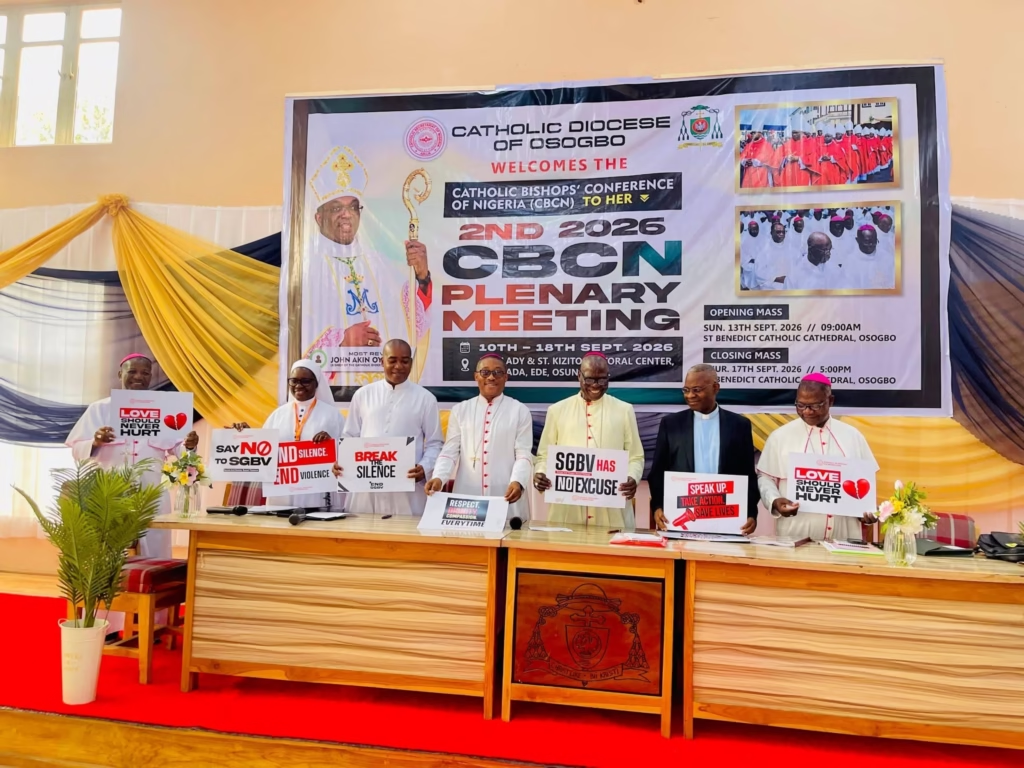
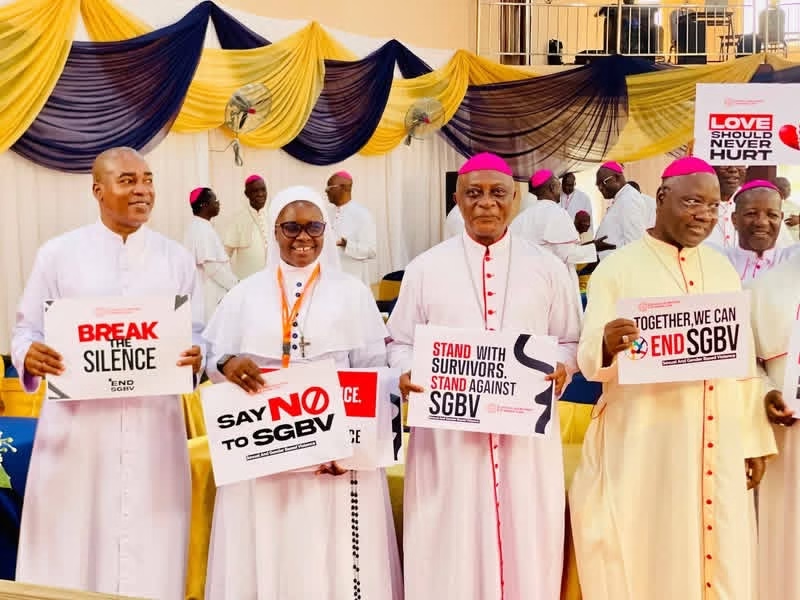
The Bishops holding placards to raise objections to the Foreign Aids Regulation, Transparency and Disclosure Bill 2026.
For the Bishops, the principle of human dignity has profound implications for a country where millions continue to confront insecurity, displacement, unemployment, poverty and inadequate public services.
“The recognition of human dignity and the right to life lies at the foundation of Catholic Social Teaching,” noting that the principles are prerequisites for the pursuit of the common good and social justice.
Insecurity and the human cost
The Bishops raised the most urgent concern which is the continuing insecurity across the country that has turned human beings into commodity of bargain reducing human dignity to nothing.
They acknowledged government’s move to decentralise the police system as part of efforts to confront insecurity, but warned that any reorganisation of security institutions must serve the common good rather than “personal, ethnic, political and religious interests.”
The Bishops said widespread violence, kidnapping, banditry, illegal mining and the theft of the nation’s natural resources continue to deprive citizens of peace and threaten national unity.
They made strong demands for the Nigerian government to recover territories being used for criminal activities and ensure that such land is returned to productive use.
The Bishops noted that the concern goes beyond the loss of properties, “The continued attacks on schools and places of worship, as well as the abduction and killing of students and worshippers, have created consequences that reach deep into the social life of communities.”
The Bishops urged government at all levels to intensify efforts that would allow displaced people to return safely to their ancestral homes, while calling for migrants and refugees to be treated with respect and human dignity, with their basic rights and needs protected.
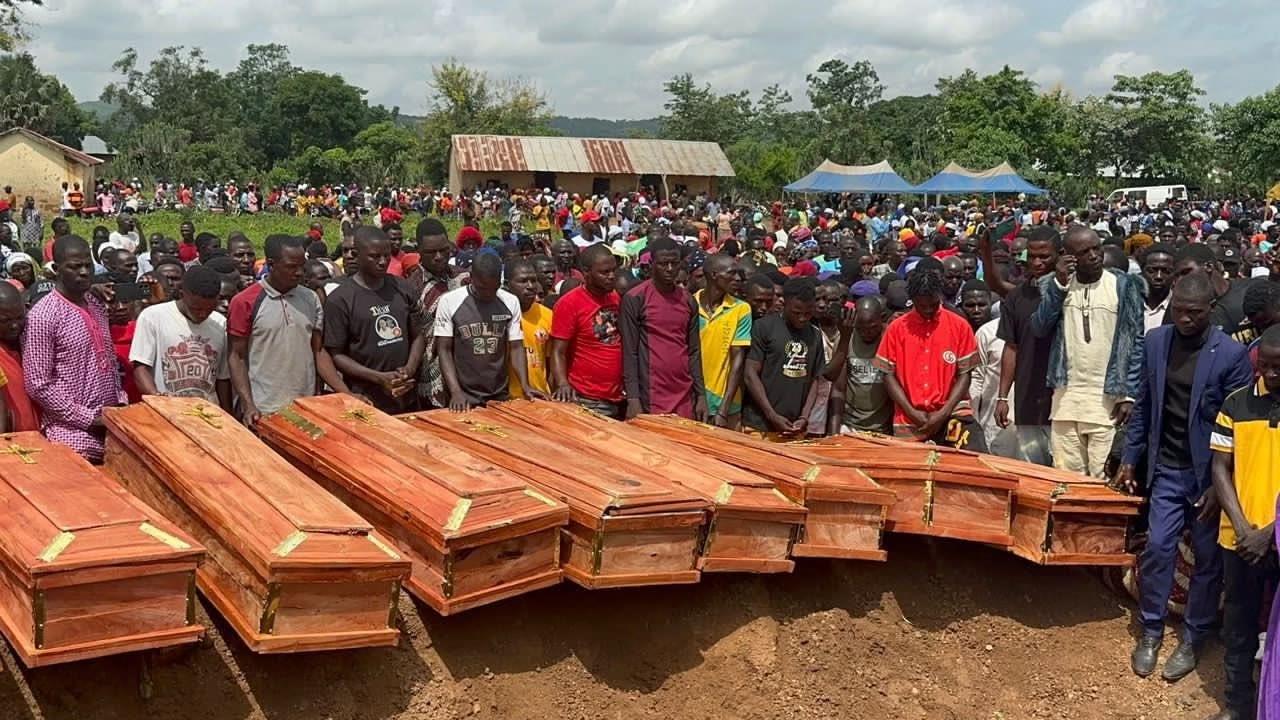
While the Church leaders prayed for those killed in the Nigerian violence, they emphasised for stronger security forces, improved intelligence gathering and accountability for perpetrators of the inhuman crime in the country
They also urged citizens to report suspicious activities, cooperate with security agencies and resist attempts to turn insecurity into an instrument of ethnic or religious division.
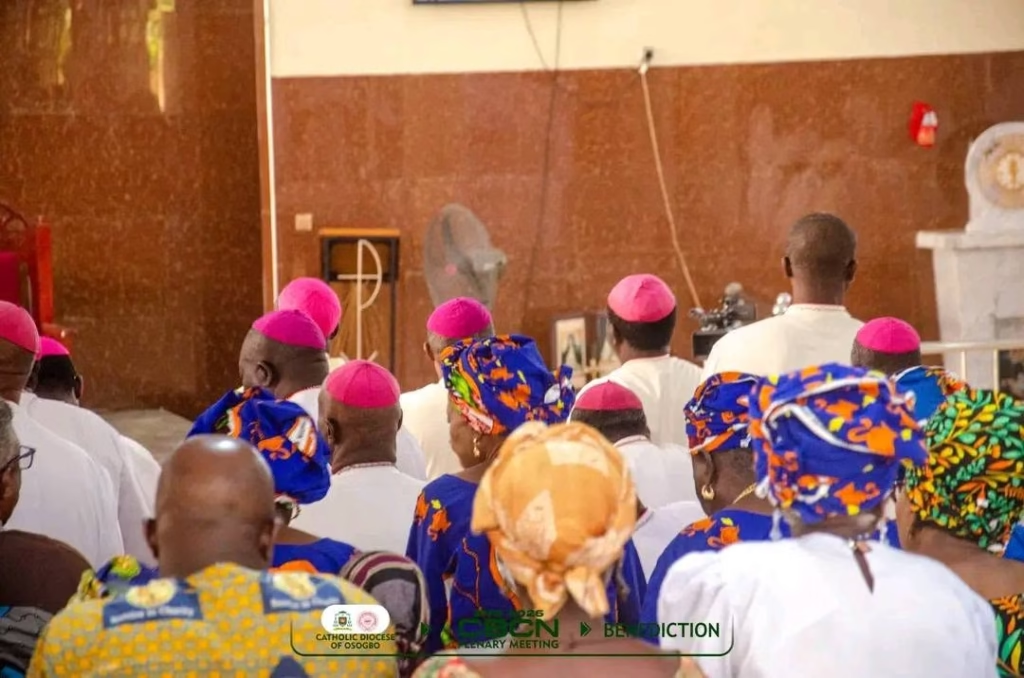
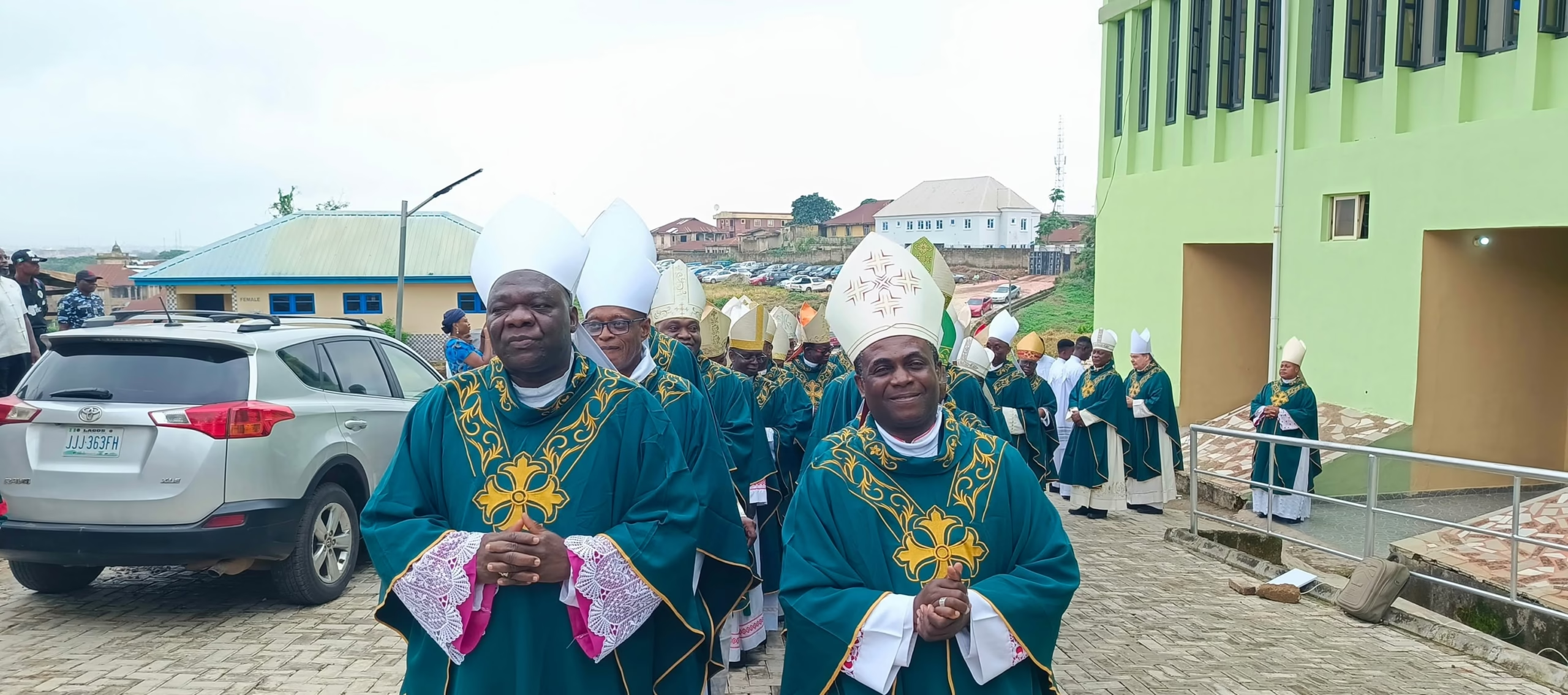
A united Church in prayer. Credit: Catholic Diocese of Osogbo.
Poverty as an instrument of control
The Bishops also painted a sobering picture of the economic pressures confronting Nigerian families, a reality they said is getting out of hand.
They expressed “grave concern” over what they described as the use of poverty as “a despicable instrument of control in our nation.”
According to them, hardship and the inability of many families to meet basic needs are leaving citizens struggling to survive despite the country’s enormous natural and human resources.
The prelates called on federal and state governments to create more employment opportunities, support local businesses and established policies that would enable private-sector growth.
They demanded concerted action to reduce poverty, pain and suffering, while encouraging citizens to engage in honest labour, support local enterprises and reject criminality and corrupt practices.
Their appeal reflects a broader concern that economic hardship is not merely a financial issue but one capable of affecting the dignity, choices and future prospects of individuals and families in the country.
2027: Bishops call for credible elections
As the 2027 general elections approached in Nigeria, the CBCN called on political parties, candidates, electoral institutions, security agencies, voters and other stakeholders to work towards free, fair and credible elections.
The Fathers of the Church encouraged eligible voters to participate actively and vote for qualified candidates in accordance with their consciences.
They said the Conference had already issued a pastoral letter on the forthcoming elections and urged citizens to study and follow its provisions.
The Bishops also directed dioceses and parishes across the country to embark on civic education and voter mobilisation, alongside end-of-month fasting and Rosary processions from October to December 2026.
The religious leaders announced December 8, 2026, as a special national day of prayer and fasting for the success of the elections.
The intervention places the Church’s extensive grassroots network at the centre of preparations for the electoral season, particularly through civic engagement and mobilisation.
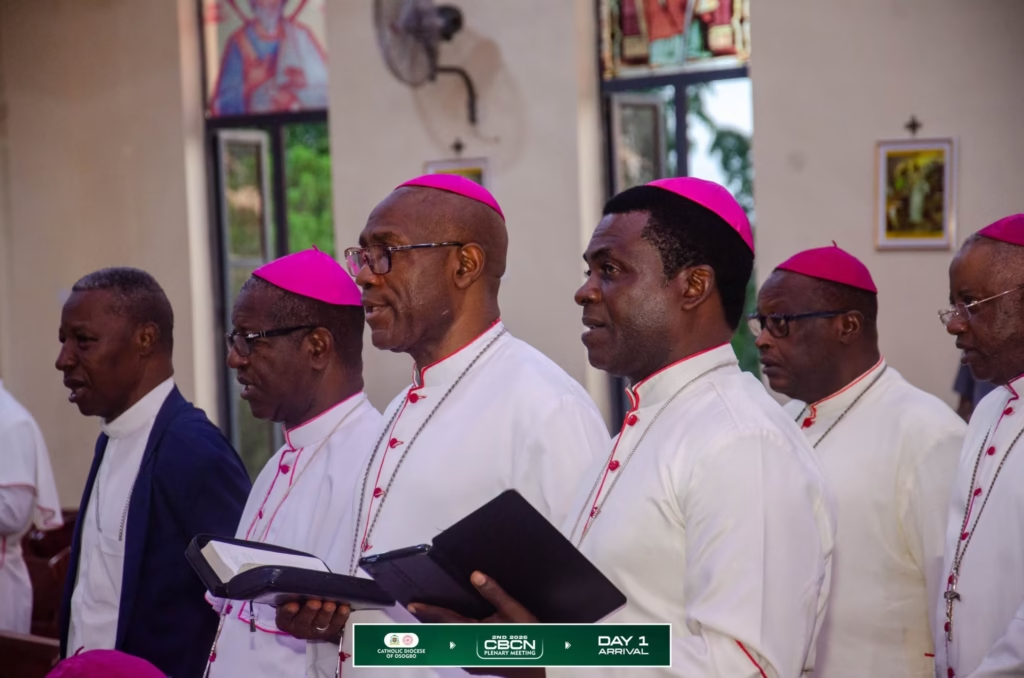
The Bishops at prayer – (L/R) Most Rev. Dr. Matthew Audu of Jos Archdiocese, Most Rev. Dr. Julius Kundi of Kafanchan Diocese, Most Rev. Dr. Anselm Lawani of Ilorin Diocese and Most Rev. Dr. Gerald Musa of Katsina Diocese. Credit: Catholic Diocese of Osogbo.
Roads, electricity and the infrastructure deficit
The Bishops lamented the state of infrastructure at the state and federal level describing it as another nightmare to the nation’s human development.
They identified bad roads, erratic electricity supply and failing public utilities as obstacles to economic growth and the ordinary routines of daily life as some of the realities Nigerians had to battle with it over the years.
They charged government to invest transparently in public amenities, repair critical roads and provide reliable electricity and clean water.
They also demanded that railway transportation facilities should be extended across the country, describing efficient transport infrastructure as important to improving the socio-economic life of Nigerians.
The charged citizens to also protect public infrastructure from vandalism and report corruption associated with infrastructure projects.
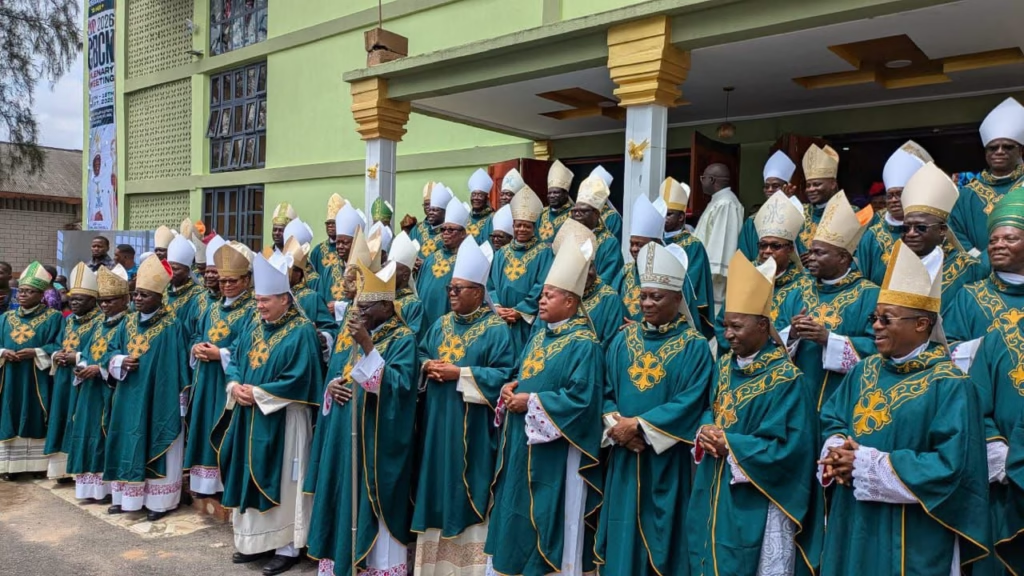
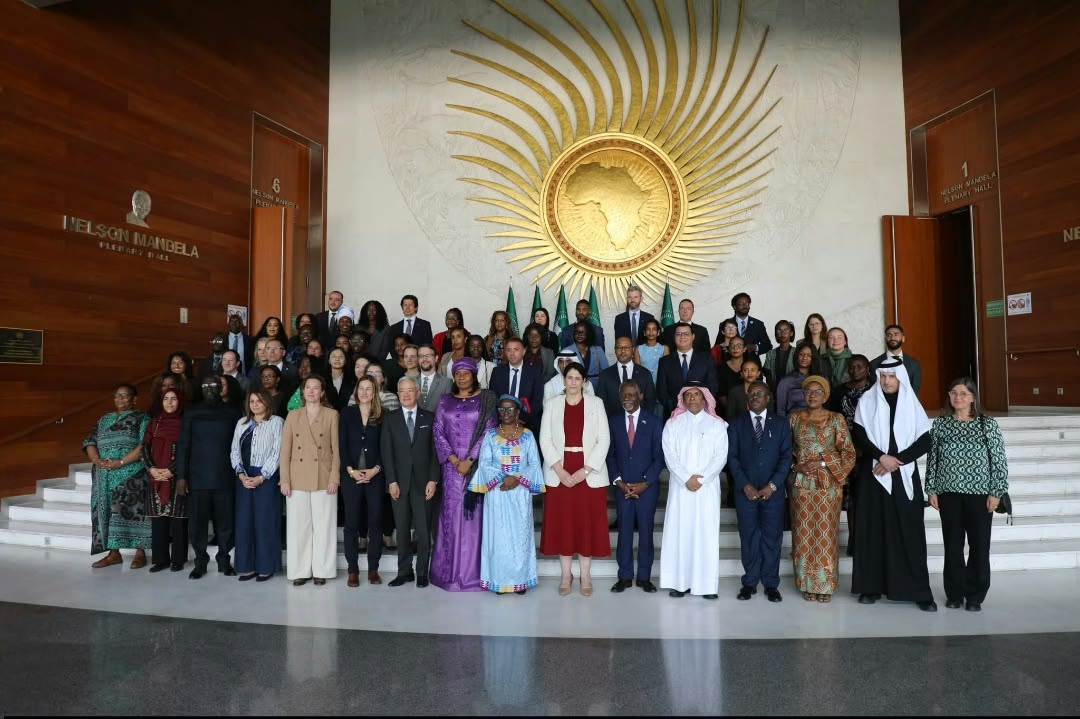
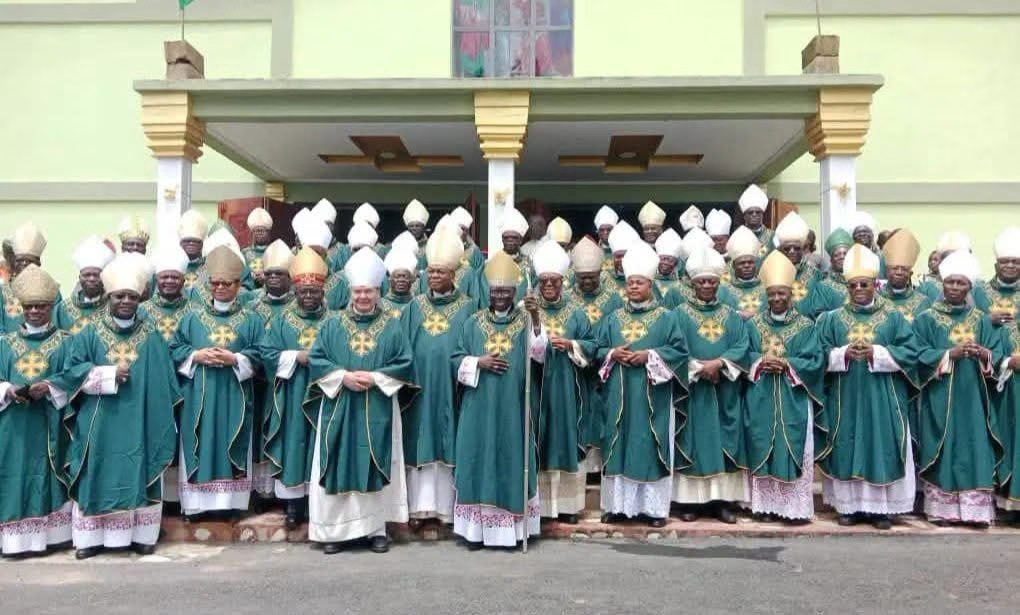
A group photo after the CBCN 2nd 2026 plenary assembly.
Technology, AI and the politics of responsibility
The Bishops said technological advancement must remain subordinate to human dignity and ethical responsibility as Nigeria moves deeper into the digital age.
They described technology as “a profoundly human reality” linked to human autonomy and freedom, while stressing that technological tools should not be treated as inherently evil or antagonistic to humanity and warned that, “Technology is not inherently evil or antagonistic to humanity, but it is never neutral.”
The Bishops encouraged the use of technology as a vehicle for evangelisation and urged Nigerians to transform data into knowledge and insights capable of creating greater value.
They tasked politicians and other users of technology to be responsive and adhere to ethical conduct in the deployment of technology and Artificial Intelligence, particularly as the country approaches the 2027 elections.
The Church Fathers insisted that AI and technology should serve people rather than becomes a tool for manipulation or other forms of social harm.