




Introduction
Recently, I came across an article by Stephen Auth (2019) titled “Bringing Back Lapsed Catholics,” published by Catholic Exchange. The author suggests that some Catholics left the faith in their youth as a rebellion against parental expectations. In contrast, others drifted away due to personal life choices, particularly regarding marriage—such as cohabitating without the sacrament of Holy Matrimony.
Unfortunately, he concludes that many of these individuals today identify as “Culturally Catholic” but do not actively practice their faith. A thought-provoking comment by Eustace Dsa on the article resonates with this sentiment: “Most Catholics in the West and even in the East have a poor understanding of the real presence…” (Auth, 2019). This emphasises a crucial aspect of our faith. We should remember that Jesus’ heart, which was pierced with a lance (cf. John 19:34), overflows with boundless mercy and graces, a theme central to St. Maria Faustina’s message of divine mercy. Inspired by the theme “The Message of Mercy for Today’s World,” it is crucial seek concrete ways of getting our brothers and sisters back to the family of God. To begin, what constitutes the family of God?
“We should remember that Jesus’ heart, which was pierced with a lance (cf. John 19:34), overflows with boundless mercy and graces, a theme central to St. Maria Faustina’s message of divine mercy.” – Dyikuk
Church as Family of God
The Catechism of the Catholic Church teaches that “the Church is nothing other than ‘the family of God’” (CCC. No 1655). In his teaching, St. Paul explains that Christ is the eternal Son, sent to regather in himself those whom the Father has called to be his beloved sons and daughters (Cf. Eph 1:5). Through Divine Filiation, all the baptised receive sanctifying grace that incorporates them into God’s family. The Sacrament of Confirmation (CCC. Nos 1213, 1303, 2026, 2798) strengthens the Divine Filiation received at Baptism. This is why Christians are urged to live as a family of God within their own families and to follow the will of God in their lives (Tan, 2022). It is a given that God accepts us as his sons or daughters who call him “Abba Father” (CCC. Nos 2214, 2398).
The motif of the Church as the Family of God finds its fullest expression in the sacrifice of Holy Mass, which Christ left us as an everlasting memorial of his passion. He invites all the faithful to the Eucharistic table. However, there are many Catholics who excommunicate themselves from Holy Communion by either being Cultural Catholics who attend Mass once a year or those who stay away from receiving the Eucharist because they have not been to confession for years. Imagine a child not partaking in a family meal – how will that child, the siblings, or the parents feel? This brings us to the message of mercy.
“The motif of the Church as the Family of God finds its fullest expression in the sacrifice of Holy Mass, which Christ left us as an everlasting memorial of his passion.” – Dyikuk
The Message of Mercy for Today’s World
Biblical Perspective of Mercy and Forgiveness
The stories of the two thieves on the cross (Cf. Matthew 27:38-44; Luke 23:39-43), the prodigal son (Cf. Luke 15:11-31), the Good Samaritan (Cf. Luke 10:25-37), Mary Magdalene (Cf. John 20:11-18), and the call/conversion of both Matthew (Cf. Matthew 9:9-13) and Zacchaeus (Cf. Luke 19:1-23:46) all point to God’s mercy and forgiveness. Despite these lofty stories, I would like us to reflect on the story of the Woman of Samaria (Cf. John 4:5-15.19b26.39a.40-42). In a society where Jews and Samaritans, men and women, do not readily mix or relate with each other publicly, the story reveals how the woman who went in search of water met a stranger (Jesus) who took her through the worship of the true God in Spirit and Truth. In a jaw-breaking encounter, he reveals all that she has ever done in her life; she then throws her jar of water and returns to the city to share her testimony. We are told that many people from that city believed in him not only on account of the woman’s testimony but also based on their eyewitness accounts.
The AIDA Strategy: A Model for Mercy
Awareness, Interest, Desire, and Action (AIDA) is a marketing strategy developed by advertising strategist Elmo Lewis in 1898 to entice customers to purchase products (Heintz, 2021). 1. “A” stands for Awareness: According to this theory, a person must be aware of a product before they consider buying it. 2. “I” means Interest: This indicates that one must develop an interest in a product before making a purchase. 3. “D” represents Desire: At this stage, a person ought to desire the goods before acquiring them. 4. “A” denotes Action: This is the critical step of actually buying the item. This framework is illustrated in the encounter between Jesus and the woman of Samaria, showcasing the AIDA principle effectively. Jesus was aware of her past and struggles, became interested in saving her, and ignited her desire for “living water.” Ultimately, she acted by leaving her water jar and running back to her village, sharing her experience with the townspeople, asking them to come and see the man who revealed everything she had done, prompting them to consider if he could be the Christ. Thus, she became the first bearer of the gospel in her town (Dyikuk, 2023).
Exemplars of Mercy and Forgiveness
⮚ Maria Faustina: A Legacy of Divine Mercy Prayer and Devotion.
⮚ St. John Paul II: A Legacy of Forgiveness, Mercy, and Divine Mercy Sunday. St. John Paul II exemplified mercy when he forgave Mehmet Ali Ağca, the man who shot him at St. Peter’s Square. On December 27, 1983, he visited Ağca in Rome’s Rebibbia prison and embraced him. At the pope’s request, Italian President Carlo Azeglio Ciampi granted Ağca a pardon in June 2000, leading to his deportation to Turkey, where he was eventually released in 2010 (Tornielli, 2021; Wanted in Rome, 2024).
⮚ St. Rita of Cascia: In the 14th century, St. Rita emerged as a remarkable example of forgiveness. She forgave the individuals who murdered her husband after he had a change of heart and prayed for her sons to be spared from his wrath (Crites, 2019).
⮚ St. Maria Goretti: Similarly, it is documented that in her final moments, St. Maria Goretti—known as “The Little Saint of Great Mercy”—forgave Alessandro, who had brutally stabbed her multiple times at the tender age of 11. She wished for his repentance and his turn toward Christ. Today, she is celebrated as the patron saint of forgiveness, chastity, and victims of rape (Treasures of the Church, 2022).
How can we bring back our Brothers and Sisters to the Family of God?
1. Invite Everyone to the Banquet: In line with Pope Francis’ theme for the 98 World Mission Sunday – “Go invite everyone to the banquet,” we should view Holy Mass as our family dinner and everyday meal. This means we need to invite everyone to Mass, consciously receive Holy Communion in a state of grace, and teach others to do the same, while also teaching about the real presence of Jesus in the Holy Eucharist. As mentioned in the discussion about “Bringing Back Lapsed Catholics,” Dsa (cited in Auth, 2019) emphasised the importance of promoting the Real Presence. It is crucial that we re-catechise them as soon as possible, making them aware that Jesus Christ – Body, Blood, Soul, and Divinity – is their loving brother, eagerly waiting with open arms for them to return to the One True, Holy, Catholic, and Apostolic Church. Regardless of their past, the loving Messiah and Savior desires to start anew with them.
2. Pray, Preach, and Engage in Outreach: We must pray and seek mercy like the thief on the cross (Cf. Luke 23:39-43). We should ask God to change their hearts and open their eyes to the truth of the gospel. In addition, we need to share the message of salvation through Jesus Christ with others and embody a godly Christian life, so they can witness the transformative work God has done in us. The Mercy-Bus, a unique symbol of the new evangelisation in Scotland, along with the annual National Divine Mercy Conference, are essential opportunities for us to engage in outreach.
3. Be Marketers of the Kingdom: Just as Moses provided water to the Israelites at Massah and Meribah (Ex 17:3-17), Jesus offered the Woman of Samaria Living Water. This demonstrates that both figures teach us to be ambassadors of God’s love, mercy, and hope. We are called to be invigorated by the chalice of salvation and to invite others into the kingdom, much like the Woman of Samaria (Dyikuk, 2023). Do not hesitate to share your testimonies of faith—they truly have a powerful impact.
3. Desire the Water of Life: In His encounter with the Woman of Samaria, Jesus asked her for a drink, sparking a longing for God within her (Cf. Jn. 4:5-15, 19b-26, 39a, 40-42). Similarly, we are encouraged to seek the Living Water that leads to eternal life. This involves having faith in Jesus, following His commandments, and being willing to repent when we falter (Dyikuk, 2023). Remember, sharing the joy of the gospel with others is a fulfilling experience, so do not be afraid to do so!
4. Shun Discrimination/Social Prejudices: Like Jesus, we must be ready to break away from discriminatory traditions and social prejudices that prevent us from interacting with people based on tribe, race, colour, sex, religion, politics, and/or social standing. This involves showing mercy and focusing on genuine relationships that build trust. We should engage in conversations about day-to-day activities and be present for others when they need our support and assistance.
5. Avoid Sins Against the Holy Spirit: We should strive to overcome cynicism that leads to sinning against the Holy Spirit. The Church encourages us to resist the six sins against the Holy Spirit as outlined in The Catechism of Saint Pius X. These include despairing of being saved, presuming on being saved without merit, opposing known truth, envying another’s graces, obstinately remaining in sin, and final impenitence (Dyikuk, 2024).
6. Embrace White and Blue Martyrdom: White Martyrdom originates from the early desert fathers and confessors, who renounced worldly comforts, retreated to the wilderness, and endured hardship and persecution for their faith. This form of martyrdom does not involve taking life or shedding blood; rather, it represents a profound commitment to forsaking worldly temptations and embodying righteousness. It is characterised by a continuous journey of worship and devotion to God, reflecting a life dedicated to uniting personal sufferings with those of Christ.
Notable figures like St. Anthony of Egypt, a prominent desert father, and Anna the prophetess, who devoted her life to service in the temple, exemplify this path. In contrast, Blue Martyrdom embodies a strong desire to lead a life infused with repentance and a deep commitment to Christ. It represents a transformative journey marked by humility and recognition of one’s flaws, seeking redeeming grace. Key examples of this devotion can be seen in the lives of Mary Magdalene and the prodigal son, illustrating the powerful impact of repentance and grace (Dyikuk, 2022).
“Go invite everyone to the banquet” – Pope Francis
Conclusion
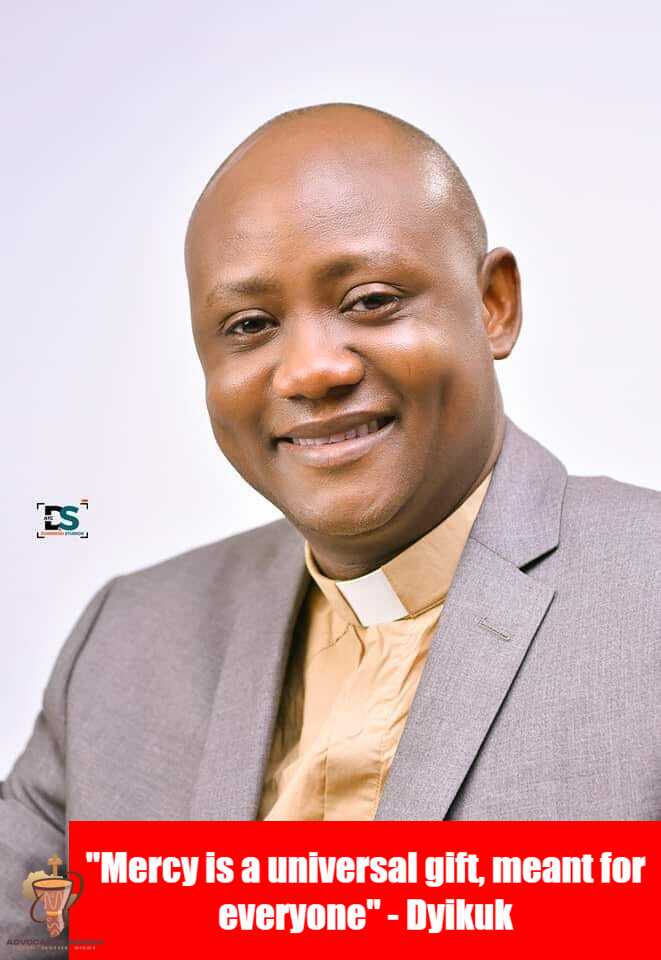
When we recite the “Our Father,” we must reflect on our brothers and sisters who may be far away, perhaps feeling isolated in the wilderness of life. It’s essential to cultivate a sense of family and fellow feeling within our homes and parishes. Mercy is a universal gift, meant for everyone. We are reminded that to err is human, and to forgive is divine; therefore, charity must begin in our own spaces. From the Rooftops and the Mercy-Bus, let us echo the powerful words of Psalm 145:8: “The Lord is kind and full of compassion; slow to anger, and rich in mercy.” The heroic example of St. Maria Faustina inspires us to become true apostles of mercy, drawing souls closer to Christ through our actions and compassion.
Editorial note: This piece was presented at the 11th National Divine Mercy Conference, which was held on Saturday, 26 October 2024, at St. Augustine’s Church, Coatbridge, Scotland, UK.