
…Church leaders have generally described the situation as a “moment of tribulation” and a “silent genocide.”
A Catholic Church in Mozambique, Southeast Africa, has reportedly been burned down by suspected Islamic extremists as part of a terror campaign that has been ongoing since 2017, leading to thousands of deaths.
St. Louis de Montfort Parish, Cabo Delgado Province, was allegedly set ablaze and destroyed on Thursday, April 30, by the Islamic State Mozambique Province (ISMP).
ISMP is an administrative official division of the Islamic State (IS), a Salafi-Jihadist militant group operating in northern Mozambique, particularly in Cabo Delgado and Nampula provinces.
Islamist insurgents attacked and burned hundreds of Churches across northern Mozambique as part of a brutal insurgency that began in 2017.
“The faith of this people of God will never be burned; it is rebuilt daily.”
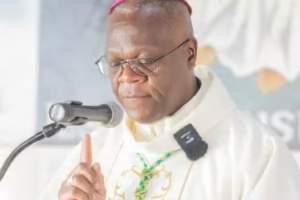
Reacting to the ugly incident, Bishop António Juliasse Ferreira Sandramo of Pemba has repeatedly appealed for international solidarity, describing the scenes as “genuine terror” where civilians are sometimes forced to watch messages of hatred while their places of worship burn.
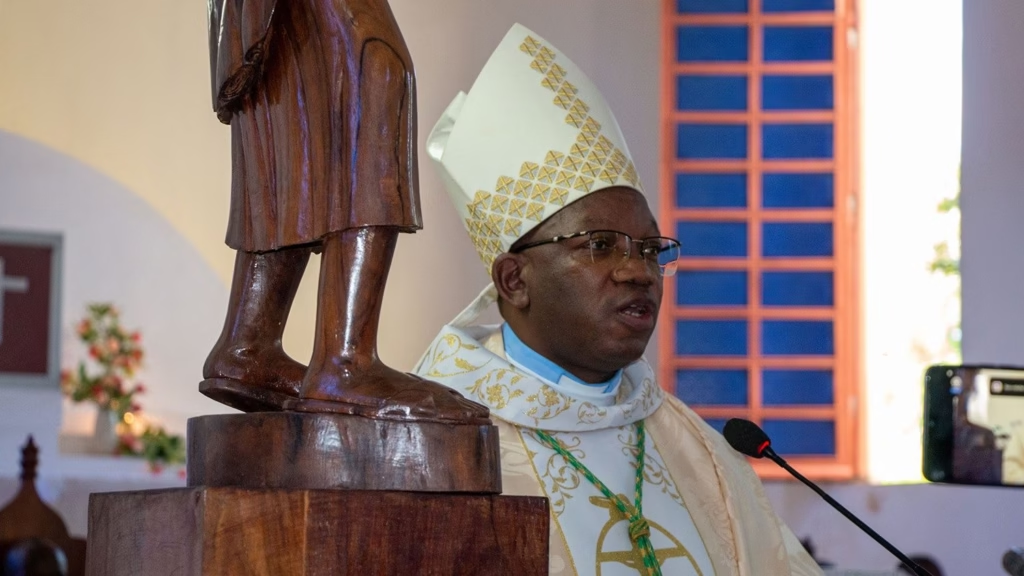
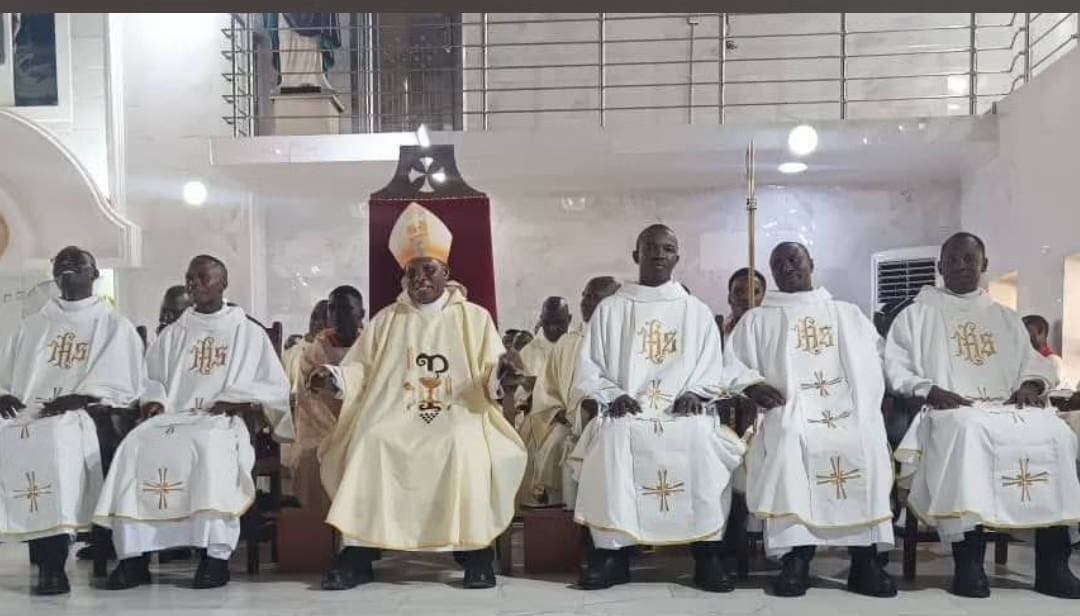
Bishop Juliasse Ferreira Sandramo of Pemba, the capital of Cabo Delgado. Credit: Hermínio José/Vatican News.
Bishop Sandramo decried that it is “A scene of genuine terror,” stressing that “Everything was reduced to rubble.”
On safety amid the carnage, the prelate disclosed that “The missionaries are safe, but the community remains in shock.”
He appealed for security, stressing, “We ask for attention and solidarity with the victims of Meza. For almost nine years, chapels and churches in the diocese have been attacked, destroyed, and set on fire.”
The Bishop of Pemba assured that despite terror attacks and seeming intimidation, the faith would never die.
“But the faith of this people of God will never be burned; it is rebuilt daily,” he said.

St. Louis de Montfort Parish, Cabo Delgado Province, allegedly set ablaze on Thursday, April 30, by ISMP.
At least 117 churches and chapels have been destroyed in the Diocese of Pemba alone.
At least 117 Churches and chapels have been destroyed in the Diocese of Pemba alone, with more than 23 burned in 2025.
In May 2026, terrorists burned down a Church in the town of Meza, an act condemned by local religious leaders as part of an “intolerable reality.”
On the nature of the attacks, reports indicate that Churches are targeted as symbols of resistance to the establishment of a strict Islamic state.
Church burnings are often paired with mass beheadings, kidnappings of children, and the burning of Christian-owned homes.
From 2024 to 2025, there have been earlier official and community responses. One local missionary who spoke to the press in February 2024 said, “Churches were burned, as were the homes of the population.”
Another local priest stated that “As always, they attack absolutely everything, including churches, but also mosques, but they especially target the population and their houses.”
On the general sentiment on persecution, Church leaders have generally described the situation as a “moment of tribulation” and a “silent genocide.”
ISMP demands that Christians either convert or pay a religious tax (jizya).
Observers lament that ISMP often releases photos of burning churches to claim territory and issue ultimatums, demanding that Christians either convert or pay a religious tax (jizya).
The group targets Christians and civilians engaging in acts of violence, beheadings, kidnapping and burning of churches, which has resulted in the deaths of thousands and widespread displacements.
Over one million people have been displaced due to the insurgency, forcing many congregations to gather in secret or in temporary structures in safer southern regions.
Advocatus Africa gathered that the government has restricted information and photography in conflict zones like Cabo Delgado, making it difficult for the full scale of the destruction to be documented.