






In this opinion piece, Dr. Ijuptil Joseph critically examines the rising cost of education, persistent power failures, and visible display of wealth among officials against the backdrop of the craze for building luxury hotels and mansions beyond the reach of ordinary Nigerians, especially poor students.
A fresh controversy has emerged over a hostel project at the University of Lagos, reportedly built by the Chief of Staff to Bola Ahmed Tinubu, Femi Gbajabiamila, and later “donated” to the institution. The facility, constructed at a reported cost of about ₦1.2 billion and maintained with an additional ₦500 million in public funds, is now said to cost students nearly ₦1 million per bedspace. This has triggered outrage among students and the wider public, who question how a project funded with government resources ends up being priced beyond the reach of ordinary Nigerians. At a time when access to affordable education remains a major challenge, the development has intensified concerns about misplaced priorities.
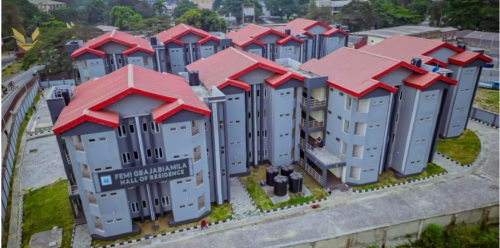
Newly built hostel at the University of Lagos reportedly linked to high accommodation costs for students. Credit: Sahara Reporters.
University accommodation, traditionally designed to reduce the burden on students, is increasingly taking on the character of luxury housing. What makes this case particularly contentious is the contradiction between its funding source and its accessibility. Critics argue that a hostel built and sustained with public funds should serve the public, not exclude them. The situation has quickly become a symbol of broader frustrations about inequality and governance, reinforcing perceptions that public resources are being channeled in ways that benefit a limited few rather than the majority.
Governance or Self-Enrichment?
The hostel controversy does not exist in isolation but reflects a wider pattern that many Nigerians find troubling. Recently, FCT Minister, Nyesom Wike, was seen commissioning luxury homes for judges in Abuja, sparking debate about government spending priorities. While housing for judicial officers is important, the scale and luxury of such projects have raised eyebrows.

Minister of the FCT, Nyesom Wike, commissioning housing projects for judges in Abuja. Credit: Advocatus Africa.
Critics argue that these developments highlight a growing disconnect between leadership and the realities faced by ordinary Nigerians. At a time when infrastructure deficits persist across sectors, such projects are viewed by many as excessive. The perception that public resources are being used to benefit a select few continues to fuel dissatisfaction. For many citizens, these actions reinforce the belief that governance is increasingly serving the elite.
Power Crisis and Display of Wealth
Seven months ago, a viral video showing a luxurious mansion build by the Minister of Power, Chief Adebayo Adelabu barely two years in office, even as the national grid continued to collapse repeatedly. This contrast has become increasingly difficult for Nigerians to ignore.

Minister of Power, Chief Adebayo Adelabu, luxurious mansion. Credit: Advocatus Africa.
While citizens endure blackouts and rising energy costs, images of opulence among public officials send a conflicting message. The expectation is that leaders should prioritise solving national challenges rather than displaying personal wealth. The recurring grid failures, often occurring monthly, have already tested public patience. When combined with visible display of affluence, they deepen perceptions of inequality and misplaced priorities. For many, the issue is not just about wealth, but about timing and responsibility.
A Question of Leadership and Priorities
At the heart of these controversies lies a broader question about leadership and governance in Nigeria. Critics argue that the current administration of Bola Ahmed Tinubu appears increasingly focused on elite interests rather than the welfare of ordinary citizens. The rising cost of education, persistent power failures, and visible display of wealth among officials all contribute to this perception.
For many Nigerians, the concern is that politics has become a means of personal enrichment rather than public service. This sentiment is echoed in growing public discourse calling for accountability and a shift in priorities. Leadership, they argue, should be measured by impact on citizens’ lives, not by the scale of projects or personal assets. Until this balance is restored, such controversies will continue to shape public opinion and erode trust in governance.