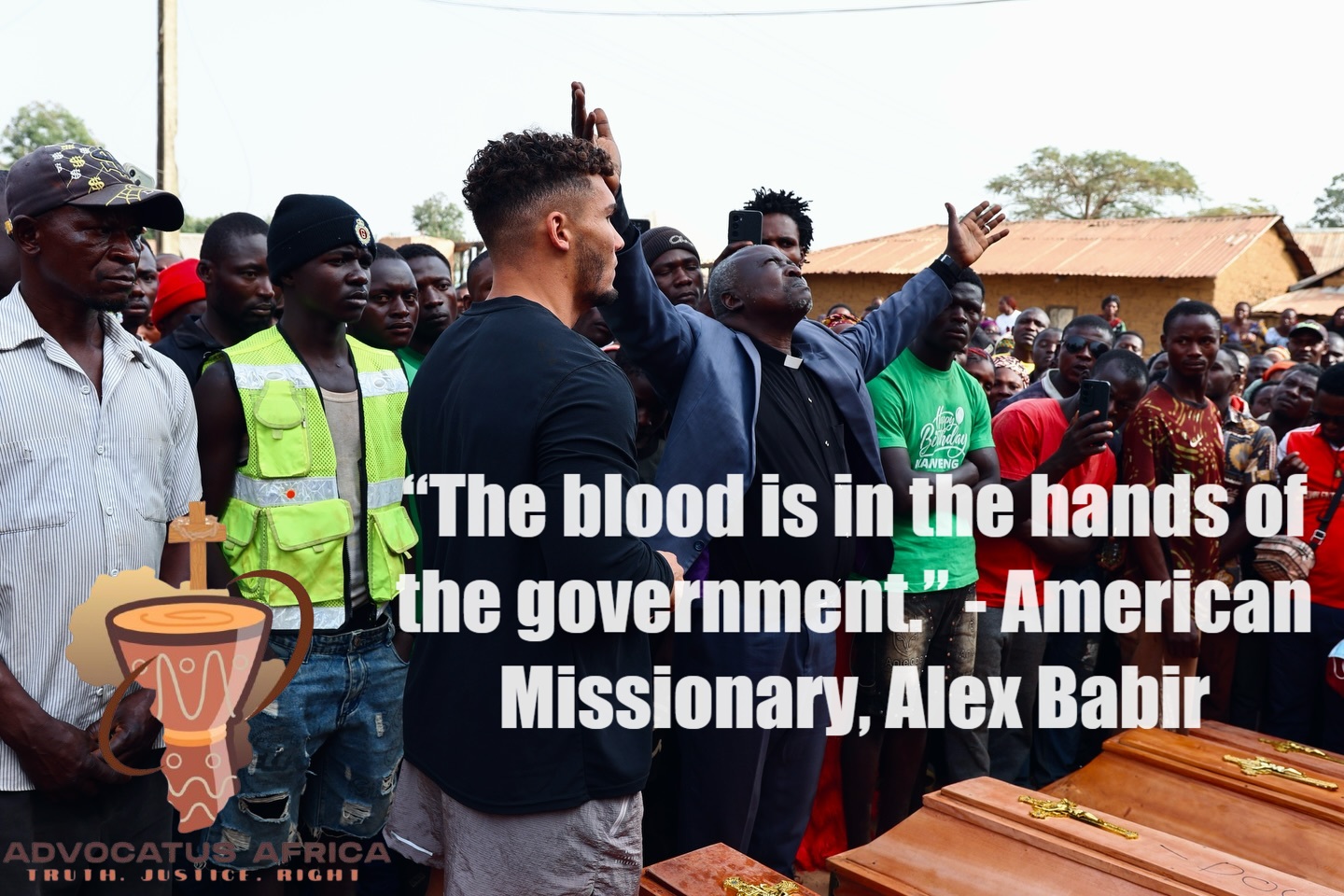











…Benue has 464,543 internally displaced persons as at February 2026
…More than 100 Churches had been completely burnt down in Makurdi Catholic Diocese – Laity Council
By Dangwam Jude Dabee
The Laity Council of the Catholic Diocese of Makurdi in Benue State, one of the troubled areas in Nigeria’s Middle Belt, has turned down the Federal Government’s proposed National Communal Ranching Programme (NCRP) for the state. Instead, they are urging the prompt and respectful return of Internally Displaced Persons (IDPs) to their ancestral homes.
The Council, in a press statement dated August 17, 2026, titled “Benue Does Not Need Ranches First. Benue Needs to Go Home First,” expressed concern over the Federal Government’s decision to select Benue, alongside Adamawa, Kaduna, Kano, Plateau and the Federal Capital Territory, as pilot locations for the programme.
“We reject this project”
The statement, signed by Mr. Samuel Azor Kunde, President, and Hon. Titus T. Ado, Secretary General, said the Council rejected the policy in Benue because thousands of residents remain displaced as a result of prolonged violence.
According to them, “We reject this project Not because Ranching is wrong, not because livestock development has no place in Nigeria’s future, and certainly not because the livestock sector does not deserve serious investment. But because Benue State will not host a National Ranching programme for Herders Cattle, while Benue displaced persons have not been safely returned home,” the Council stated.
The religious organisation appealed to President Asiwaju Bola Ahmed Tinubu and the Governor of Benue State to reconsider the proposed programme and instead developed what it described as a “Federal Government Policy for the Communal Return of All IDPs to their Ancestral Homes.”
The Council insist that communities across Guma, Gwer-West, Gwer East, Logo, Ukum, Agatu, Otukpo, Kwande, Makurdi and other parts of Benue State continue to suffer the effects of violence and displacement.
Citing the International Organisation for Migration (IOM) February 2026 Displacement report which indicated that Benue had 464,543 IDPs, with Guma, Ukum, Makurdi, Gwer-West, Logo, Kwande, Gwer East and Agatu among the local government areas with some of the highest displaced populations.
The Council further disclosed that more than 181 Churches and Pastoral units across seven Deaneries in the Makurdi Catholic Diocese had closed down, while many parish houses had also been shut.
“It is not an old grievance being revived for political effect”
It added that more than 100 Churches had been completely burnt down within the diocese, leaving many Catholic faithful living in internally displaced persons’ camps.
“This is not history. It is not an old grievance being revived for political effect. It is the present condition of our people,” the Council said.
It argued that farmers who remain uncertain about the safety of returning to their farms should not be expected to accommodate a new national livestock settlement on the same land; “A family whose home has been destroyed cannot be told that the government’s next priority is to build infrastructure for Cattle while the family still sleeps in displacement,” it stated.
The Council maintained that security, justice and the protection of property rights must precede any major land-use intervention, “Security must come first. Not because Livestock does not matter, but because human beings matter more, justice matter more, and land ownership rights matter too,” it said.
The Council also said the Chief Shepherd of Makurdi Diocese, Bishop Wilfred Chikpa Anagbe CMF, and the diocesan priests had rejected the project, adding that the Laity Council joined them in opposing the initiative in Benue State.
State Ranching Law
The Council further reminded the Federal Government that Benue State already has the Benue State Open Grazing Prohibition and Ranches Establishment Law, 2017, which prohibits open nomadic livestock herding and grazing outside permitted ranches and provides a state framework for ranching and livestock administration.

Hon. James Oche, the then Executive Chairman of Ado LGC issues criminals red card in Ado, enforces anti-open. Credit: dailypost.ng.
It therefore insisted that any Federal Government intervention in Benue must be consistent with the state’s existing legal framework and the constitutional provisions governing land administration under the Land Use Act.
The Council proposed a four-stage priority for the state to consist of first, “restore security of life and property; second, return displaced persons to their ancestral lands; third, rebuild destroyed communities and compensate for other losses,” only then it will determine what additional livestock infrastructure is required, where it should be located, who should own and manage it, and under what law.
Among its demands, the Council called for the immediate reconsideration of Benue’s participation as a pilot location for the ranching programme until measurable security conditions had been established in affected communities.
It also demanded a publicly stated Federal framework for the safe, voluntary and dignified return of Benue’s IDPs, covering security, reconstruction, housing, schools, healthcare, roads and agricultural livelihoods.
The Council further requested clear benchmarks for the return of displaced persons, including security assessments, community consultations, restoration of basic services and independent verification that communities are safe for residents to return and remain.
It called on the Federal Government to respect Benue’s existing 2017 ranching law rather than establish a parallel Federal arrangement that could create further legal and political conflict.
The Council also demanded meaningful consultation with affected communities before any ranching project is implemented, particularly with displaced families, traditional and religious institutions, farmers, landowners and local governments.
“Not a Rejection of Livestock Development”
The Council stressed that its opposition to the proposed programme should not be interpreted as opposition to livestock development or ranching.
“Benue State does not oppose development and so does the Laity Council of Makurdi diocese. Benue State does not oppose Modern Livestock Production and so do we. Benue State does not oppose Ranching where Ranching is Lawful, Voluntary, Properly Regulated and Compatible with the Rights and Interests of Host Communities. And so do we,” it stated.
The Council noted that the state’s 2017 law already provides for ranching, arguing that the central issue was whether government should introduce a major land-use programme while thousands of residents remain displaced and insecure.
“The issue at hand is whether the government can reasonably ask a population that remains displaced and insecure to accept a Major Land-use Programme before it has first secured their return, that is the question. The answer should be obvious.”
The Council said government could earn the trust of Benue residents by demonstrating that their lives and security came before projects.
It further argued that if government wanted to address conflicts involving herders, land ownership and livestock production, such policies must first address the security and displacement crisis affecting indigenous communities.
“We are asking for the most basic responsibility of government“
The Council said the people of Benue had continued to farm, teach, worship and build despite the loss of lives and property, insisting that they were not seeking special treatment.
“We are not asking for special treatment. We are asking for the most basic responsibility of government: that is, Security. Justice. A Home to return to. A Farm we can Cultivate without fear. A future in which our Children do not inherit Displacement as their birth right.”
The Council called for the immediate restoration of security in affected communities, reconstruction of destroyed homes, reopening of schools and healthcare facilities, and the restoration of safe farming activities.
“Let the soldiers secure the Communities. Let the governments rebuild the Homes. Let the Schools Reopen. Let the Clinics return. Let the Farms become Safe again. Let the Displaced return home.”
“Benue does not need Ranches first”
It said that once displaced Benue residents had safely returned to their communities, stakeholders would collectively determine how best to develop a modern livestock industry that respects pastoralists, farmers, investors and host communities.
“And when Benue people are home and secure, we will sit together as Nigerians, and determine how best to build a Modern Livestock industry that respects both Pastoralists and Farmers, both Investment and Community Rights, and both Economic Development and Human life.”
The Council firmly posited, “Benue does not need Ranches first. Benue need to go home first. We as people of God in the diocese of Makurdi are asking, simply, to first go home safely, permanently.”
They reiterated that they remained prayerful as they await the response of the Federal and Benue State governments, stressing that the response should come through concrete action and a policy for the safe return of displaced residents to their ancestral homes.
Editor’s Note: Featured photo is courtesy of guardian.ng.