






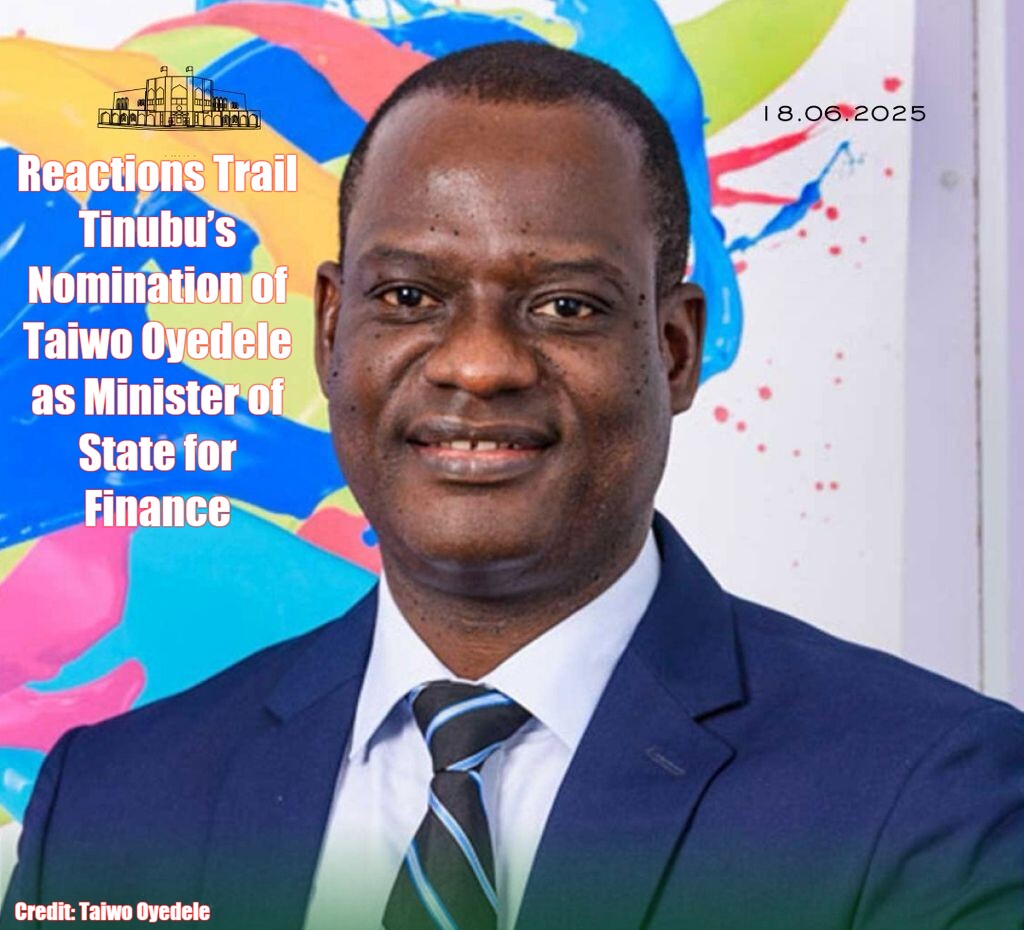
The recent nomination of Mr. Taiwo Oyedele by President Bola Ahmed Tinubu as the new Minister of State for Finance, replacing Doris Uzoka-Anite, has sparked significant reactions.
The nomination was formally conveyed to the Nigerian Senate for confirmation in a letter addressed to Senate President Godswill Akpabio.
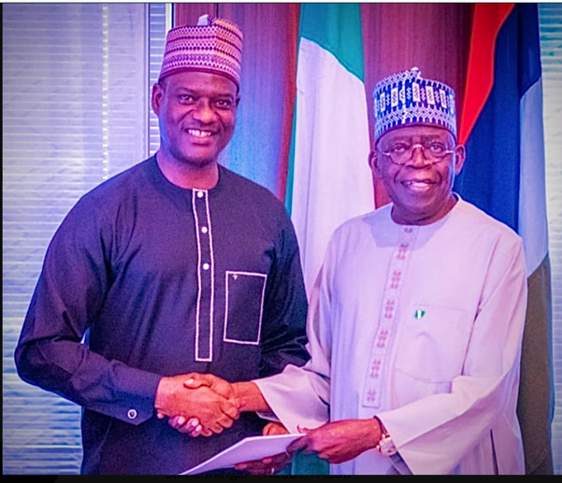
President Bola Ahmed Tinubu and Taiwo Oyedele. Credit: Bola Ahmed Tinubu
The announcement was made in a statement issued by the President’s Special Adviser on Information and Strategy, Bayo Onanuga, on Tuesday.
According to the Presidency, Uzoka-Anite will now serve as Minister of State at the Ministry of Budget and National Planning, marking her third portfolio within the current administration.
A Tax Reform Architect Moves to Finance
Before his nomination, Oyedele served as Chairman of the Presidential Committee on Fiscal Policy and Tax Reforms, where he led efforts to overhaul Nigeria’s tax system. The committee, established in 2023, was tasked with restructuring the country’s fiscal framework and improving revenue generation.
President Tinubu described Oyedele as a seasoned economist and public policy expert whose experience will strengthen Nigeria’s financial management.
“Taiwo has served our nation diligently as Chairman of the Presidential Committee on Fiscal Policy and Tax Reforms, leading the overhaul of our tax system with clarity, courage, and competence,” the president said in a statement.
He added that Oyedele’s appointment forms part of a broader effort to build a government team defined by expertise, discipline, and results.
Education and Professional Background
Oyedele, 50, hails from Ikaram-Akoko in Ondo State and has built a career spanning academia, policy, and global consulting.
He earned a Higher National Diploma in Accountancy and Finance from Yaba College of Technology, before completing a Bachelor of Science in Applied Accounting at Oxford Brookes University.
The economist also undertook executive education programmes at leading institutions including London School of Economics, Yale University, Gordon Institute of Business Science and Harvard Kennedy School
Oyedele spent 22 years at PricewaterhouseCoopers (PwC), joining in 2001 and eventually becoming Fiscal Policy Partner and Africa Tax Leader.
Beyond consulting, he is also an academic. Oyedele serves as a professor at Babcock University and a visiting scholar at Lagos Business School.
Cabinet Reshuffle, Mixed Reactions
The appointment forms part of a minor cabinet reshuffle within the Tinubu administration.
While Oyedele is expected to bring his fiscal reform expertise into the finance ministry, Uzoka-Anite will transition to the Ministry of Budget and National Planning, where she will continue to serve as minister of state.
The move comes at a time when the government is implementing major tax reforms and fiscal restructuring policies aimed at boosting government revenue and stabilising the Nigerian economy.
The nomination has generated diverse reactions from political commentators and citizens, particularly on social media.
Journalist and Political analyst, Reuben Abati described the decision as strategic, suggesting that appointing a technocrat like Oyedele could strengthen Nigeria’s fiscal policy framework.
However, critics have questioned the decision. Some commentators argued that promoting the former tax reform committee chairman may be controversial given the ongoing debate about the impact of recent tax reforms on Nigerians.
Others raised concerns about ethnic balance in government appointments, while some supporters praised Tinubu’s record of identifying technocratic talent.
Meanwhile, several policy analysts say Oyedele’s success in office will likely depend on whether he is given the political backing needed to implement fiscal reforms.
What Happens Next
Before assuming office, Oyedele would be screened and confirmed by the Nigerian Senate.
If confirmed, he will join the finance ministry team at a time when the government is pursuing major economic reforms, including changes to taxation, revenue collection, and fiscal policy.
For the Tinubu administration, the appointment signals a continued emphasis on technocratic expertise in managing Nigeria’s economic transition.