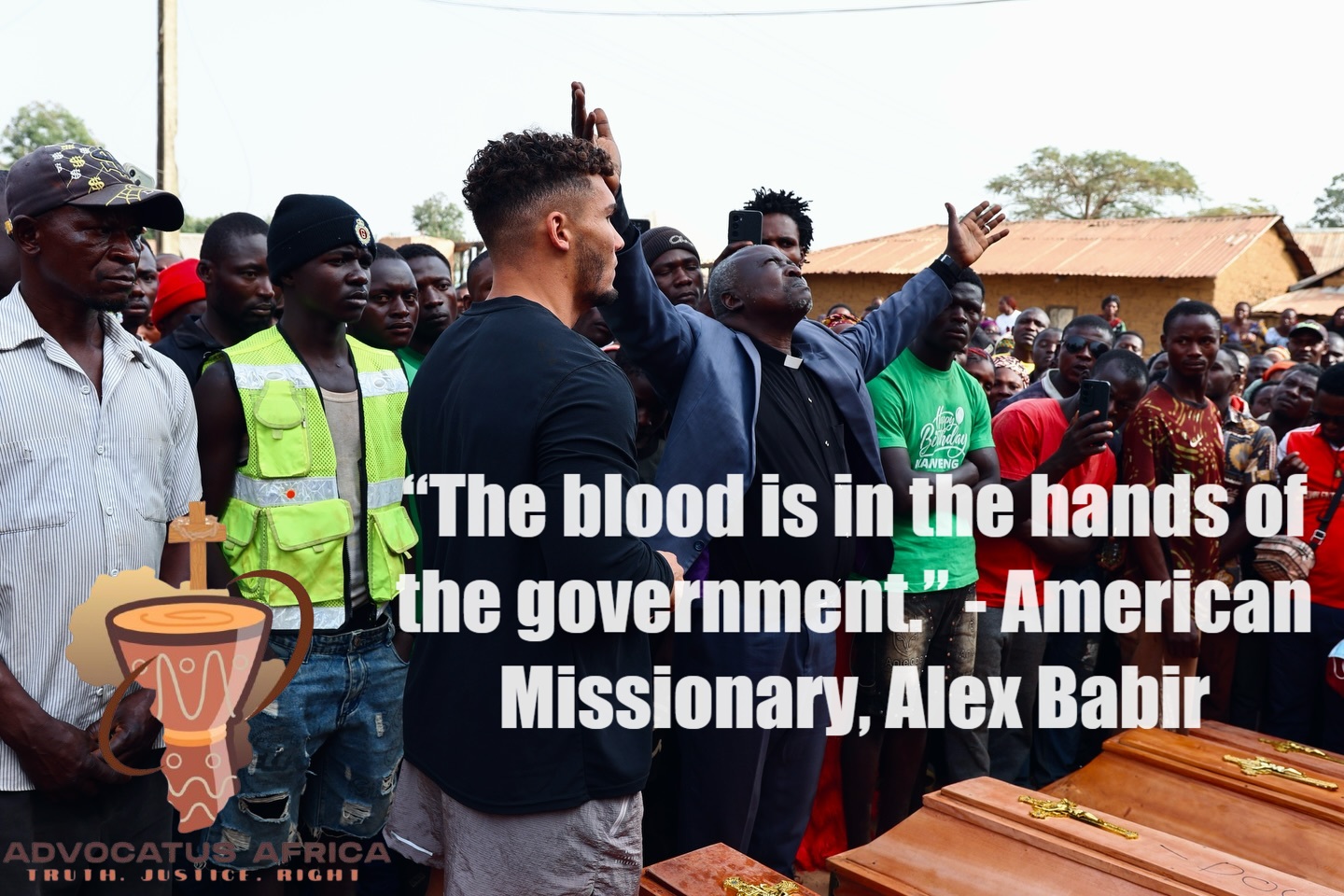

Commentators are linking the emotional videos of fiery Plateau-born cleric, Rev. Ezekiel Dachomo, who urged for intervention and boots on the ground, with the recent news about the deployment of 200 US soldiers to bolster security and assist the Nigerian army in tackling Jihadists amid the contentious debate about Christian genocide.
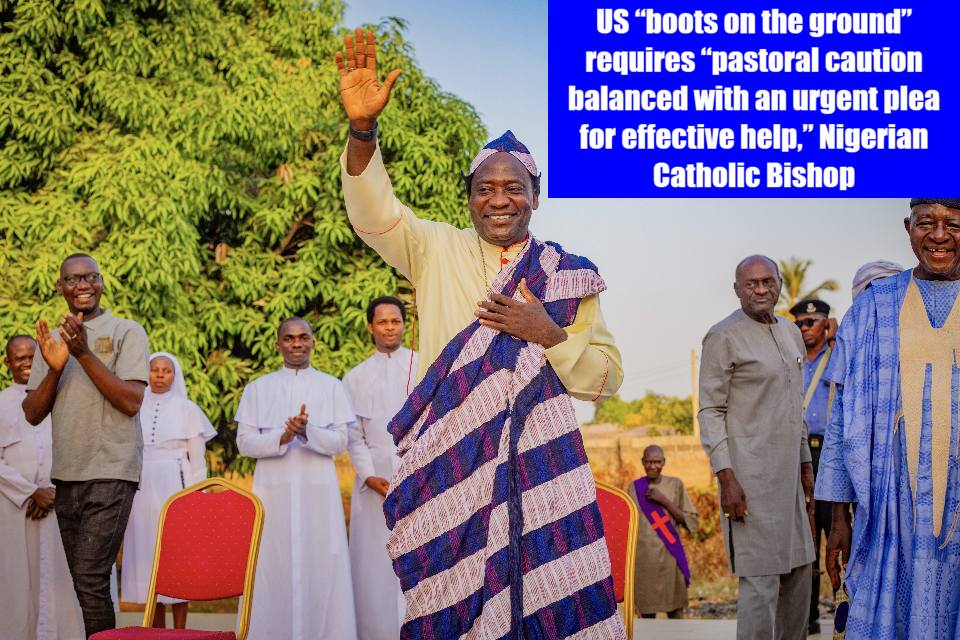
In an exclusive interview with Advocatus Africa, the Catholic Bishop of Lafia Diocese, north-central Nigeria, Most Rev. Dr. David Ajang, decried the general situation of insecurity in the country, insisting that both the government and religious leaders have an obligation to peace and security.
When asked about his reaction to the US intervention, the Bishop said, “My reaction…is one of pastoral caution balanced with an urgent plea for effective help. One must acknowledge that the sentiment shared by my brother, Rev. Ezekiel Dachomo, comes from a place of deep, agonising frustration that many of us in the Middle Belt feel.”
He maintained that “When you have buried your parishioners, seen your schools emptied, and watched your people live in constant fear while our own security apparatus appears either overwhelmed or indifferent, the desire for any force that can stop the killing is understandable.”
“The sentiment shared by my brother, Rev. Ezekiel Dachomo, comes from a place of deep, agonising frustration that many of us in the Middle Belt feel.” – Bishop Ajang
On the call for “boots on the ground,” the Bishop of Lafia noted that it “is a complex matter,” stressing that “Rev. Dachomo’s appeal to the U.S. and the international community is essentially a vote of no confidence in the current state of our national security.”

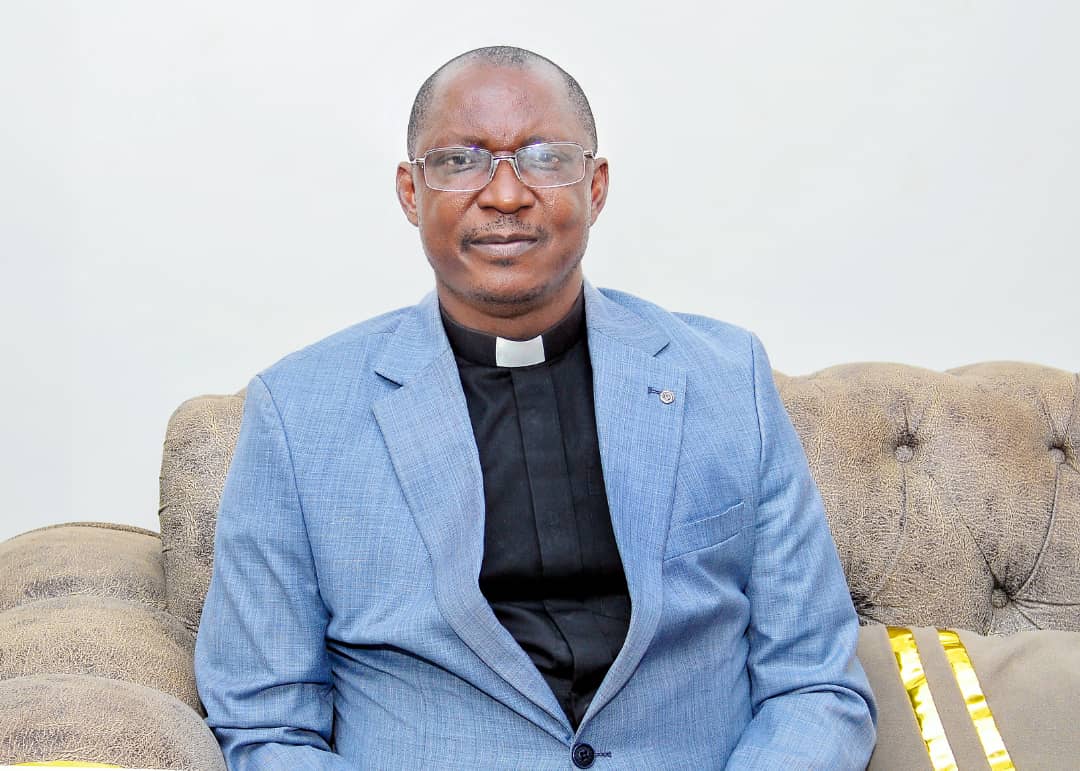
Most Rev. Dr. David Ajang, Catholic Bishop of Lafia Diocese. Credit: Bishop David Ajang.
The prelate maintained that “It is a cry of ‘Help us, for we are perishing’” adding that “Even within our Church, we have also witnessed a spectrum of views. Some of our leaders have also testified before the international community that the scale of the crisis requires more than just local promises. They see it as a moral imperative for the world to step in where the state has failed.”
He, however, warned that “we must be careful,” saying, “As a Church, we have always maintained that the primary responsibility for protecting Nigerian lives belongs to the Nigerian Government. Inviting foreign military forces to occupy our land carries long-term risks for our national sovereignty and could potentially escalate the conflict into a global proxy battleground. The presence of foreign troops might stop a bullet today, but it doesn’t heal the underlying ‘cancer’ of corruption and bad governance that allowed the insecurity to thrive in the first place.”
Still on the US intervention, the cleric stressed, “I think we need international pressure and technical support rather than just a foreign army. I believe we should be calling for targeted Sanctions, Intelligence and Surveillance Support, Conditions on Military Aid, which ensures that foreign aid to our military is judiciously applied and strictly tied to the protection of vulnerable communities and human rights.”
“I think we need international pressure and technical support rather than just a foreign army.” – Bishop Ajang
He provided context, underlining that “my candid view is that while I understand and empathise with the desperation that leads to calls for foreign boots on the ground, I pray that we do not reach a point where we have to surrender our nation to others to save it. However, if our government continues to remain ‘complacent or insensitive,’ as some have put it, they shouldn’t be surprised when the victims look beyond our borders for a saviour.”
“To suggest that Christians are burying empty coffins is a dangerous form of disinformation.”
Bearing his mind on claims by fiery Islamic cleric Sheik Ahmad Gumi that Christians are burying empty coffins and opposed US intervention, theprelatestated that, “Such statements are of deep concern for the truth and for the fragile peace of our nation. It is rather unfortunate when influential figures make claims that contradict the visible, bleeding reality on the ground. It does not just offend the victims and their families, it endangers the future of our coexistence as a nation.”
He insisted that “To suggest that Christians are burying empty coffins is not only an insult to the grieving families in Kuru, Mangu, and throughout the Middle Belt, but it is also a dangerous form of disinformation. I have personally stood by the graves of some victims, and I have consoled mothers who watched their children being hacked to death. For anyone to suggest or imply that these funerals are a ‘theatrical performance’ is to mock the sanctity of human life.
“Gumi has the burden of proof to substantiate his claims. In an era of “fake news,” we must be careful not to use religious platforms to spread falsehoods that dehumanise victims. This kind of rhetoric attempts to delegitimise the genuine suffering of a persecuted people and shield the perpetrators from accountability.”
“While the Church is wary of any ‘boots on the ground’ that might complicate our national crisis, we cannot align with those who want to keep Nigeria’s security a ‘closed-door’ affair while the blood of innocents continues to flow.” – Bishop Ajang
Clarifying the role of religion in a polarised nation, Ajang, 55, underscored that “As clerics, especially religious leaders, our language should heal, not salt the wounds of those who have lost everything. We invite anyone who doubts the reality of these killings to visit the IDP camps and the fresh cemeteries in Plateau and Benue States.”
Touching on “the debate over foreign intervention,” which he describes as “a valid political discussion,” the religious leader emphasised that “we must look at why people are calling for it. Sheikh Gumi opposes US intervention on the grounds of sovereignty. However, sovereignty is a contract: the state protects the people, and the people respect the state.
“When the state fails to protect its citizens from being slaughtered in their homes, the people will naturally look elsewhere for help. We must ask why some are so vehemently opposed to international eyes on this conflict. If there is nothing to hide, and if the ‘militants’ are indeed just ‘bandits’ as is often claimed, why fear international cooperation in bringing them to justice?”
He maintained that “While the Church is wary of any ‘boots on the ground’ that might complicate our national crisis (as I mentioned previously), we cannot align with those who want to keep Nigeria’s security a ‘closed-door’ affair while the blood of innocents continues to flow.”
Role of the Church in the protection of the flock being kidnapped and killed in Nigeria
Speaking further to Advocatus Africa on what the Church is doing to protect God’s flock, the philosopher-Bishop replied, “You know too well that the Church is not a state with an army, yet we are the first port of call when the state fails. Our role in protecting the flock is multifaceted; it is pastoral, prophetic, and practical.”
He underlined that “In the prophetic role, the Church, as the voice of the voiceless, constantly holds the government’s feet to the fire” while emphasising that “the primary duty of any government, as mandated by Section 14 of our Constitution, is the security and welfare of its people.
Ajang insisted that “When they [government] fail, the Church must be the ‘disturbing conscience’ of the nation, calling out negligence and demanding accountability. In all these, the Church’s most powerful weapon is the Truth.”
“In the prophetic role, the Church, as the voice of the voiceless, constantly holds the government’s feet to the fire.” – Bishop Ajang
On what the Church is doing practically to arrest the situation, the Bishop of Lafia disclosed that, “We use our international networks (like Aid to the Church in Need or the Vatican) to raise global awareness, and ensure that the ‘silent slaughter’ in our rural communities is seen by the world.”
He further stated that “in many of our villages, the government presence is nowhere. The schools are closed, and even the traditional rulers have fled to the cities for safety. The people rely mostly on the Church. Very often, the only person of note who remains with the people is the Priest. By staying, the Church provides a psychological and spiritual anchor.
The former Chaplain of Government House, Jos, Plateau State, emphasised that “We encourage our priests not to abandon their flocks, even though they have become ‘endangered species.’ We are increasingly training our parishes in ‘security consciousness’ by fencing rectories, installing basic surveillance where possible, and forming local vigilante groups in collaboration with community leaders to provide early warnings.”
“We use our international networks (like Aid to the Church in Need or the Vatican) to raise global awareness, and ensure that the ‘silent slaughter’ in our rural communities is seen by the world.” – Bishop Ajang
He noted that “we are aware that protection is not just about stopping a bullet; it’s about what happens after the attack. Thus, as it is today, the Church is the largest provider of aid to Internally Displaced Persons (IDPs). We provide food, shelter, and medical care to those who have lost everything to militants.
“We provide spiritual and psychological counselling to survivors of kidnapping and the families of those killed. Protection also means protecting the soul from falling into despair or the cycle of revenge.”
According to him, “as I mentioned during my recent ordinations in Lafia, much of this violence is fuelled by a ‘lost generation’ of idle, uneducated youth who are easily recruited by criminal gangs. The Church prevents this through formation by investing in education and moral formation. If we can keep our youth in schools and give them a sense of purpose, we reduce the ‘human resource’ available to kidnappers and bandits.”
“We encourage our priests not to abandon their flocks, even though they have become ‘endangered species.’” – Bishop Ajang
The Prelate stated that “while we cannot provide armoured tanks, but we provide the truth that prevents the world from forgetting them, the bread that keeps them alive in displacement, and the moral guidance that prevents them from becoming like their oppressors.”
“The loss of these seven miners is not just a statistic; these were sons, brothers, and parishioners.”
The former Parish Priest of Martyrs of Uganda, Kuru, where suspected Fulani militants recently killed seven miners, spoke about these attacks amid the much-talked-about genocide against Christians.
“This is a deeply painful subject, particularly given my personal connection with the community of Martyrs of Uganda in Kuru. The loss of these seven miners is not just a statistic; these were sons, brothers, and parishioners. As a shepherd of the Church, my response to the term ‘genocide’ must be both compassionate toward the victims and analytically precise,” he said.
The Bishop noted that “we must acknowledge the horror that these young men were targeted while seeking a legitimate livelihood. Whether this attack is labelled a ‘reprisal’ for cattle rustling (as some reports suggest) or a ‘bandit raid,’ the result remains a recurring tragedy of blood.
“In Kuru and across the Middle Belt, we see a pattern where Christian communities are frequently the victims of coordinated, high-casualty attacks that leave people feeling abandoned by the state. This must be unequivocally stated before we go on to discuss the genocide terminology.”
He acknowledged that the question of whether this and the killings of Christians in Nigeria constitute ‘genocide’ or not “has been a subject of intense debate within the nation and the international community,” stressing that “Some people have argued that the systematic nature, the frequency, and the specific targeting of Christian-majority villages point to a deliberate attempt to displace or eliminate these communities. When people are killed because of who they are and where they live, the word ‘genocide’ resonates as the only word heavy enough to carry their pain.”
“As a shepherd of the Church, my response to the term ‘genocide’ must be both compassionate toward the victims and analytically precise.” – Bishop Ajang
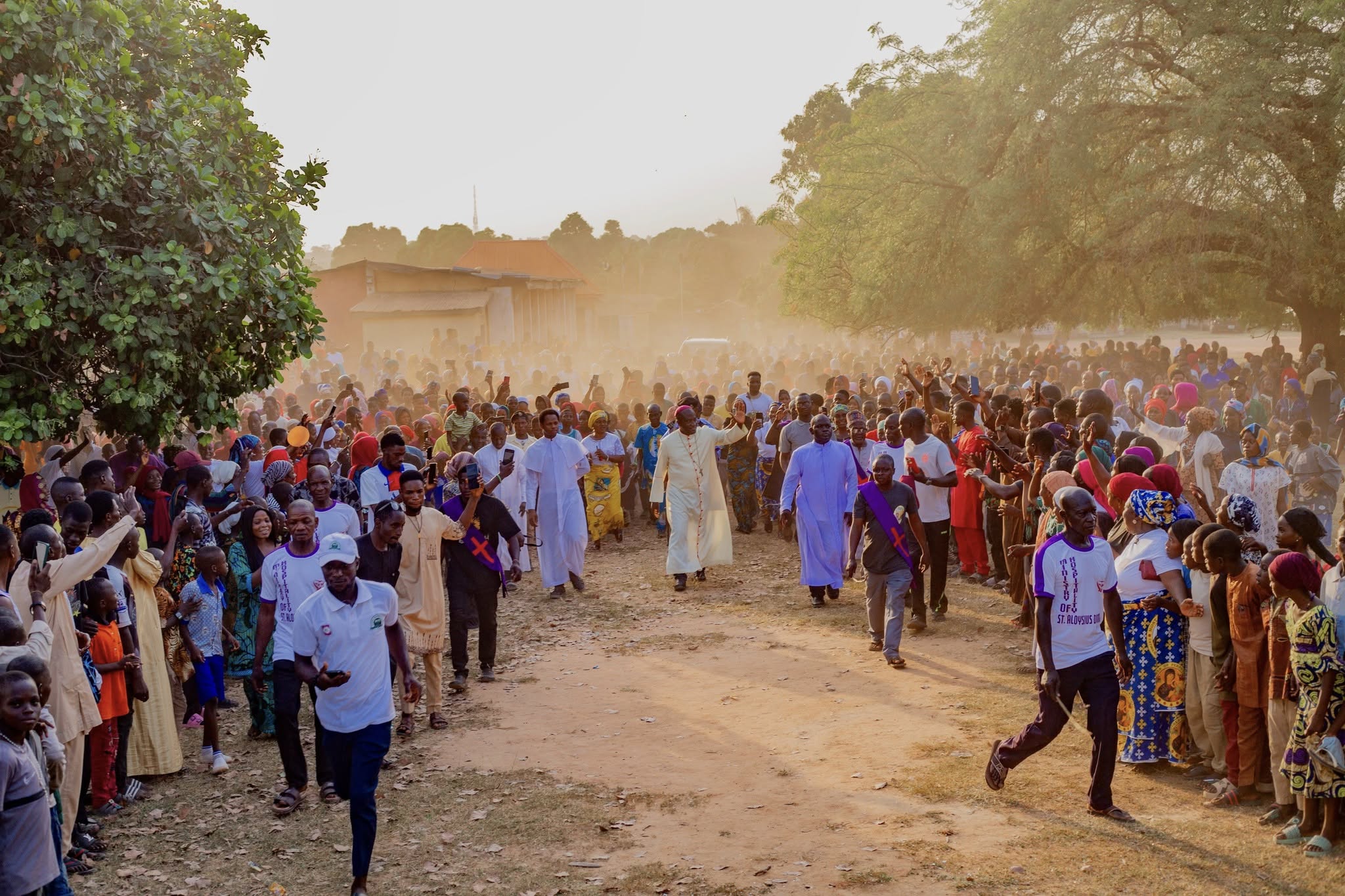
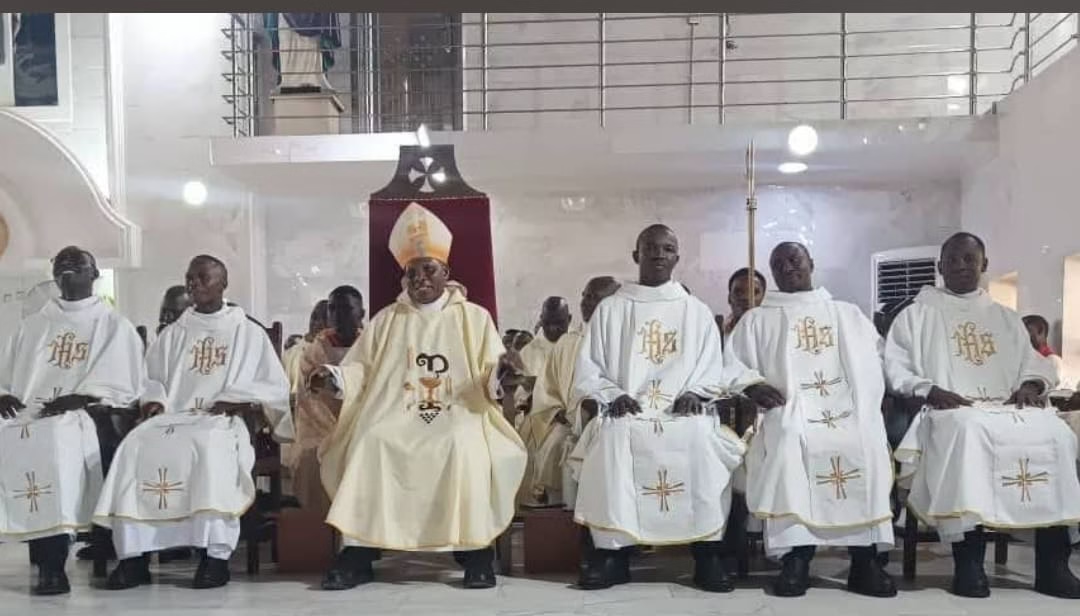
Bishop Ajang with the faithful during a December 2025 pastoral visit to St. Aloysius Catholic Church, Doma. Credit: Bishop David Ajang.
He explained that, given its complex nature, it is often difficult for prosecutors to establish the intent of genocide, saying, “From the technical view, some have also argued that ‘genocide’ in international law requires the proof of intent to destroy a group in whole or in part. Identifying that specific intent can be complex when violence is also fuelled by land disputes, criminality, and a total breakdown of local security.”
Stating the position of the Catholic Bishops’ Conference of Nigeria (CBCN) on the matter, he said, “It is safe to affirm the CBCN position, which states that the scale of these atrocities, ‘gives credence to allegations of genocide in some quarters.’ We do not use the term lightly, but we refuse to ignore why our people are using it.”
“It is safe to affirm the CBCN position, which states that the scale of these atrocities ‘gives credence to allegations of genocide in some quarters.’” – Bishop Ajang
The member of the administrative board of the CBCN also explained that “Whether we call it ‘genocide,’ ‘ethnic cleansing,’ or ‘systemic persecution,’ the label matters less than the action required. We must be careful not to allow debates on the dictionary distort the seriousness of the issue while the killing continues, and we fail the victims.
“These attacks in Kuru are part of an unending cycle of orchestrated violence that the government has failed to stop. To the mother who buried her 15-year-old son in Kuru last week, the distinction between a ‘bandit’ and a ‘genocidaire’ is irrelevant—the loss is total.”
According to him, “The Church’s role is to keep the conscience of the nation awake. We will continue to demand that the government move beyond ‘condemning’ these acts and start preventing them by securing our mining sites and rural communities.”