


The Roman Catholic Diocese of Galloway in Scotland has called for a more thoughtful reflection and a clearly defined vision and mission for the Church in Scotland, amidst the ongoing discussions regarding the possible merger of Dioceses.
The Diocese advised the Scottish Bishops to consider more study for discerning the nature of missionary activities in Scotland for the intent of possible merger of Dioceses.
The report, which was submitted to the Scottish Bishops’ Conference for further discussion and published on the Diocesan website, indicated that “The consultation document was sent to parish priests and responses came from parishes, deaneries and a clergy assembly,” after which responses were collected.
The consultations, which raised questions, highlighted that “For many, they did not feel equipped to give an informed response” was a sign for the Scottish Bishops to take a deeper reflection into the ongoing consultation.
“What is a diocese? What is it for? How does it fit into the Church’s mission? For that matter, what is the Church’s mission in Scotland? What do we mean by mission in real terms?”
It further raised critical observations that “There was a strong feeling of the need for a well-articulated vision,” noting that “If we do not have a well-articulated vision of Church, if we do not understand the nature and purpose of a diocese, how can we be expected to answer fundamental questions regarding structures in the Church in Scotland?”
Responding to the real question of possible amalgamation of Dioceses, the people of God in Galloway was published on the Diocesan website and noted that “There were opinions on all sides (yes, no, don’t know” according to the report, “The consensus among most was to keep Galloway diocese as it is (with the caveats found below) with a recognition of the history of the diocese and its considerable geographical size.”
However, some specific proposals were made: seven dioceses; four entirely new dioceses to replace the eight; three diocese (north, east, west).
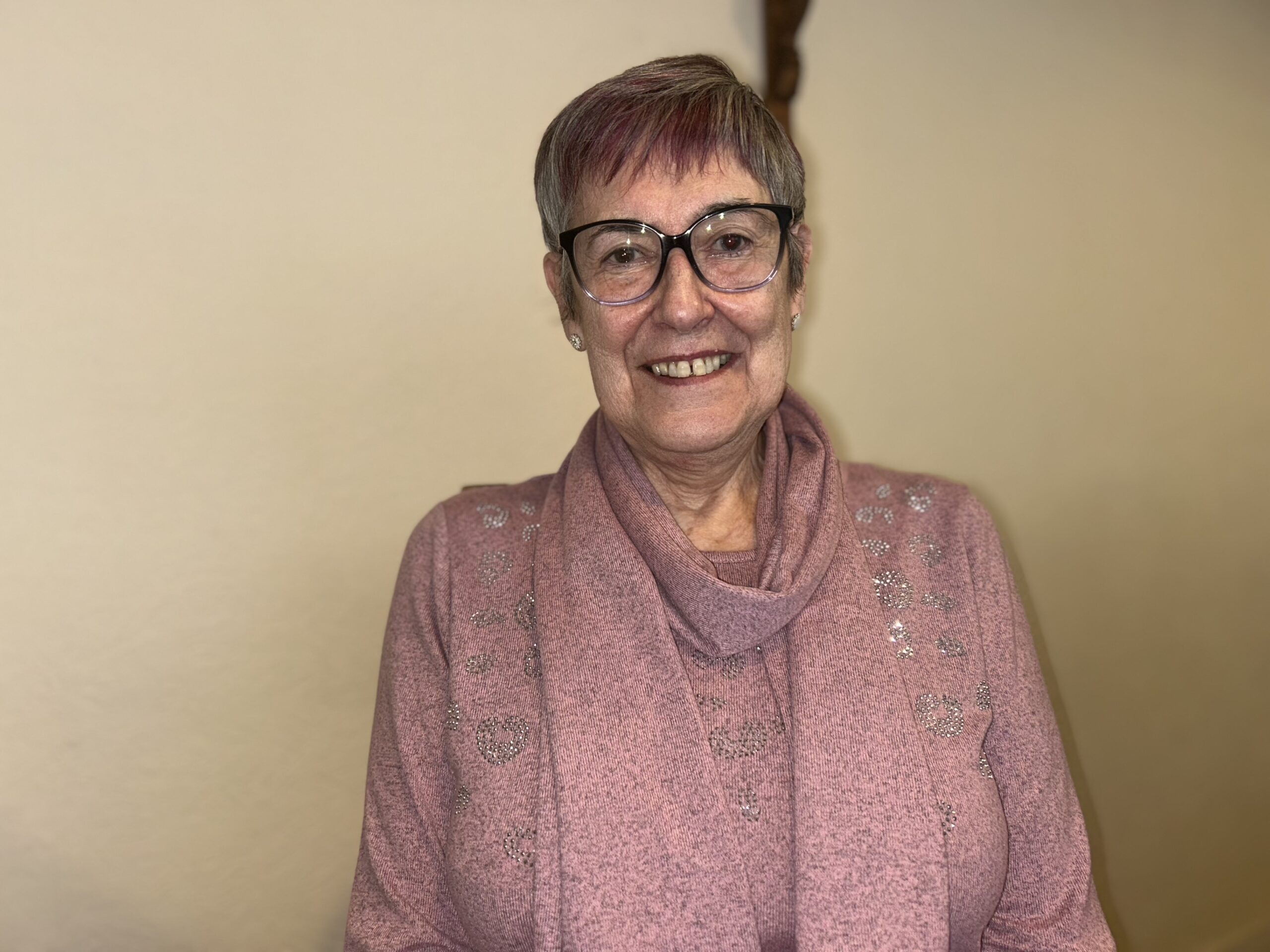
The Roman Catholic Diocese of Galloway whose Bishop is Frank Dougan, is located at the southwest of Scotland, and covers the council areas of Dumfries and Galloway, South Ayrshire, East Ayrshire, and mainland North Ayrshire

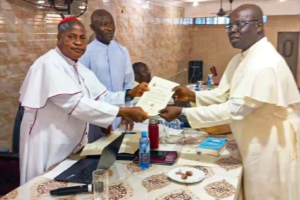
Bishop Frank Dougan of the Roman Catholic Diocese of Galloway. Credit: RC Diocese of Galloway.
It also includes a large rural area with some sizeable towns and there is concern as to how its identity would change if merged with a large urban diocese.
The Diocese of Galloway further interrogated reasons for the anticipated changes to create an avenue for more study and proper discernment.
“Why are we looking at these changes at all? Is it just a question of administration? Is it a financial question? Is it centred on a particular vision? Is the primary driver a pastoral reason? Does it reflect an inward or outward looking Church? What models of Church best preserve local identity and a strong pastoral identity?
“What is the problem we are trying to solve? Are we rationalising to save resources or redeploying them to do mission? There was a lot of uncertainty expressed and the request for more information and data about dioceses.”
Others issues of concern discussed “were the question of married priests and female priests and deacons was raised by some”, while the idea of “Sharing of resources was almost universally seen as a good thing.”
On 10 June 2026, Advocatus Africa reported that the Bishops’ Conference of Scotland had begun a consultation on the nature of missionary activities in Scotland, looking at the possibility of merging Dioceses.
On the same issue of the amalgamation of Dioceses, the Diocese of Argyll and the Isles had indicated a unanimous position that Argyll and the Isles should remain an independent diocese as this best suited its unique reality and so enable missionary growth.
Notwithstanding, Argyll and the Isles Diocese also agreed to the idea of sharing of resources across the Dioceses in Scotland.
In April 1957, Pope Pius XII first established the practice of sharing priests and resources across the Catholic Church when he issued the encyclical “Fidei Donum” (meaning “Gift of Faith”).
He asked dioceses with plenty of priests to “share” them with rapidly growing but under-resourced Churches in Africa and other mission territories.
The Latin term fidei donum is now used to describe a priest who is sent by his home bishop to serve in another diocese or country experiencing a shortage of clergy.
The Catholic Church in Scotland as in other parts in Europe has received massive converts into the Church in recent years, though still struggling with the decline in Church attendance, resource deficit, decline in vocations to priesthood and the religious life.