
The Catholic Diocese of Kafanchan in central Nigeria has condemned in strong terms the destruction of over 1,200 lives and 3500 poverty over 5 billion naira while advocating for lay participation in politics, holistic formation, and trauma management for victims.
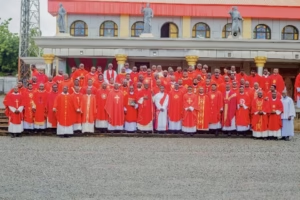
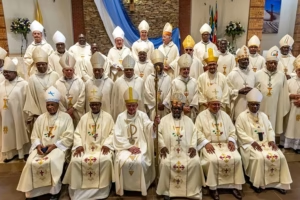
This condemnation was made in a communique issued at the end of the 4th General Assembly of the Catholic Diocese of Kafanchan, held at the new Kafanchan Diocesan Secretariat, Madakiya, from 22nd to 24th June 2026.
“The cry of a persecuted Church is both a plea for justice and a call to action“
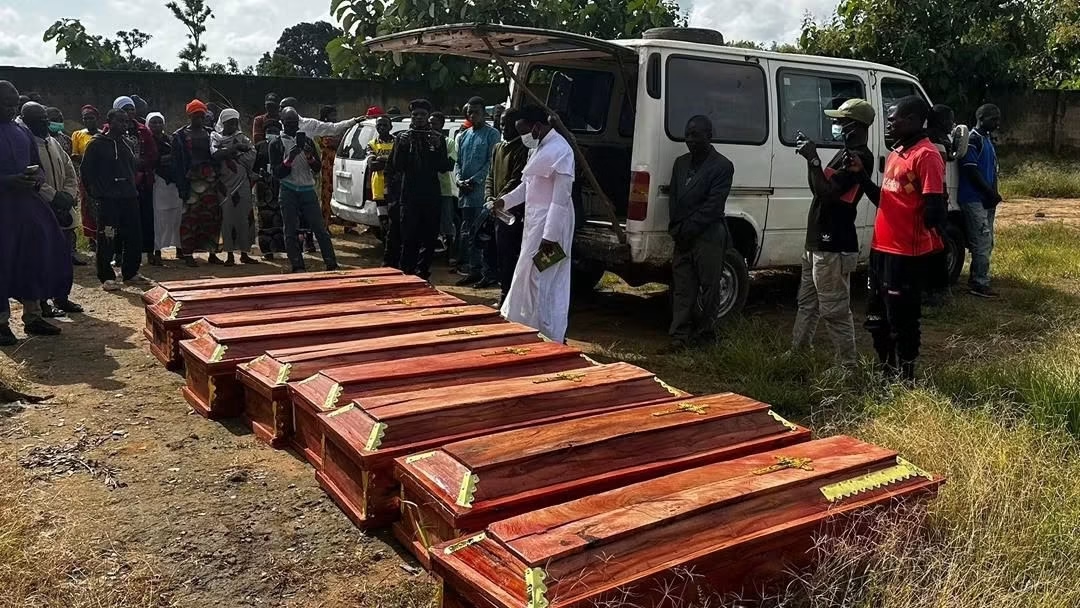
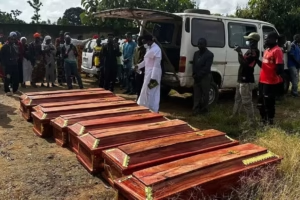
“We noted with great concern, the devastation that this persecution brought upon us as documented by the Justice Development and Peace Commission (JDPC) of our Diocese. A total of 1,287 lives lost, 501 persons injured, 3,506 homes destroyed, 28 churches burned, with farmlands and other means of livelihood valued at 5.5 billion naira shattered.
“Also, the records show that 928 people have been kidnapped out of which 171 people were killed including 2 Priests, 1 seminarian, and 2 catechists,” the statement signed by Most Reverend Julius Yakubu Kundi, Bishop and Very Reverend Fr. Dr. Jacob Shanet, Chancellor, of Kafanchan Diocese noted.
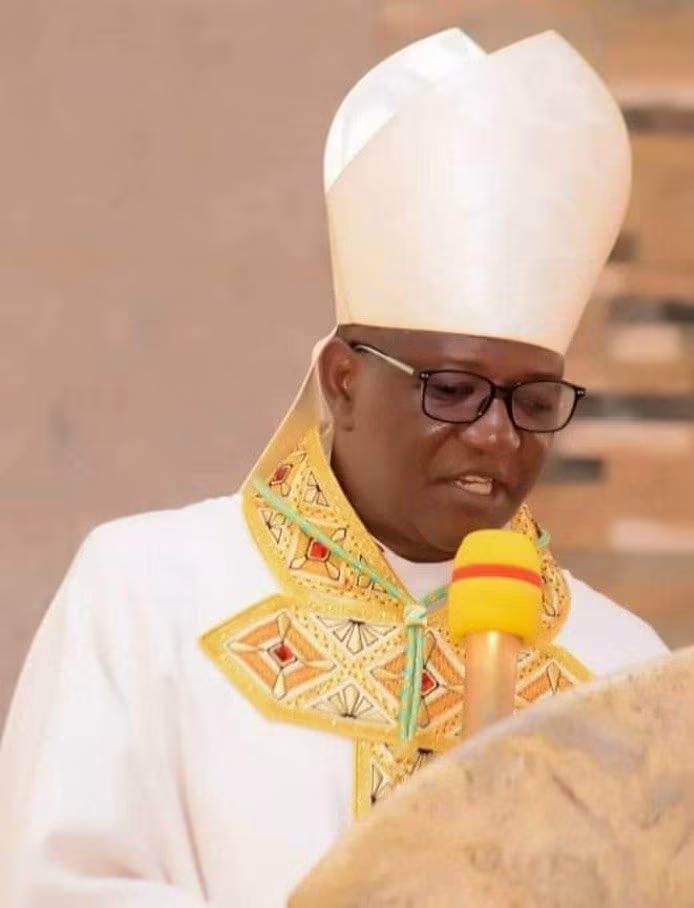
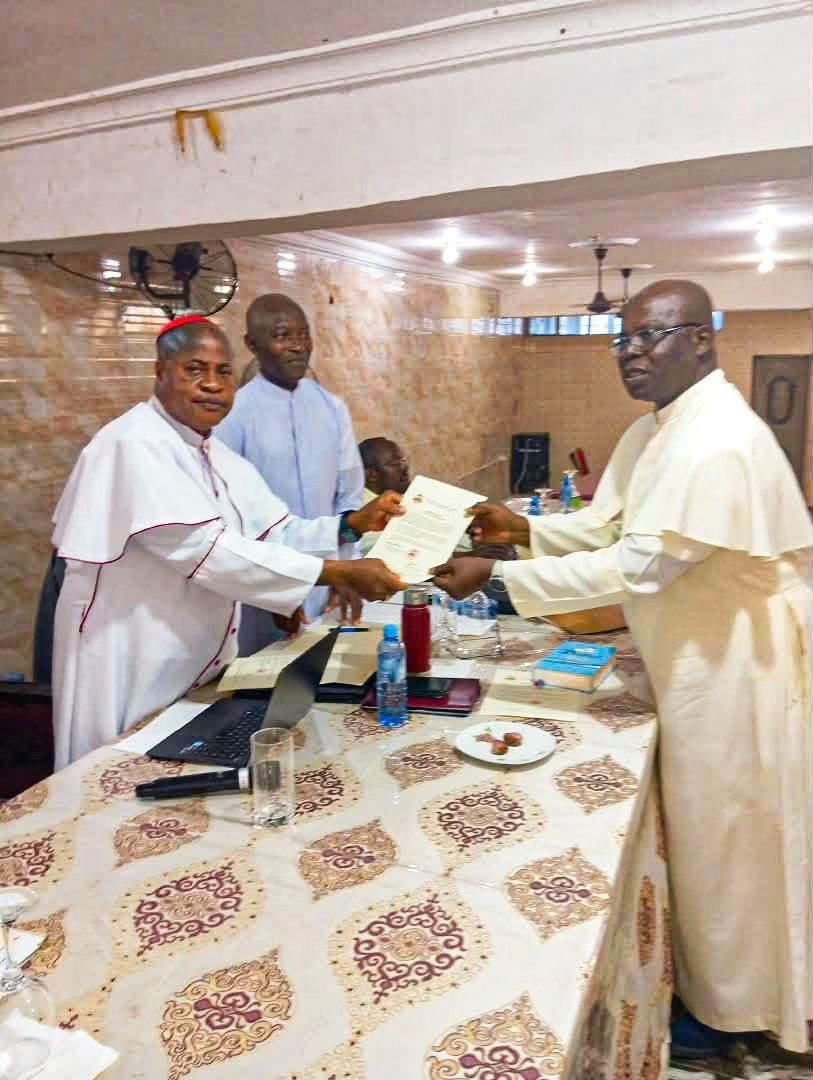
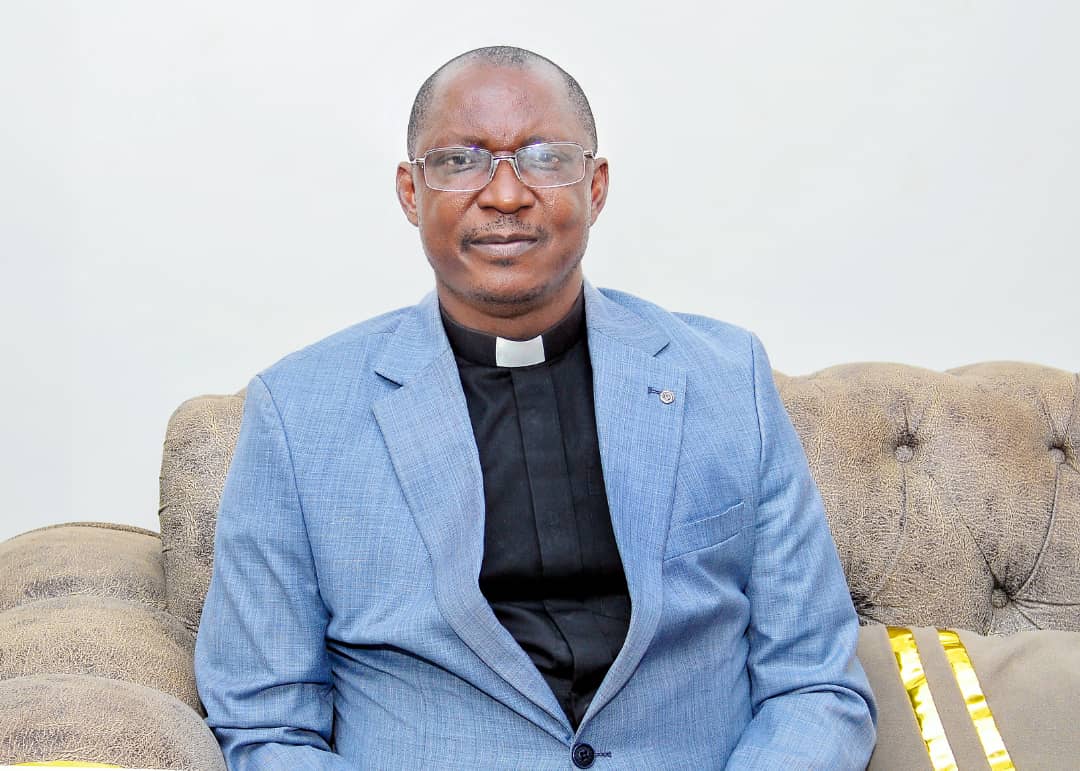
Most Reverend Julius Yakubu Kundi, Catholic Bishop of Kafanchan Diocese. Credit: Cadiokaf.
Diocese also disclosed that “over 2.4billion naira ransom is recorded to have been forcefully paid. This shows that ours is a church of “a wounded shepherd and wounded flock” on a journey of faith and hope. Yet, the cry of a persecuted Church is both a plea for justice and call to action.”
However, the statement noted “Our wounds may heal leaving scars, yet healing that is wholesome must facilitate justice for victims whether dead or alive. We call on the Government, as a matter of urgency, to rehabilitate and compensate the surviving victims of terrorism and banditry in our communities and bring to an end the spate of violence.
It further noted, “We condemn as unjust, the act of rehabilitating and forgiving bandits and terrorists without the consents of their victims. The victims need more care and attention in the area of trauma management, compensations to rebuild and resettle peacefully.”

“We urge all Catholics and Christians to actively participate in politics”
“The human person is a political being, irrespective of religious, ethnic, social and economic status. Catholics and indeed Christians cannot shy away from active, conscientious and committed involvement in all aspects of politics,” the Diocese said in the communique.
In part, the statement which had the “Journey of Faith, Community in Hope: Seeking for Justice and Peace Amidst Persecution” underscored the importance of Christian lay faithful participation in politics.
“This comprises getting involved in political party membership, vying for political offices, and demanding accountability from elected office holders. We urge all Catholics and Christians to actively participate in politics as a way of contributing their quota to good governance. Let all Christians know that God is glorified if they participate actively and sanitized the political system of this country.
“We condemn in strong terms political violence and the use of thugs or any form of intimidation during elections. Let the children of God unite and vote for their preferred candidates who they feel can serve them better without any intimidation,” the Diocese maintained.
On holistic formation in schools, the communique observed that “in schools aims at developing the whole person – socially, emotionally, morally, physically and even spiritually, we, the Church of Kafanchan reflected the fact that much of the ethical, emotional and social needs of our young people are not well addressed by our system of education today.

“The education of a young person should not be focused on academics only.”
“This makes the case that the education of a young person should not be focused on academics only. Academics not guided by morals has led many of our Nigerian youths into social vices, like abuse of drugs and substance, and cybercrime. Therefore, we call on the Government, Religious bodies, private bodies and individuals who run schools to make as part of the goals of education, nurturing the multiple facets of a student’s being, recognizing the independence of his mind, body, and character.”
Therefore, the Diocese advocated “for an integrated curricula, which can redesign learning experiences that connect academics with real world contexts and character formation,” adding, “Let the Government considers the idea of partnering with the church to revitalize education in this country which can adequately form young people in critical thinking, genuine history, civic responsibility and peace building. This will equip them to reject violence and become bridge builders.”

The Metropolitan of the See of Kaduna, Most Rev. Dr. Matthew Man-Oso Ndagoso, commissioning the Ultra-Modern Secretariat. Credit: Julius Eyyazo.
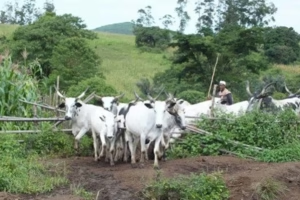
In its “cry as a persecuted Church,” the Diocese, where dozens of priests have been kidnapped and rectories destroyed by suspected Fulani Ethnic Militia (FEM), decried the level of insecurity in the country, demanding urgent action by the government.
“We sadly admitted that the psychological, emotional and economic wounds of our people resulting from many years of the deprivations, massacres, displacements from ancestral lands and kidnappings continue to pose the biggest challenge to our existence and mission as a church.”
They used the occasion to express gratitude “to God for the gift of faith on the soil of Kafanchan Diocese and abundant blessings upon us and for the many achievements we have recorded for over 30years of our existence,” adding, “We remain indebted to the missionaries who have toiled under very harsh conditions to plant the seed of faith in Kafanchan Diocese, especially the Society for African Missions (SMA) and others who came after them.
Conclusion
Created as an ecclesiastical jurisdiction in 1995 with 34 indigenous priests and fewer parishes, the Diocese disclosed that it “can now boast of having 191 indigenous priests, a Diocesan Institute of Female Religious, 83 parishes and many institutions.”

Reverend Fathers Juluis Eyyazo, Douglas Daniel, and the Director of Radio Nigeria, Maria Kaduna 90.1 FM, Joseph Gandu, at the entrance of the new secretariat complex. Credit: Julius Eyyazo.
The Diocese took this opportunity to affirm its belief in the living God as a Church that remains hopeful during turbulent times.
“As a church, we have learnt that through faith every suffering and deprivation transforms us into a resilient, courageous and hope-filled church.
“We will continue to pray to God to sustain this hope to help us see the emergence of a new Nigeria where justice and peace will reign. We will intensify efforts toward healing, reconciliation, peace building and interreligious dialogue.
May our Lady of Guadalupe pray for us. Amen,” the communique maintained.
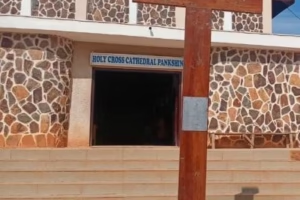
High points of the occasion were cultural rendition and the commissioning of the ultra-modern new Diocesan Secretariat, at Madakiya, home to other ecclesiastical institutions like the minor seminary and Bishop’s court.