







A Nigerian prelate and communication expert has made a case for prayerful communication as a recipe for ensuring human voices and faces are preserved in the use of Artificial Intelligence (AI).
In his homily for the recently concluded World Communications Day 2026, titled “Preserving human voices and faces through prayerful reflection,” the Catholic Bishop of Katsina Diocese, Most Rev. Bishop Gerald M. Musa, reminded the world about Pope Leo XIV’s message, which “warns that modern society risks losing ‘the sacredness of the human face and voice.’”
“Prayer itself is one of the highest forms of authentic communication.”
Bishop Musa noted that the Vicar of Christ “reminds us that authentic communication must protect human dignity and foster genuine encounter rather than isolation,” adding that “Prayer itself is one of the highest forms of authentic communication because prayer preserves the human voice before God and the human face before one another.”
The Bishop of the youngest diocese in Nigeria cautioned against spreading falsehood, bullying, and other unwholesome digital activities that impinge on human dignity.
“Sadly, many people today hide behind digital masks. Some spread hatred, falsehood, bullying, and division from anonymous accounts. Others have thousands of followers online but no deep relationships offline. We have facial recognition technology, yet we are forgetting how to recognise one another as human beings created in the image of God,” Bishop Musa observed.
The 55-year-old prelate decried that even though we are wired together digitally, people are increasingly disconnected personally and spiritually.
“A young man spent hours chatting online every day, yet he never spoke to his lonely mother, who sat beside him in the living room. One evening, she jokingly said, “I live with a son whose face I see every day, but whose voice I only hear on WhatsApp!” We laugh, but these stories reveal a painful truth about our world today: we are highly connected digitally, yet increasingly disconnected personally and spiritually,” he said.
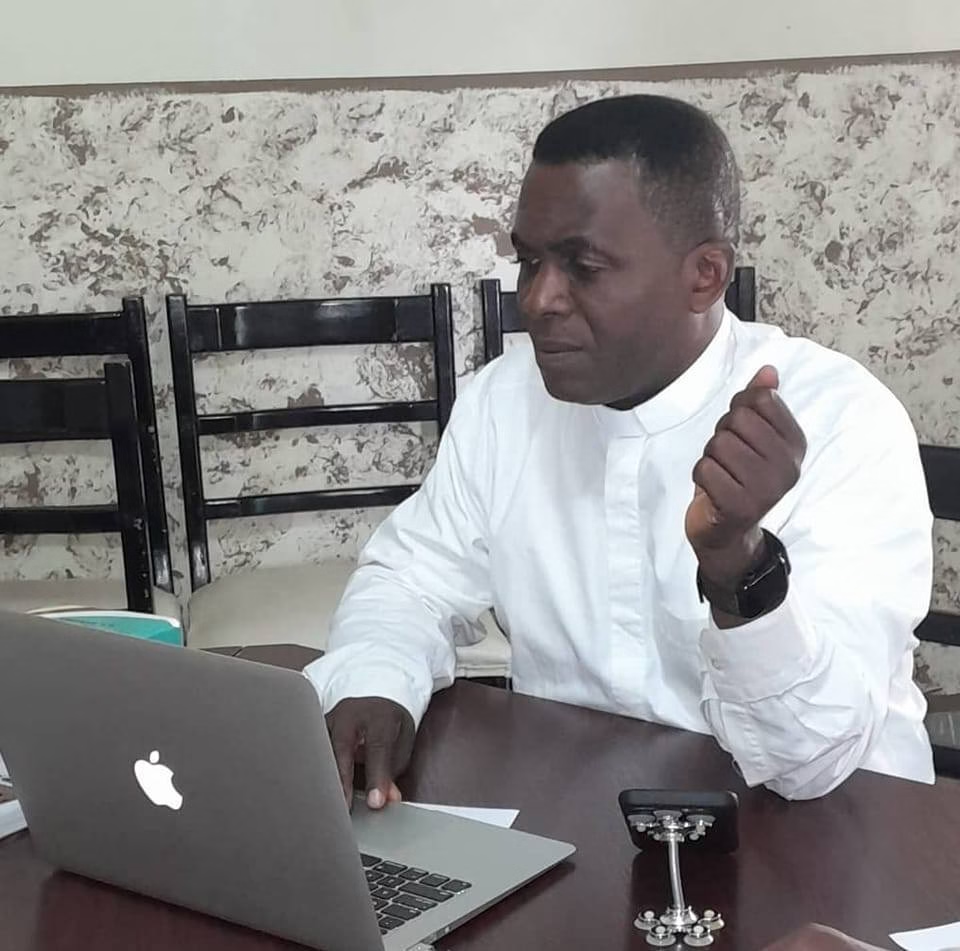
The highly digitally connected Bishop Gerald M. Musa, who has 10K followers on Facebook, where he publishes his daily homilies, is nonetheless, personally and spiritually connected to his flock
“In today’s Gospel [John 17], Jesus also models authentic communication.”
The former lecturer at the Centre for the Study of African Culture and Communication (CESACC), Catholic Institute of West Africa (CIWA), Port Harcourt, Rivers State, explained that the theme of the 2026 World Communications Day, “Preserving Human Voices and Faces,” speaks powerfully to the day’s liturgical readings.
“One key verse stands out in the First Reading: ‘With one accord they devoted themselves to prayer’ (Acts 1:14). The Apostles gathered together physically, spiritually, and emotionally. They did not merely exchange information; they shared communion. They preserved one another’s voices, fears, hopes, and faith through prayerful presence.
“In today’s Gospel, Jesus also models authentic communication. In John 17, Jesus speaks heart to heart with the Father. His prayer is not mechanical or superficial; it is deeply relational and personal. In an age dominated by artificial intelligence, digital filters, anonymous accounts, and virtual interactions, Jesus reminds us that true communication begins not with technology but with communion,” he maintained.
According to him, “the Upper Room teaches us another way. The Apostles gathered not as isolated individuals but as a praying community. Their unity prepared them for Pentecost. Prayer transformed fearful people into courageous witnesses. Real communication does the same: it transforms noise into understanding, strangers into neighbours, and fear into communion.”
“Prayer unites hearts and strengthens communities.”
Citing an African proverb, Bishop of the Northwest Diocese noted that “When spider webs unite, they can tie up a lion,” to underscore the point that “Prayer unites hearts and strengthens communities.”
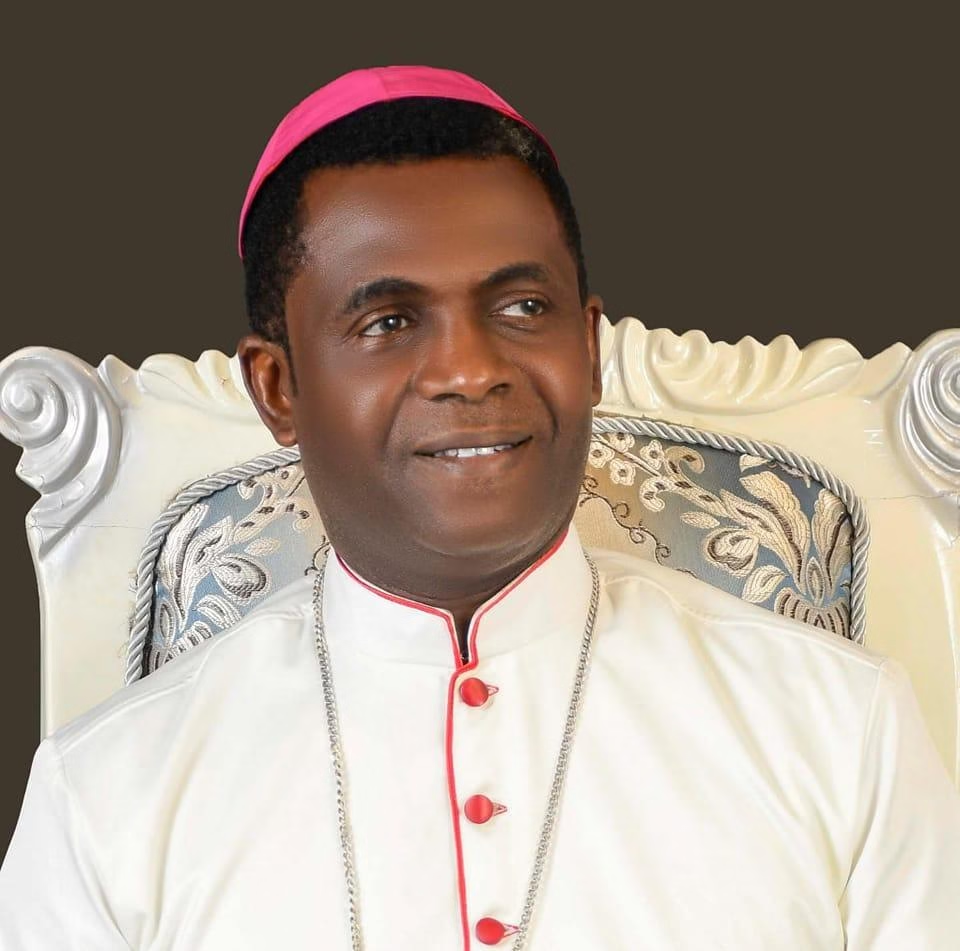
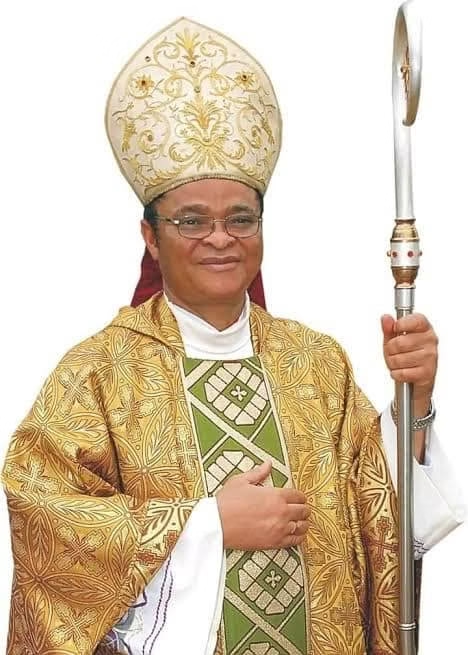
Bishop Gerald M. Musa. Credit: Gerald Musa.
He emphasised that “Families that pray together preserve not only faith but also human voices and faces. Communities that truly listen to one another become places of healing and hope.”
The first Bishop of Hausa extraction warned against a noisy society that does not pay attention to the importance of listening, truth, and love.
“In a noisy world, are we still making space for genuine prayer and authentic listening? Are our voices and faces becoming instruments of communion, truth, and love, or tools of division and isolation?” he rhetorically questioned.
The communication scholar prayed, “May we never become so digitally advanced that we forget how to be truly human,” adding, “May He teach us to listen more deeply, speak more truthfully, and encounter one another more compassionately.”
The digitally savvy Bishop who has 10K followers on Facebook, where he publishes his daily homilies, submitted, “As we prepare for Pentecost, let us ask the Holy Spirit to heal our communication.”
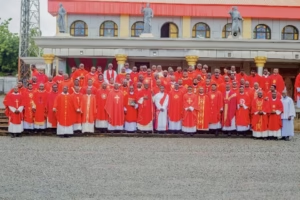
Editor’s Note: The featured photo is courtesy of St. Joseph’s Catholic Church, Shagari Low-Cost, Katsina Diocese.