






Nigeria’s economic recovery narrative is facing renewed scrutiny after the World Bank revealed that poverty levels continued rising sharply despite a significant decline in inflation. The latest findings highlight a growing disconnect between improving macroeconomic indicators and the worsening living conditions faced by millions of Nigerians under ongoing economic reforms.
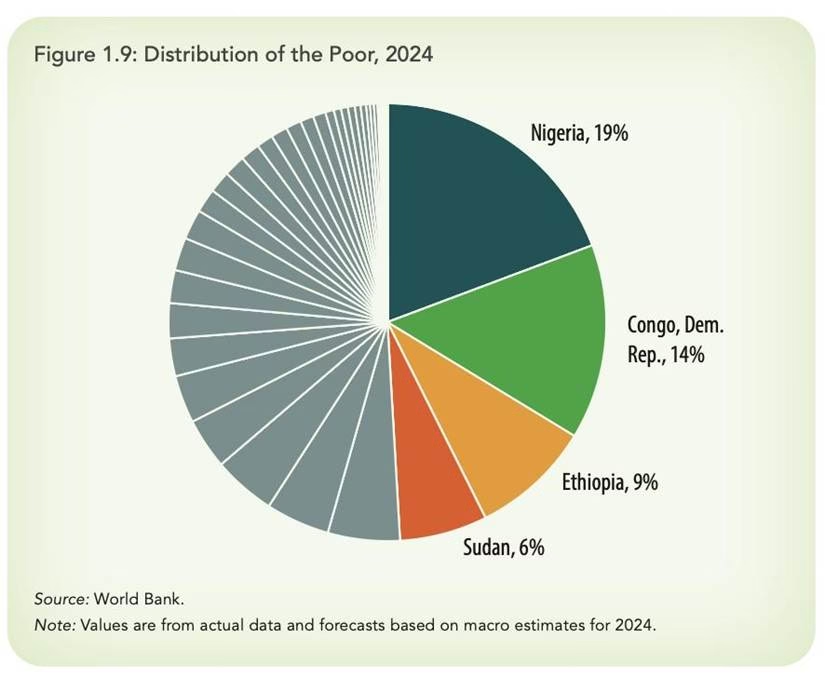
According to the World Bank’s April 2026 Nigeria Development Update titled “Nigeria’s Tomorrow Must Start Today: The Case for Early Childhood Development,” Nigeria’s poverty rate increased from 56 percent in 2023 to 61 percent in 2024 before reaching 63 percent in 2025, which represents roughly 140 million Nigerians living below the poverty line.
The report stated that the rise in poverty occurred even as inflation moderated significantly across the country. Data from the National Bureau of Statistics showed headline inflation falling from 34.80 percent in December 2024 to 15.15 percent by December 2025, while food inflation dropped from 39.84 percent to 10.84 percent during the same period.
Despite the easing inflation figures, the World Bank warned that household incomes have not recovered fast enough to offset the effects of earlier price shocks. The institution noted that inflation, although lower, remains high enough to continue eroding purchasing power and worsening living standards for vulnerable households.
The report further identified structural weaknesses within Nigeria’s economy, especially the slow growth of agriculture where more than half of poor Nigerians remain employed. While services and industry recorded stronger expansion, agricultural productivity lagged behind, limiting the impact of economic growth on poverty reduction.
The findings present a major challenge to the reform narrative promoted by President Bola Ahmed Tinubu’s administration. Since the removal of fuel subsidies and the liberalisation of the naira exchange rate in 2023, the government has repeatedly pointed to exchange-rate stability, stronger foreign reserves, and improved investor confidence as evidence that the economy is stabilising.
International financial institutions and credit agencies have acknowledged some of those gains. S&P Global Ratings recently upgraded Nigeria’s sovereign credit rating from “B-” to “B,” citing improvements in the country’s macroeconomic profile, stronger oil production, domestic refining capacity, and foreign exchange reforms.
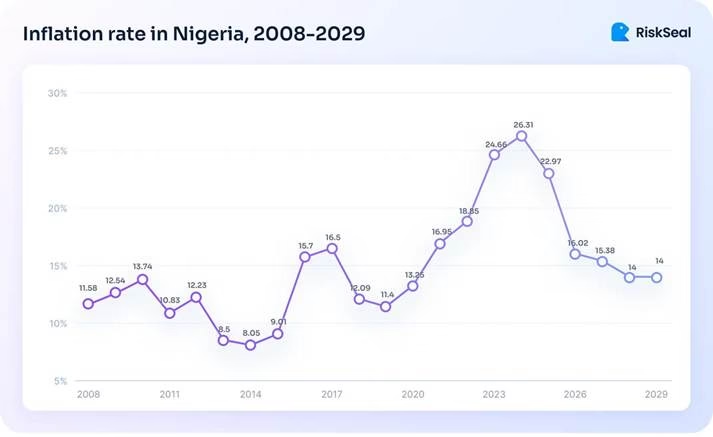
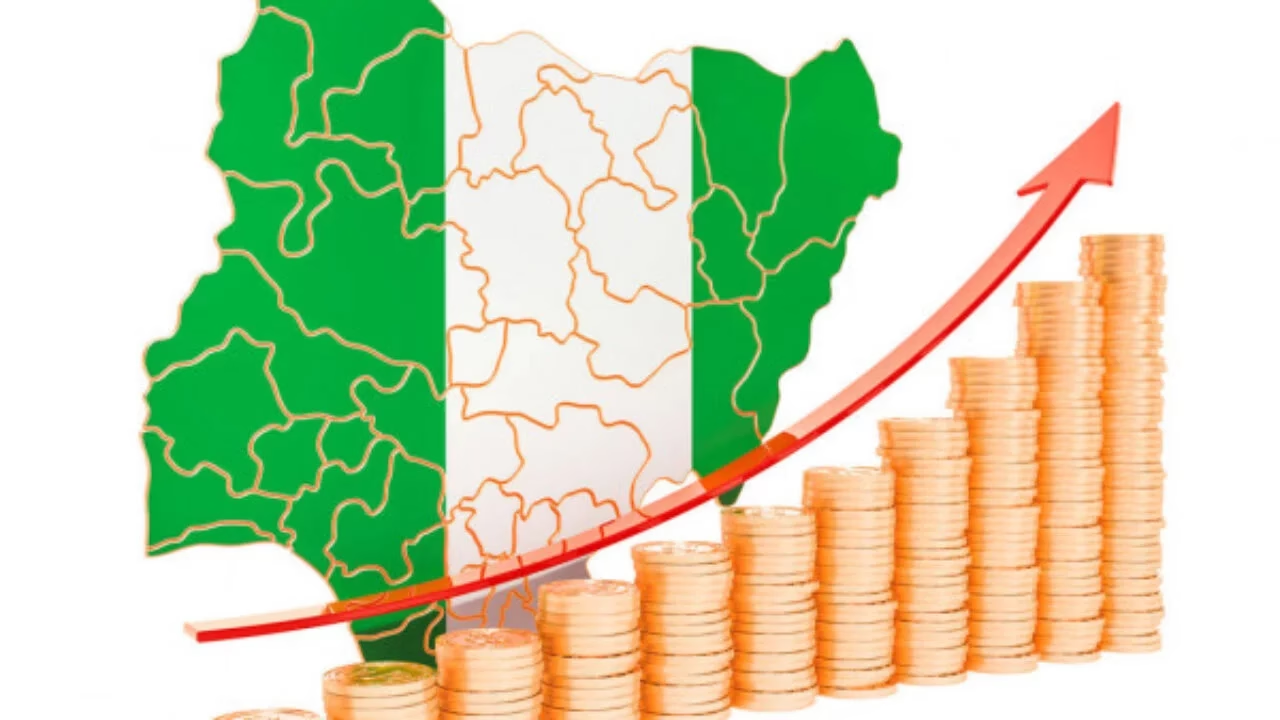
However, the World Bank’s poverty data suggests those macroeconomic gains have not translated into broad welfare improvements for ordinary Nigerians. Although the economy is projected to grow by over 4 percent in 2026, rising living costs, weak job creation, and declining real incomes continue placing pressure on households across the country.
The World Bank also linked the worsening poverty crisis to external shocks, particularly global conflicts affecting energy, food, and transportation costs. A separate World Bank Commodity Markets Outlook projected that ongoing instability in the Middle East could push global energy prices up by 24 percent in 2026, increasing inflationary pressures for developing economies such as Nigeria.
Online discussions among Nigerians similarly reflect growing frustration over the disconnect between macroeconomic optimism and everyday realities. Conversations on Reddit’s Nigeria communities show many users acknowledging that some reforms may have been necessary while criticising the pace of hardship, weak social protections, and declining living standards since 2023.
Looking ahead, the World Bank projects poverty could gradually decline to around 59 percent by 2028 if inflation continues easing and economic conditions stabilise further. However, the institution warned that progress would remain slow without stronger job creation, improved agricultural productivity, and more inclusive growth policies capable of directly improving household incomes.
Editor’s Note: Featured photo is courtesy of farmingfarmersfarms.com.