


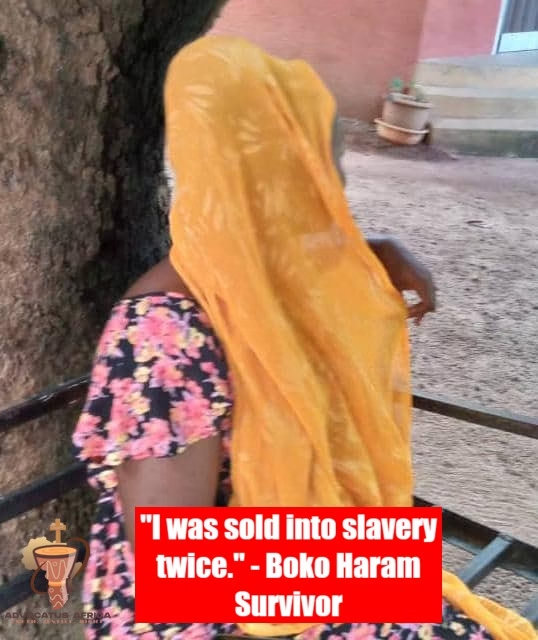
Left to nurse their wounds and wallow in trauma, most victims of the Jamā’at Ahl as-Sunnah lid-Da’wah wa’l-Jihād (JAS) sect, popularly known as Boko Haram, across northeastern Nigeria, often laud the tireless efforts of Civil Society Organisations (CSOs) while decrying the government’s negligence towards their plight.
This disclosure was made to Advocatus Africa in an interview by one of the survivors of Boko Haram abductions at a Christian facility in north-central Nigeria, where she is being cared for by the Catholic Church.
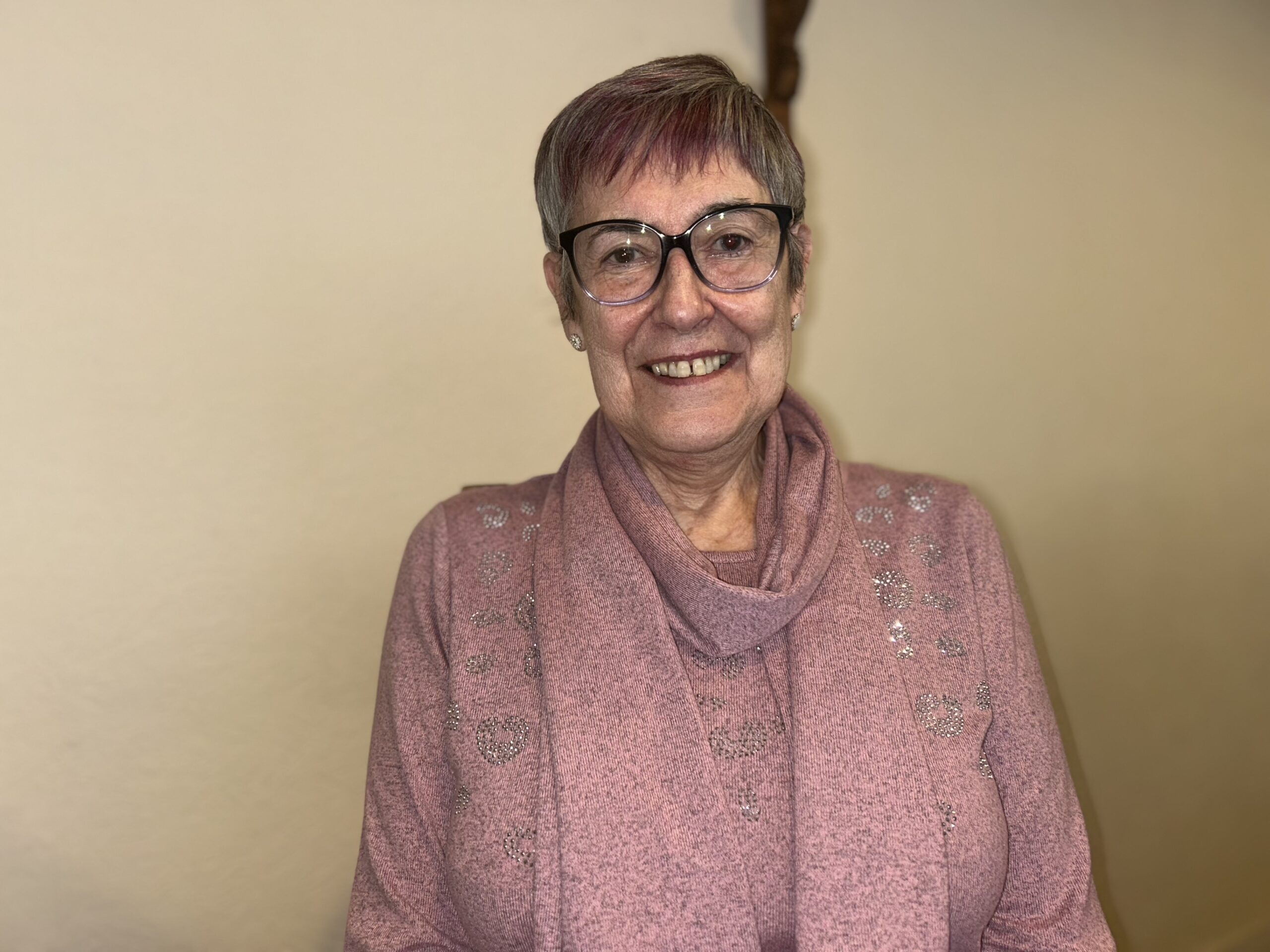
Sharing her moving ordeal, Justina Jonathan, who was 25 when she was abducted by the terrorists, narrated that: “I remain traumatised, without material or mental support from the government or any Non-Governmental Organisation (NGO). It is just the Catholic Church that is helping me now.”

She disclosed her nightmare in the den of the terrorists in vivid terms, saying: “I was coming back from my sister’s burial in Abuja with my parents on December 18 Dec 2020, when we ran into Boko Haram along Maiduguri road.”
The distance between Abuja and Maiduguri is 692 kilometers (430 miles) with a driving distance of 845 kilometers (525 miles).
According to her, “When we saw them, our driver tried to reverse, but they started shooting at our bus, and before we knew it, the bus missed its way into the bush. The driver ran. My parents also escaped. I did not know how that happened, but I believe it is an act of God.
JAS and ISWAP’s terror, leadership tussle and territoriality
“Boko Haram forced me into their car at gunpoint. This happened some minutes past 5 p.m. From that time, we started journeying into the forest until the next day. It was terrible. I later learnt the name of the place they drove us to as Tapkin-Chadi,” she further disclosed.
Tapkin-Chadi, Lake Chad region, in the Hausa language, located at the junction of Nigeria, Niger, Chad, and Cameroon in central and western Africa, is a region that is rich in fish but under the control of Islamic State West Africa Province (ISWAP), a splinter group of Boko Haram that governs the Islands and their surrounding waters.
For context, in August 2016, Boko Haram officially split into two primary factions following a leadership dispute and deep ideological disagreements over the treatment of Muslim civilians.
While ISIS recognised the ISWAP faction led by Abu Musab al-Barnawi, the original JAS group, reverted to its old name under the leadership of Abubakar Shekau.
The split occurred because of three reasons, which include the treatment of civilians by the Shekau faction, justifying the indiscriminate killing of people, including Muslims; a leadership tussle with the al-Barnawi faction accusing Shekau of hoarding resources and killing fellow militants who challenged his authority and a rivalry due to the replacement of Shekau with Abu Musab al-Barnawi as the governor (wali) of the region in 2016, which the Shekau group refused to accept.
In May 2021, ISWAP forces attempted to kill Shekau in his Sambisa Forest stronghold, but instead of surrendering, he detonated a suicide vest, killing himself.
Despite Shekau’s death, a revamped JAS under Bakura Doro has continued to fight ISWAP, recently gaining ground in the Lake Chad islands throughout 2023 and 2024. While ISWAP is domiciled in the Lake Chad region, Boko Haram oversees the Sambisa forest area.
Meanwhile, Justina lamented that, “I was left with only one exam to take when this happened.”
When asked if the insurgents were violent to her and other kidnap victims in the camp, the terrified lady said, “Well, when I got there, I met some victims like me. What they usually do is, the first time you meet them, they will treat you nicely and tell you about their religion, asking that you convert to Islam, then they sell you out as a slave.
“I was sold into slavery twice. To the first man for a year and later, to the second man for a year and a half. In all, I spent two and a half years with them. We do a lot of work for them, like going to the farm, fetching firewood, water, washing, and other house chores, including sex.”
In a pensive mood, the victim disclosed that “We were many in number. Over 30 victims are still working for them as slaves. It is always those of us who are Christians who suffer the most because we are hardworking. Many of us couldn’t bear it. They converted out of frustration and sexual abuse. Only six of us were able to stand firm for our faith.”
Miraculous escape: Faith came to the rescue
The courageous lady, who is currently undertaking a Diploma in Health Promotion and Education from one of the Colleges of Health Technology in the region, recalled what the terrorists told them while detailing her miraculous escape.
“They said we are their property. That we will continue to be their slaves as long as we remain Christians. Concerning how we escaped, I tried twice, but I was caught and punished; it is extremely difficult for anyone to escape from their camp without being helped by an insider. It was during the third escape attempt that God helped me to survive their claws,” she recounted.
Jonathan also stated that, “We met a Boko Haram member and pleaded with him to help us escape. We promised to pay him. It was not easy for him. This is because any of their members caught assisting victims to escape were killed instantly.
“Nonetheless, he agreed to help us out. We spent four days travelling in the forest. On the fourth day, the man went back and told us where we could get a vehicle that would convey us to Monguno.
Monguno, 133 kilometers from Maiduguri, the Borno State capital, one of the country’s worst hit by Boko Haram insurgency in the northeastern part of the country, is home to 255,835 Internally Displaced Persons (IDPs) households as of 22 May, according to the United Nations Office for the Coordination of Humanitarian Affairs.
The young lady revealed that, “On reaching the place [Monguno], we saw a car, but the driver said he could not carry us because some Boko Haram members came the other day looking for us. He said, right now, they are on our trail. According to him, any driver who tries to convey us home will be killed. Before we knew what was happening, a group of Boko Haram members arrived from nowhere. We fled and went our separate ways. It was four of us – me, one girl, and two others. We met some guys who helped to hide us that night. Sadly, the two others were captured.”
She continued: “Early in the morning, we continued trekking through the bush. It was hard and risky to get a vehicle because they were all over the place looking for us. Eventually, we arrived in Monguno that evening and explained what happened to the soldiers there. They took us in. One of the other two who were recaptured escaped and rejoined us.”
She detailed that the activities of Boko Haram have religious motives, adding that they were “anti-Christian in motive.”
“They are criminals who also engage in crime for religious purposes. I say so because they kidnap for ransom and enslave their Christian victims. Besides, it is always their Christian victims who face the worst forms of abuse and molestation,” Jonathan disclosed.
She also stated that, “My elder sister is dead, and I am left with a father and mother and 4 young ones.”
While narrating her ordeal, the victim, whose father is a cook in a parish in one of the Catholic dioceses in the north, and Mom, a trader, said she has left vengeance for God while unveiling her plans.
“Who am I not to forgive? Though it is really painful, I have to let go of it” said she adding that “If possible, I want to go back to school, get a scholarship, study abroad and maybe after school, secure a work to support my poor parents and siblings – because right now, my Dad has retired and it is not easy for him taking care of us all.”
She was emphatic about her message to Christians when she underscored the point that “Christians should hold on to their faith in line with what they read in the Bible – Jesus says that this is bound to happen. We just have to endure – be patient enough to hold onto the cross.”
Using her story as a compass for others, the young survivor told Advocatus Africa that, “although they did not want us to carry out any of our Christian prayers, I was always fasting, especially during the Lenten season, during my incarceration by Boko Haram. When it came to our faith, we proved stubborn and stood our ground. I believe that that was what saved us.”
She urged Christians across the globe, especially those in countries where Christian persecution is rife, to hold forth the faith, saying, “Please, never give up – no matter what, I tell you, it really pays to serve God. My life is a living testimony.”
Call on the government to uphold the Constitution, save lives and livelihoods
She was bold in reminding the government about its constitutional responsibility to secure lives and livelihoods.
“The government should do things that will help the country because a lot of people are suffering, especially travelers. They should increase security personnel in all big forests and bring the insurgency to an end.”
Jonathan also urged NGOs “to assist other captors who are still in the hands of Boko Haram to regain their freedom. This is because a lot are still there, helpless. I would like all of us to join hands to stop showing religious difference so that we can be free from this violence devouring our country, toward making it a safe place where love and peace flow.”
As regards her message to the government, CSOs and Church, she said, “I encourage political, traditional and other civil authorities to ensure justice, peace and development. While I am grateful to the Church for the prayers and support, I received, I urge religious leaders to continue building their members spiritually so that their faith will be strong in a way that no one can defeat them due to their heroic witnessing.”
It is expected that Jonathan would heal and become a source of inspiration not only to other countless traumatised girls in her shoes, but also become a leading voice in Africa like Malala Yousafzai, the Pakistani youth education activist and 2014 Nobel Peace Prize laureate.