




This feature raises alarm over the dwindling numbers of those enrolling in seminaries, novitiates, and young people attending Holy Mass in Europe, stressing that the empty pews are a metaphor for a Church in need of oxygen
Introduction
For most parts of the world, Europe is described as the cradle of civilisation and the epicenter of evangelising other continents such as Asia and Africa. This reference comes with nostalgia. Sad as the scramble and partition of Africa at the Berlin Conference (1884 -1885) is, what would follow was the missionary enterprise that cascaded into Europe, transporting Christianity with other packages such as education, vocational training, and provision of basic health care to Africa. The arrival of Portuguese, Scottish, Irish, and Italian priests, as well as male and female religious into new mission fields across the continent, was the icing on the cake of the vocation boom that characterised the Church in Europe.
From 1490, when the first missionaries arrived in Sub-Saharan Africa at the request of King Nzinga of Kongo, North of modern Angola, to inroads in the rest of Africa in the 18th century, Europe drew from a pool of missionaries in its kitty. In Ireland, for instance, ideally, a family would have an ordained priest, a professed brother or a religious sister. Despite the heroic generosity of the Church in Europe and the sacrifices of gallant early missionaries who died in active ministry because of snake bites and mosquitoes, the continent is confronted with a relapse in the faith.
“Despite the heroic generosity of the Church in Europe and sacrifices of gallant early missionaries who died in active ministry because of snake bites and mosquitoes, the continent is confronted with a relapse in the faith.”
For instance, in a May 21, 2022, Op-Ed titled, “Growth, decline and extinction of UK Churches,” John Hayward disclosed that the “Church in Wales will be extinct in 12 years.” In a similar article, “Counting religion in Britain, January 2023,”Clive Field alluded to “Christian decline” in the region, stressing that “how it’s measured and what it means [is] a less Christian future for England and Wales.” The dwindling numbers of those enrolling in seminaries, novitiates, and young people attending holy mass are alarming. The empty pews are a metaphor for a moribund Church in need of oxygen. As such, “this generous continent where Christianity has its roots,” now “needs the New Evangelisation and new evangelisers” (New Vocations for a New Europe, 1998, no 7).
Factors responsible for the loss of flavour
First, the so-called age of the Enlightenment (1685-1815) pushed religion beyond its limits, leaving humanity with science as a pseudo-god who has answers to all human problems. Between the 1970s and 1980s, reliance on philosophies such as the Big Bang theory made matters worse. In the end, faith was dwarfed by science and technology.
Second, the lack of a clear separation between Church and state sacrificed the sacred on the altar of the secular. The Church’s complicity in the face of authoritarian figures in France, for instance, brought about the French Revolution (1789-1799). Also, the Spanish Civil War (1936-1939) soon became a testing ground for what would befall the Church across Europe during World War II. This led to revolt and anti-clericalism. The rest is history.
Third, the sex scandal involving some priests, which broke in the 11th century, came to the limelight between 1985 and 2002. Though the hierarchy rose to the occasion by offering apologies, assisting victims, and rehabilitating perpetrators, it gave the Church bad publicity. Where coverups were fingered, it led to litigation and even prosecution.
Fourth, determined to protect children, parents who hitherto gave instructions to their kids suddenly became overprotective of them. This development created a strong sense of entitlement in children, with parents doing what their kids want and instead of children doing what their parents expect. Though the scripture (Cf. Proverbs 13:24) recommends the diligent discipline of children, unfortunately, this has been swallowed by modernism.
Fifth, secularism and modernism ushered in what Pope Benedict XVI referred to as “indifferentism.” The 20th century brought about a kind of morality that depended on “individual feelings” rather than the teaching of the Church as handed on through apostolic tradition. Man’s freedom became elastic to the point that truth is relative, depending on how one looks at it.
Sixth, the New World Order of the Internet and capitalist commercialisation that craves material possessions soon set in. When objectification took center stage, the focus was on man, not God – deriving sensual pleasures in pornography and various sexual rendezvous, which emphasize same-sex unions, silencing teachings on matters of faith and morals, which insist on divinely revealed truths and magisterial teachings.
How Europe can get its groove back
As a panacea, some provisions of the final document of the Congress on Vocations to the Priesthood and to Consecrated Life in Europe given in Rome on 6 January 1998, titled “New Vocations for a New Europe,” which highlights the role of priests, religious, and laity as indispensable agents in changing the narrative into a sweet melody, are worth reflecting upon:
Role of priests, consecrated men, and women
No one can donate blood to a Church on life-support than committed priests and religious and willing members of the laity. This is because “to whom much is given, much is expected.” Accordingly, “There is nothing more stimulating than a witness to one’s vocation, which is so passionate as to make it contagious. Nothing is more logical or coherent than a vocation which generates other vocations and makes them completely ‘fathers’ and ‘mothers’” (New Vocations for a New Europe, 1998, no 6). This requires rigorous promotion of vocations by word and deed. Although there are pockets of contempt for priests and religious who wear the cassock, Roman collar or habit, it is incumbent on pastors of souls, including religious, to appear in public places – stadia, city malls, airports, and bus stations, banks, schools, hospitals, and cinemas in their religious garb. Despite the seeming contempt, chances are that the few young ones who still follow their parents to Church could be inspired to take to the priestly and religious life.
What is more, on Good Shepherd Sunday, the parish or religious institutes can organise a vocation rally, engage the youth in a talk show, or organise them to act promoting vocations in the Church. From the cradle to the grave, the priest, more than anyone else, plays an indefatigable role in the life of the Christian – he baptises, administers holy communion and confirmation (mostly bishops), anoints (the sick), hears confession, weds couples, and ordains (in the case of Bishops). Therefore, there is no time that he does not intervene in the life of the believer. If the young are trained to realise how beautiful the hands of the priest are in “sanctifying the Christian people and offering sacrifices to God,” they are likely to embrace the vocation to the priestly or religious life.
It is crucial to undertake a new evangelisation that prioritises parish-based catechesis and catechism. The parish, rather than the school, is the citadel of teaching the faith. After all, most church-owned schools began in the parish. The challenge with accessing both catechesis and Catechism from the school is a lack of quality assurance and checks and balances as regards issues of faith and morals among teachers who do not practise the faith. While in the parish, the priest is the moderator, in the school, it is the head teacher or principal who might not necessarily be Catholic. As such, aside from sticking to what the book says, the lived experiences of teachers who may not share the same Catholic faith with the children is a cause for worry. For things to change, priests and religious must give up their honeymoon to embrace teaching the young. Parents and educators must realise that their “fidelity to God’s call is the precious and irreplaceable means by which [their] children and pupils might discover their vocation” (New Vocations for a New Europe, 1998, no 5).
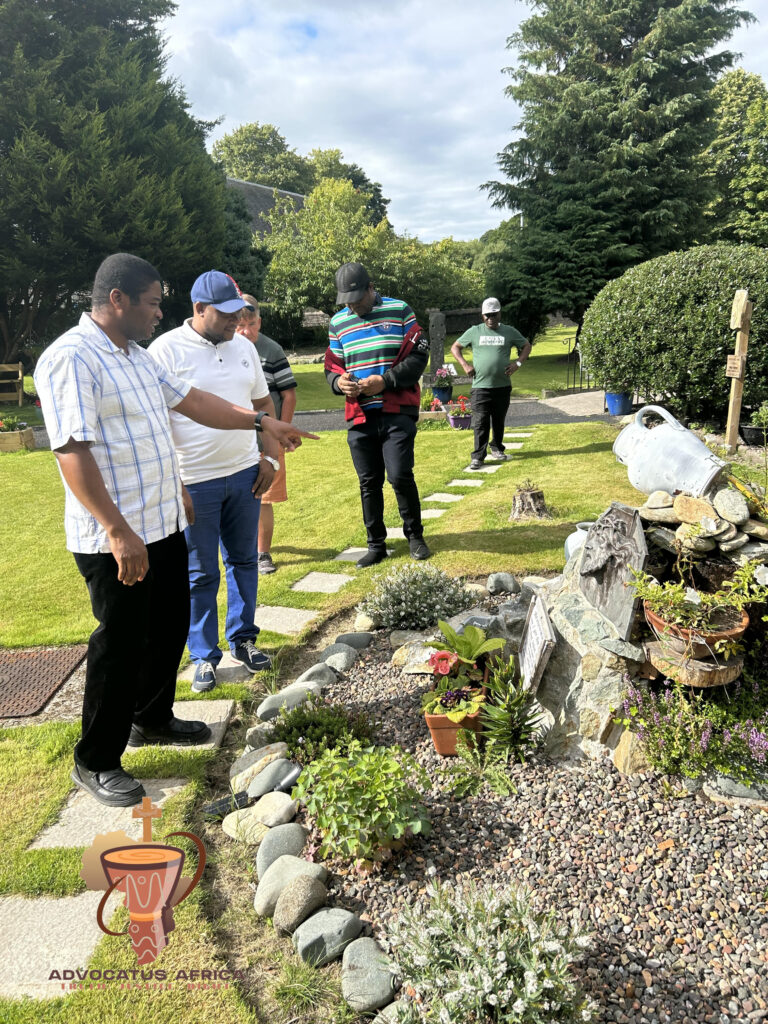
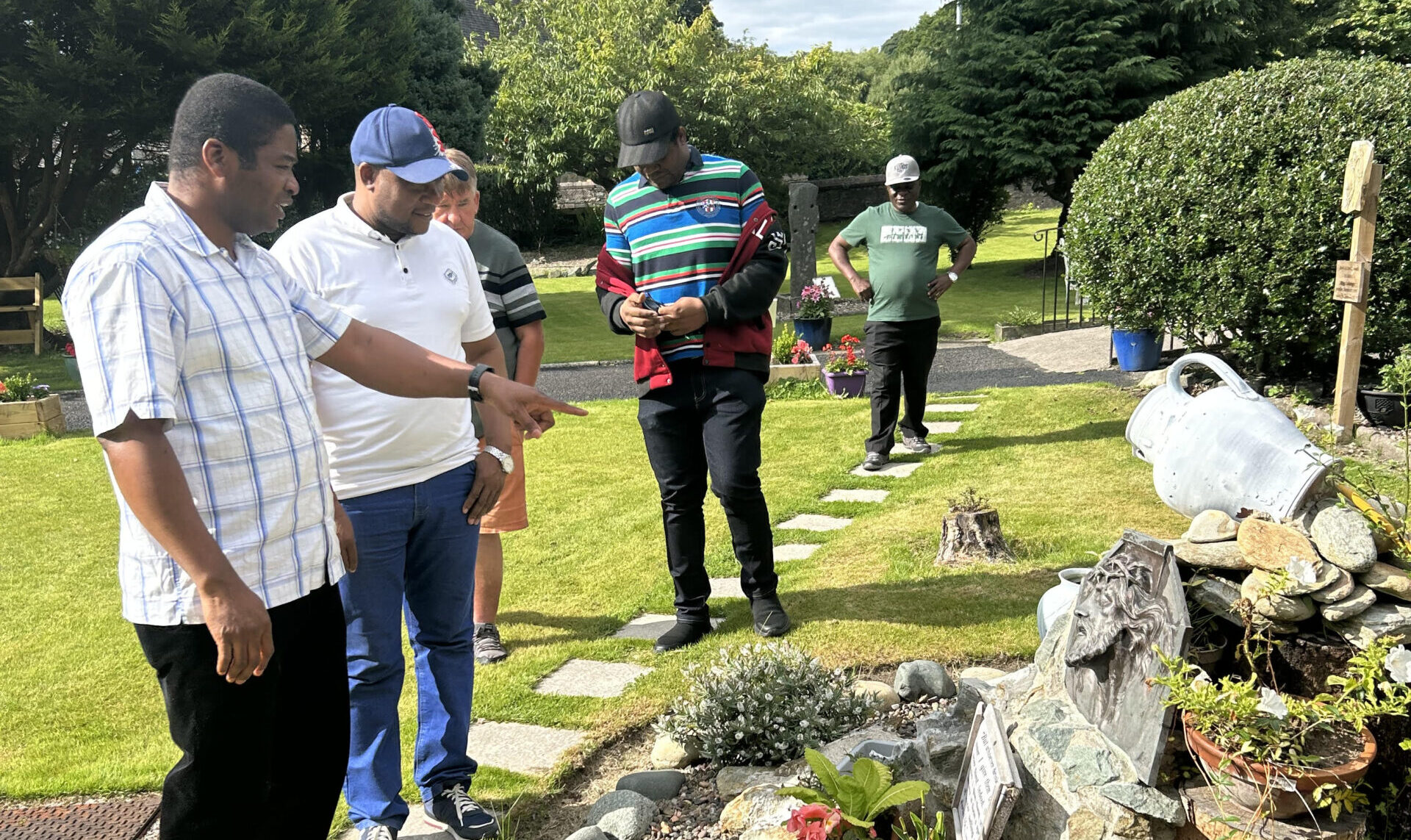
Some Nigerian priests on a reverse mission in the UK relish nature
The task before the “Whole People of God in Europe.”
On concrete witnessing, the Church urges the good people of Europe “to marry theological reflection and pastoral praxis, theory and pedagogical experience,” stressing that doing so would “provide a concrete and practical help to those working in vocations promotion” (New Vocations for a New Europe, 1998, no 8). Catholics must realise that “in a Church which is vocational, all are vocations promoters” (New Vocations for a New Europe, 1998, no 6). One of the most practical ways of revamping the faith is through “the family [which is] the domestic Church” (Lumen Gentium, no 11). This implies that it is in the family that children first learn who God is and seek him in prayer. As the basic cell of society, it is the bastion of nurturing the young in faith and morals. It is from the family that parents teach their children how to say the three magic words – please, sorry, and thank you.
“Rather than sit in the gloom of contemporary challenges, it is expedient for people of God in Europe to go back to the drawing board of their heydays of vocation boom.”
Rather than sit in the gloom of contemporary challenges, it is expedient for people of God in Europe to go back to the drawing board of their heydays of vocation boom. When the Church used to be full, when parishes were overcrowded with three to four and five Masses. Lessons must be learnt from an erstwhile clergy-driven Church to a post-Vatican Council II era where the watchwords are “collaborative ministry” and “co-responsibility.” This means that both Church Handlers and Churchgoers must acknowledge the Church’s assets and liabilities, including the good, the bad, and the ugly. After all, the Church is both human and divine. In Africa, the saying goes: The people of God in Europe ought to ask: ‘From where did the rain start beating us?” This means, where did things go wrong, and how can we get the young back on track?
Concluding thoughts
Amid the current challenges facing the Church in Europe, the words of the Church Fathers, namely: “Still today, we wish to believe, the Spirit of the Father is calling” (New Vocations for a New Europe, 1998, no. 7) are consoling. While a curative measure could be a holy franchise in which pastoral personnel from Asia and Africa, lands where Europe evangelised hundreds of years ago, may come to help out, it is expedient to implement preventive measures – robust catechesis from the pulpit centered around eucharistic adoration and the promotion of vocations to the priestly, religious and married lives. In the long run, it would be crucial to marry “theological reflections” with “pastoral praxis” through an enlivened liturgy of the word, liturgy of the Holy Eucharist, the liturgy of life – personal witnessing and Marian devotions. That way, Europe can get its groove back, thus revamping its erstwhile vocation boom.