By Elizabeth Ameh
The Borno State Government, north-eastern Nigeria, in collaboration with UNICEF, has conducted a four-day Supplementary Immunisation Activity (SIA) targeting 1.6 million children across 312 wards in the state’s 27 Local Government Areas (LGAs).
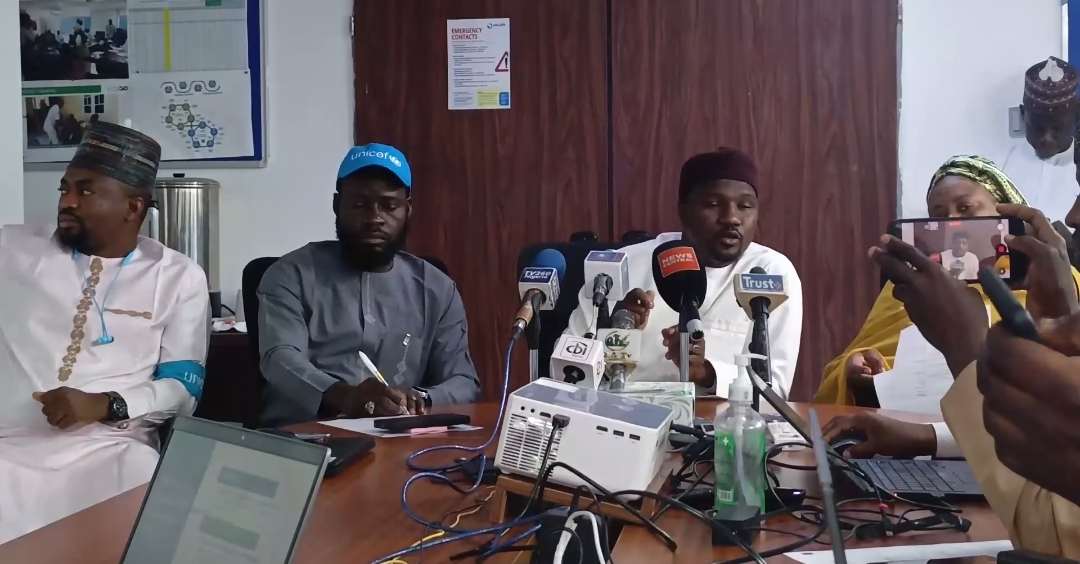
The Director of Disease Control at the Borno State Primary Healthcare Development Board (BOSPHCDB), Dr. Mallah Abdullahi, disclosed this during a media roundtable organised by the Borno State Government and UNICEF to commemorate the 2026 World Immunisation Week.
The roundtable aimed to brief journalists on immunisation efforts, highlight vaccine successes in the BAY states — Borno, Adamawa, and Yobe — and gather media input on strengthening immunisation and vaccine programmes.
According to Dr. Abdullahi, the immunisation activity aligns with Governor Babagana Zulum’s 25-Year Strategic Plan and 10-Year Development Plan.
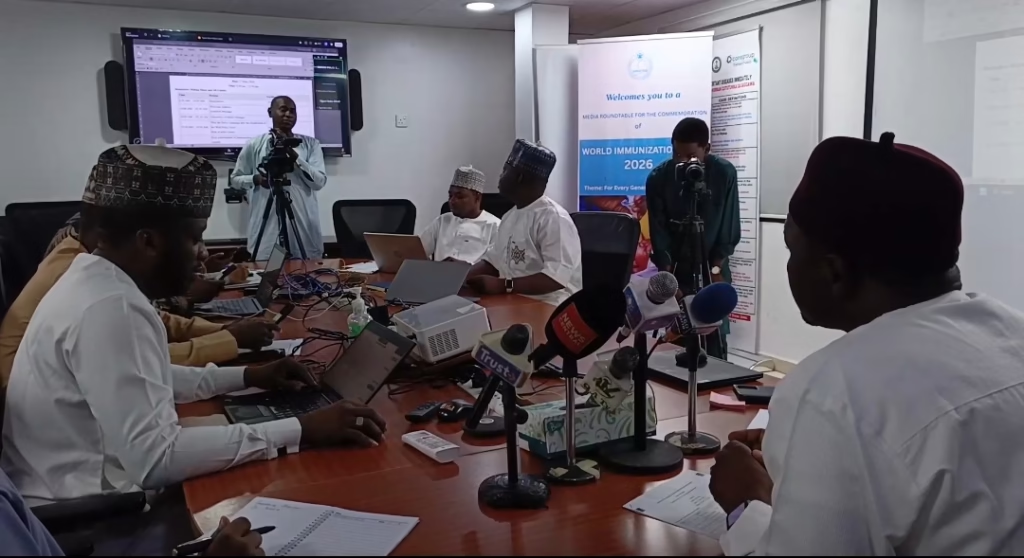
Participants at the event.
He noted that Pillar 3 of the strategic initiative is specifically designed to ensure that no child contracts polio.
Dr. Abdullahi outlined the different types of immunisation activities in the state beyond SIAs detailing that, “Routine immunisation is being conducted across 377 Primary Healthcare Centers spread across the 27 LGAs.”
According to him, “We also conduct mop-up campaigns to ensure that children who were missed during routine or SIA sessions get vaccinated. This prevents the virus from spreading to neighbouring wards.”
UNICEF: Coordinated Campaigns Critical to Saving Children
On his part, the UNICEF Health Specialist, Dr. Hassan Saidu Malgwi, said coordinated vaccination campaigns remain critical in protecting children from vaccine-preventable diseases.
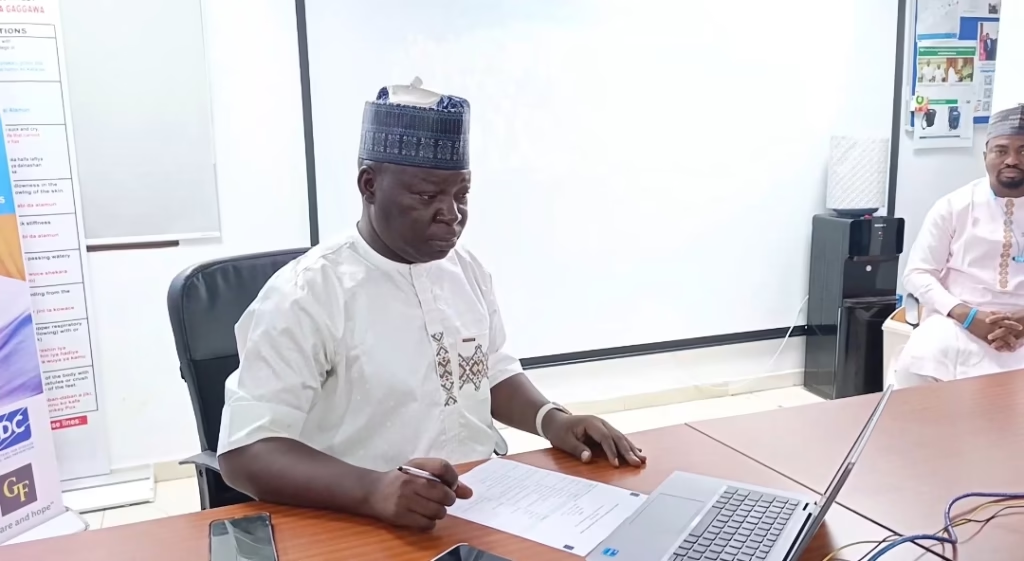
Dr. Hassan Saidu Malgwi, UNICEF Health Specialist.
He noted that childhood killer diseases like polio can be prevented through routine immunisation and improved healthcare services.
Partners at the event delivered goodwill messages, commending UNICEF and the Borno State Government for ensuring every child is vaccinated against childhood diseases. They also recognized the media as key partners in promoting vaccine acceptance.
A polio survivor, Mallam Ali Yerima, encouraged parents not to let myths stop them from taking their children to health facilities for vaccination.
Another polio survivor spoke on the lifelong challenges caused by the virus. She lamented that some people still reject vaccines due to misinformation and urged parents and guardians not to make the “costly mistake” of failing to vaccinate children aged 0 to 5 against childhood diseases.
“I’m What a Virus Leaves Behind When We Act Too Late.”
A second survivor delivered a moving poem on the plight of polio survivors: “My name is Adama Yarima Balla. I’m a polio survivor, and I have a short piece I’d like to read. Please look at me. I’m not an illustration from a textbook. I’m not a statistic. I’m your neighbor. I’m someone’s child. And I’m what a virus leaves behind when we act too late.
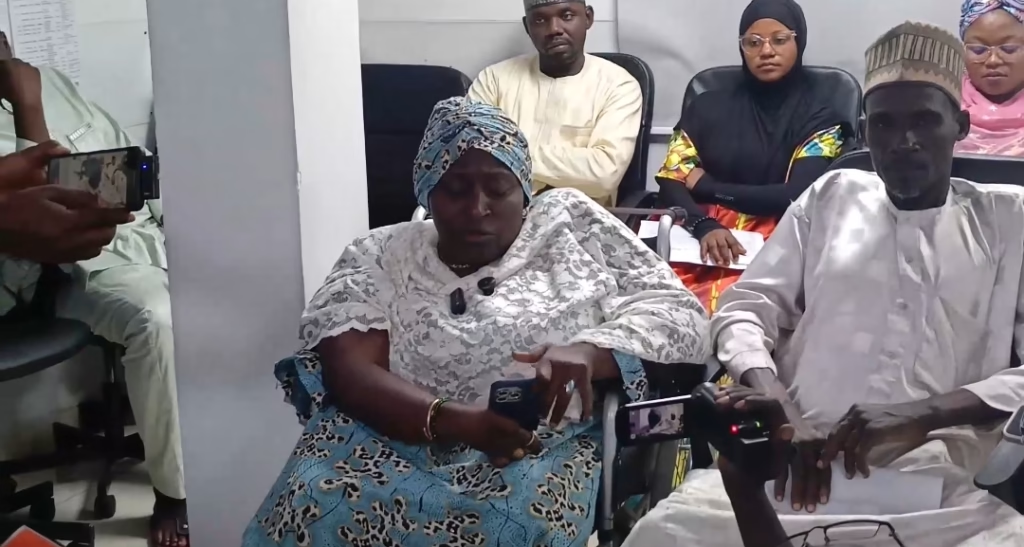
A polio survivor, Adama Yarima Balla, reciting her poem.
“I breathe today because my lungs still work. But I cannot lift my hands to wave you goodbye. I cannot move my legs. I cannot walk to the podium. I was carried here, in this chair, by the hands of others. Why? Because I met the polio virus before I met the vaccine.
“For those who have not seen polio up close, let me describe it. It is not a fever that passes. It is not a rash that fades. It is a thief that climbs up your spine and cuts the cords to your arms, your legs, your diaphragm. It leaves you awake, aware, and imprisoned in your own body.
“I’m telling you this during World Immunisation Week, not to frighten you, but to wake you up. I see the social media posts: ‘Polio is gone.’ ‘Vaccines have side effects.’ Let me be very clear. The side effect of not vaccinating is a child learning to breathe through a hole in their throat. The side effect of delay is a generation of wheelchairs filling wards we thought we had closed.
“We have a miracle in a vial. It costs pennies. It takes seconds. But it saves legs. It saves futures. When you hold your child for their vaccination, you are not injecting poison. You are building a wall. You are telling this virus: Not this house. Not this street. Not this generation.
“I have spent decades wondering what it feels like to hold something high, to run in the rain. Do not let another child ask those questions. Do not give the virus another chance. Protect your child. Speak up. And if you see a parent who is afraid, show them my photo. Show them this wheelchair. Ask them which risk is truly more frightening.”
She used the occasion to urge journalists to amplify stories on vaccines and immunisation to combat myths and save lives.