

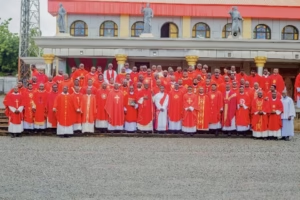

The Catholic Diocese of Enugu, Eastern Nigeria, has called on both religious, the consecrated life and lay faithful for a joint prayer over Igboland for surviving the horrific four-year civil war which started on 6 July 1967 and ended on 15 January 1970, as well as for unity, peace, and the security of the region.
The special joint prayer is to kickstart on Saturday, 31 January 2026, in thanksgiving to God for saving Igboland during the Civil War, and for peace, the security of lives and property, and the progress of the Igbo people around the world.
The Diocesan Chancellor and Secretary of the Catholic Diocese of Enugu, Very Rev. Fr. Wilfred Chidi Agubuchie in a statement dated 26 January 2026, signed and addressed to the parishes, chaplaincies, religious communities, institutions, all the clergy, members of the consecrated life and lay faithful across the diocese, noted that the prayer is union with all the Bishops and Christian denominations in Igboland.
The move has also received the endorsement of prominent Igbo religious and political leaders to have the joint prayer for Ndigbo organised annually on the last Saturday of January by every Christian denomination in Igboland.
“A call for joint prayer for Igboland”
In part, the letter titled, “A call for joint prayer for Igboland,” read, “In union with all the Bishops and Christian denominations in Igboland, and as already discussed in the first Presbyterium meeting and Diocesan Pastoral Council meeting of the year 2026.
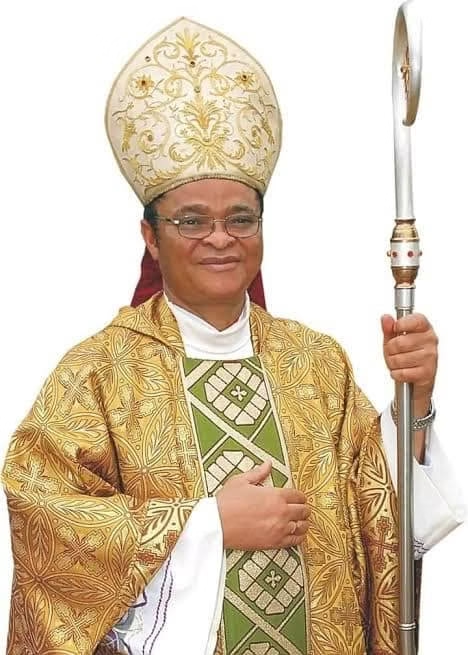
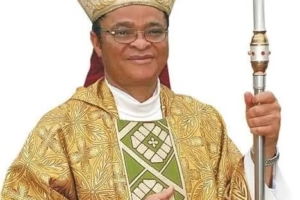
“The Catholic bishop of Enugu, Most Rev. Callistus V.C. Onaga, invites the Clergy, Members of the Consecrated Life and the Lay Faithful to a special joint prayer on Saturday 31 January 2026 in thanksgiving to God for saving Igboland during the Civil War, and for peace, the security of lives and property, and the progress of Ndigbo.”

The Bishop further explained that on the said prayer day, all Masses to be celebrated in their Diocese are to be offered for the survival of Igbos and Igboland during the Civil War, as well as for peace, security of lives and property, and above all, the progress of the Igbo people wherever they are.
“The Parish Priests, Chaplains, superiors, and heads of institutions are expected to announce this call for prayer to their communities and ensure that it is well-attended and faithfully observed.
“Note that the competent Igbo religious and political leaders have agreed that this joint prayer for Ndigbo shall be organised annually on the last Saturday of January by every Christian denomination in Igboland.
“We are encouraged to join in this union of prayer devotedly, as we pray that it will bring lasting peace, fraternal unity and sustainable development in Igboland and Nigeria as a whole. May the Blessed Virgin Mary, Queen of Peace, intercede for us. With an assurance of prayer for one another, I remain Fraternally Yours in Christ,” Bishop Onaga stated.

Children malnourished as a result of the war
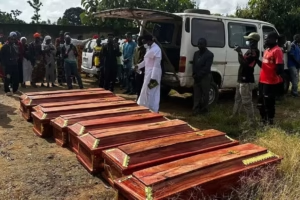
It is estimated that there were between 1 million and over 2 million casualties, primarily due to famine and disease, with between 8,000 and 30,000 Igbos and other easterners killed in the pogrom.
The Biafran War was caused by deep-rooted ethnic, religious, and political tensions that arose after Nigeria’s independence.
These tensions were intensified by a military coup in 1966 and the subsequent massacres of the Igbo people in Northern Nigeria.
The secession of the Eastern Region, led by Ojukwu, was driven by fears of ethnic annihilation, a struggle for control over oil resources and a prevailing sense of insecurity among the Igbo population.
In Lagos, General Yakubu Gowon addressed the nation with the phrase “No victor, no vanquished,” defining Nigeria’s post-civil war reconciliation.